
AI Search Brand Discovery: Key Findings
- AI search is changing how consumers discover brands, with more people using tools like ChatGPT and Gemini to research products before visiting brand websites.
- Brand-owned content is no longer the main source of visibility, as AI systems pull recommendations from publishers, creators, and affiliate platforms.
- Marketers need to expand beyond SEO and owned channels by building partnerships, creator collaborations, and cross-channel measurement strategies that support visibility in AI search.
In 2026, online search delivers users to their destinations much differently.
Previously, users would enter a query, scan the results, and click through to a brand’s website. Now, AI tools handle more of that research upfront.
This means users are shown product comparisons and recommendations before needing to enter a site.
In late 2025, 40% to 55% of consumers already used tools such as ChatGPT and Gemini when making purchase decisions, according to McKinsey’s “New Front Door to the Internet” report.
Sudarshan Nath is the SEO Team Lead at Viacon, a full-service digital agency that connects people & brands via engaging experiences.
Nath explains that many people now skip traditional search altogether and ask AI tools to guide them instead.
“They ask ChatGPT to compare products, turn to Gemini to see which brands are worth considering, and use AI assistants to narrow their choices before visiting a company website,” Nath says.
“When those answers appear, they rarely come directly from the brand itself.”
Editor's Note: This is a sponsored article created in partnership with Viacon.
How AI Search Alters Brand Visibility
AI-powered search works very differently from traditional search engines.
These tools gather information from across the internet and combine it into a summarized response. This gives readers more information faster, changing how visibility works.
Much of the material that feeds these answers comes from publisher reviews, expert commentary, affiliate platforms, and creator-driven content.
And these sources provide signals of credibility that AI systems rely on when deciding what brands to surface.
Visibility in AI-powered search also depends far more on the quality and breadth of external data than on traditional keyword signals.
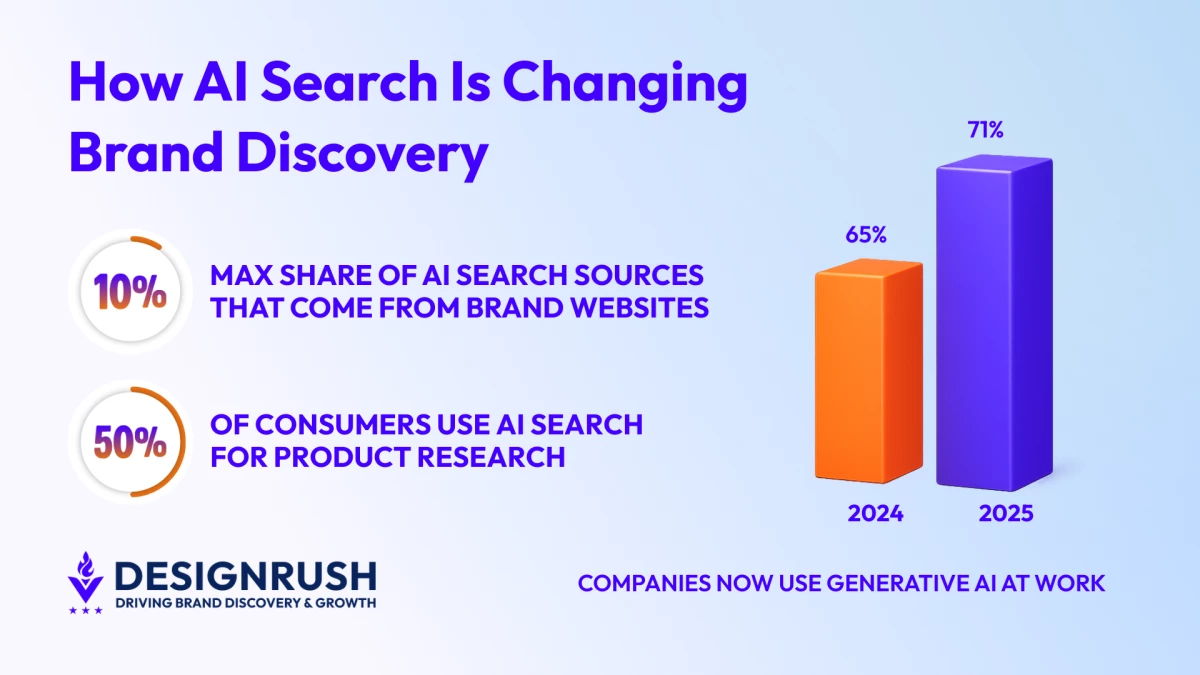
This is especially relevant given industry findings, indicating brand site content accounts for only 5% to 10% of the sources AI systems draw upon when generating responses.
“AI-powered search is shifting visibility away from owned assets toward authoritative third-party and creator-led ecosystems,” Nath says.
In other words, it’s not just search rankings that brands are vying for. They’re competing for credibility across the wider web.
The Numbers Behind AI-Driven Brand Discovery
Data suggests it’s becoming the norm to use AI-powered tools when shopping.
Up to 55% of consumers in key sectors already use AI-based search to inform purchase decisions, according to McKinsey’s “New Front Door to the Internet” report.
That same report indicates around 50% of consumers use these tools intentionally to research products and services.
Not only are many individuals quick to adopt AI, but so are organizations.
McKinsey’s 2025 State of AI report found that 71% of companies now regularly use generative AI in at least one business function, up from 65% in early 2024, showing how the technology is moving into everyday workflows.
This convergence between consumer behavior and internal adoption is changing how performance is measured.
“As AI adoption grows across both consumers and businesses, performance needs to be measured across touchpoints, not just individual channels,” Nath says.
AI Search Impact on Revenue and Traffic
AI now plays a role in how search works, and industry metrics reflect this.
McKinsey estimates that around 50% of Google searches now include AI-generated summaries, a number that could reach 75% by 2028.
Moreover, AI-driven discovery could influence as much as $750 billion in consumer spending by 2028.
This all goes to show, AI responses are expected to become even more integrated into search platforms.
As for traffic, patterns already indicate early movement.
Brands may see 20% to 50% declines in traditional search traffic, McKinsey predicts. That’s why maintaining a strong visibility strategy is key during this transition period.
All signs point to the same thing. AI tools are quickly becoming part of how people research and evaluate brands before deciding what to buy.
HubSpot breaks down the latest AI trends for marketers and how they can help transform your business:
The Risks of Relying Only on Owned Channels
Many marketing strategies still center on channels that companies fully control.
For years, brands have relied on their websites, landing pages, blogs, and SEO content to stay visible online. While those channels still matter, it’s risky to rely on them solely.
AI-driven discovery usually pulls information from several sources before offering recommendations.
When a brand’s presence exists mostly on its own platforms, it becomes harder for AI systems to pick up the credibility signals that influence consumer decisions.
That shift is already affecting how brands show up in the decision-making process.
“Brands dependent solely on owned channels face declining discoverability and reduced influence in purchase decisions,” Nath says.
That means the wider online conversation about a brand now matters just as much as the content it produces.
Why Marketers Must Expand Their Media Mix
As discovery spreads across more platforms and voices online, marketing strategies have to evolve with it.
Brands are increasingly working with publishers, creators, affiliate partners, and online communities that influence how people talk about and evaluate companies beyond their own websites.
The goal is no longer just visibility. It’s about making sure credible voices across the internet are discussing and reinforcing a brand’s reputation.
“Media strategies must expand into partnerships, PR, community platforms, and trusted external content ecosystems,” Nath says.
The modern media mix now extends far beyond paid advertising and SEO. It includes the broader network of content and conversations that shape how AI systems interpret trust.
HubSpot shows how to get your brand found in AI search results:
Why Attribution Matters in AI-Driven Discovery
As brands expand their presence across third-party ecosystems, another challenge quickly comes into focus. Understanding what actually drives results.
Traditional attribution models often focus on direct clicks or final conversions.
Those models struggle to capture the earlier stages of influence that occur during research, particularly when AI-generated answers guide consumer exploration.
“Cross-channel attribution becomes essential to measure influence beyond direct response and last-click pathways,” Nath says.
For performance teams, this means building measurement frameworks that track influence across channels rather than focusing only on the final interaction.
The video below shows practical ways to structure your site to be visible in AI search results:
How Marketers Should Adapt to AI Search
The rise of AI search does not mean traditional marketing channels will disappear. What it does mean is that the landscape where brand influence is built has expanded.
Companies that want to remain visible will need to distribute their presence across a broader ecosystem.
That presence now needs to extend beyond owned channels, into the places where people form opinions and validate brands before making a decision.
“Marketers should diversify distribution, reinforce external authority signals, and redesign measurement models for AI-driven discovery,” Nath says.
Clearly, brands must adapt fast and be flexible to change.
Otherwise, it could mean losing credibility within the networks AI platforms rely on to generate answers.
That’s why marketers must keep up with new technology demands while also maintaining a strong visibility strategy.