
Each week, our analysts track the developments reshaping organic visibility and AI discovery. Brands building search programs can partner with vetted SEO agencies for strategic implementation.
This week, Google deprecated FAQ rich results and expanded publisher controls in Google Discover.
An Ahrefs study of 1,885 pages confirmed that schema markup does not boost AI citations on any major platform.
Here are the latest updates in search this week.
FAQ Rich Results Are Gone
Google deprecated FAQ rich results on May 7, 2026, removing them from search results entirely.
For most sites, this means losing a visible content surface that helped drive clicks on informational queries.
The FAQ search appearance and Rich Results Test support will be removed in June 2026, with Search Console API support following in August 2026.
Existing FAQ structured data does not need to be removed. Other search engines may still process it, but Google will no longer use it for rich results or report on it in Search Console.
So what should teams do with existing FAQ markup?
Sites that actively maintained FAQ markup for rich result clicks should remove it from priority pages, starting with their highest-traffic informational content.
That effort is better redirected toward content depth, How-To or Article schema that Google still supports, or structured data for entity recognition.
Sites that added it incidentally can leave it in place.
Schema Markup Does Not Boost AI Citations
An Ahrefs study tracked 1,885 pages that added JSON-LD schema between August 2025 and March 2026 and matched them against 4,000 control pages.
The study found no measurable uplift in AI citations on any platform.
Treated pages showed no statistically significant gain in Google AI Mode or ChatGPT citations. Google AI Overviews showed a 4.6% decline relative to controls.
Schema markup appears on 53% of AI-cited pages, but Ahrefs attributes this to site-quality signals rather than to the schema itself.
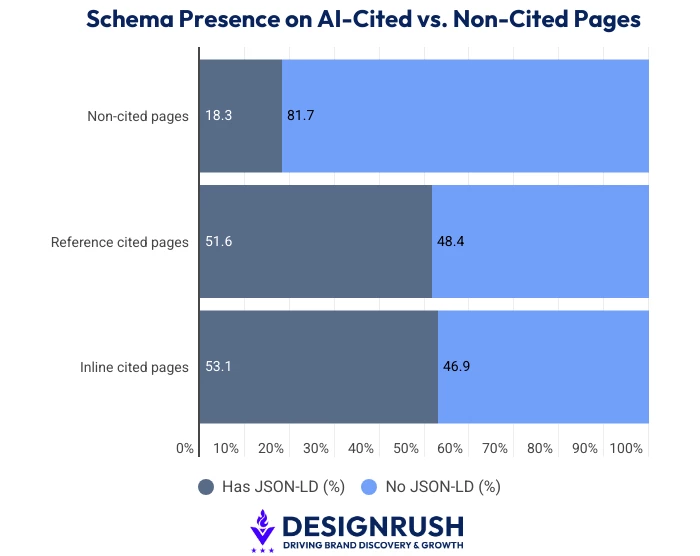
Better-maintained sites use structured data and also publish stronger content, build more links, and rank higher in organic search.
Pages outside the AI consideration set may still benefit from schema for crawlability and entity recognition.
For everything else, as GEO strategies continue to evolve, the data consistently points away from schema as a standalone tactic.
Google Gives 54 Publishers Control Over Discover Profiles
Only 54 U.S. publishers have been granted enhanced control over their Google Discover profile pages, out of 46,926 monitored by analytics service 1492.vision.
The program is invitation-only, with no public documentation on how to qualify.
The enhanced profiles include:
- Custom banner images
- A configurable links shelf
- Pinned posts
- Control over the display order of social links and content tabs
🆕New, or rather, return of the "Follow" button on Google Discover.
— Damien (andell) (@AndellDam) August 21, 2025
A Follow button next to the site name on each card in the Discover feed.
This allows you to follow the site entity, echoing the "preferred sources" option.
And especially your question @gaganghotra_ CC… pic.twitter.com/97hyjwv2Q8
Standard profiles sort links algorithmically by follower count. Claimed profiles let publishers decide the order manually.
The cohort skews toward local news. Nearly half of the 54 publishers are regional newspapers and local TV stations, consistent with Google's stated focus on supporting local journalism.
Feature adoption varies sharply by tier. Local TV stations average 2.2 configured links per publisher. National publishers average 0.6.
| Tier | Publishers | Avg. configured links |
| Local TV | 14 | 2.2 |
| Regional newspapers | 13 | 1.4 |
| National publishers | 15 | 0.6 |
| Lifestyle brands | 6 | 0.7 |
| Specialty | 6 | 0.5 |
Lifestyle brands have the highest overall adoption score but the flattest visibility trajectory, suggesting the profile is a branding surface rather than a ranking signal.
Separate data shows publishers risk losing up to 60% of Google Discover traffic as AI summaries reduce the need to click through.
That is why publishers outside the cohort should treat this period as preparation time.
Auditing sameAs JSON-LD markup and preparing a professional square banner now puts teams ahead of a likely broader rollout.
SEO Industry Insights
The schema finding lands in the same week that one of the world's largest media companies issued its starkest warning yet about search dependency.
Condé Nast CEO Roger Lynch described three consecutive years in which internal forecasts underestimated actual declines in search traffic.
"Every year, our search traffic was down more than we had forecast. So last year I told our teams, 'Assume there's no search.' You have to have your businesses planned as if search is zero," Lynch said in an interview.
He described a barbell effect within the portfolio, which includes Vogue, The New Yorker, GQ, Vanity Fair, Wired, and Pitchfork, among others.
Large authoritative brands and small niche publications are performing well. Brands caught between those two extremes face the steepest declines.
"You either need to be large and authoritative in a big category, or you need to be really nailing a specific niche where you have a loyal audience that's willing to pay," Lynch explained.
SEO expert Cyrus Shepard analyzed 54 experiments and studies to identify 22 ranking factors associated with earning AI citations.
New: AI Citation Ranking Factors
— Cyrus Maxx (@CyrusShepard) May 7, 2026
Everyone talks about AI Citations as a way to boost visibility + traffic, but what works?
To find out, I gathered every study/experiment from the past 2 years, and scored the biggest wins
22 Ranking Factors associated with earning AI citations pic.twitter.com/lPhO42NFbv
His conclusion is that top signals align strongly with traditional SEO practices, with a few tweaks.
"Win SEO, win AI citations (most of the time, with extra steps)," he noted.
A Reuters Institute survey of 280 senior media leaders across 51 countries confirms the direction. Publishers expect search traffic to fall more than 40% over the next three years.
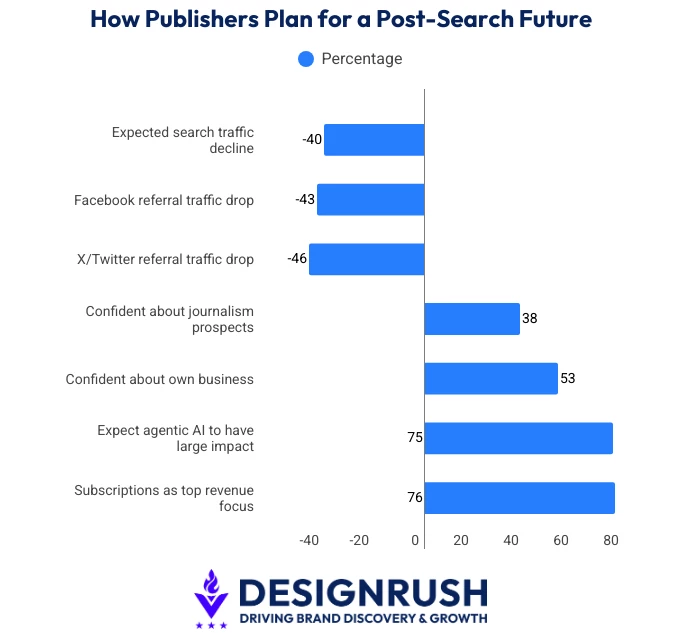
The brands best positioned are those with strong category authority or loyal direct audiences.
Three immediate priorities for this week:
- Export FAQ performance data from Search Console before June, then remove the markup from your highest-traffic pages to reduce reporting noise.
- Claim your sameAs JSON-LD now and prepare a professional square banner. Publishers with complete profiles will have a head start when the Discover pilot scales.
- Shift GEO investment from schema to content authority. Audit pages with high citation potential but thin original analysis and prioritize those for deeper editorial work.
Google is removing legacy signals and confirming that schema markup, one of the most widely adopted GEO tactics of 2025, failed to deliver measurable results.
SEO data for 2026 reinforces why authority compounds where schema falls short.
Our Take: Is Content Authority the Only GEO Signal Left?
For pages already in the AI consideration set, the Ahrefs data suggests that content authority may be the only GEO signal left.
We think the more uncomfortable implication is what happens to the brands that optimized for schema instead of authority.
They spent resources on a signal that correlates with citation but doesn't cause it, while the gap between cited and uncited content widened around them.
The Lynch directive to plan for zero search traffic is the logical endpoint of that gap.
Brands that built direct audiences were never dependent on Google referrals to begin with, which is why citation rates aren't their primary concern.
GEO is creating a strategic divide between brands with owned audiences and brands still waiting for referrals.
For analysis on Google's AI Mode citation updates, the Search Console impression fix, and how to prepare sites for AI agent traffic, check out last week's SEO roundup.
Which comes first on your roadmap, building content authority or optimizing for AI retrieval?
These leading SEO agencies help brands stay visible as AI systems change which content gets cited and which gets filtered out.