
OpenAI is set to acquire Python toolmaker Astral as it looks to strengthen its position in the artificial intelligence coding tools market and compete more directly with Anthropic, Reuters reported.
The company plans to integrate Astral’s tools into Codex, its AI-powered software engineering agent, which already has more than two million weekly active users.
Since the start of 2026, Codex usage has tripled, while overall activity has increased fivefold.
Taken together, the numbers point to a development environment where AI is now part of everyday engineering work.
And, as code generation speeds up, testing, review, deployment, and rollback are starting to carry more weight in the delivery process.
However, Anand Ashok, founder of award-winning web and software development studio Quixta, pointed to pressure building on review and release processes as AI-generated output increases.
“When AI agents participate in planning, code generation, and verification throughout the development lifecycle, the system architecture has to support continuous iteration at machine speed to prevent system failures,” he said.
“Tightly coupled or right systems resist AI-driven changes because the model cannot safely modify one component without creating cascading failures elsewhere.”
More Code, More Demand on Delivery Systems
The increase in AI-generated output is putting more weight on the systems surrounding code delivery and maintenance.
AI is estimated to drive productivity gains of 30% to 35% across the software development life cycle, according to Deloitte.
That increase changes where engineering teams spend time writing first drafts of code, with validation, dependency management, observability, and integration taking on more weight.
Astral’s tooling already sits close to those parts of the workflow through Python package management, linting, and formatting.
Incorporating those systems into Codex pulls AI closer to the mechanics of software delivery.
Ashok highlighted execution pressure as validation, dependency management, observability, and integration gain importance.
“The highest-risk area is accepting AI-generated code without reviewing its structural implications,” he said.
“AI tools optimize for functional correctness, but they operate within a narrow context without accounting for system-wide constraints or long-term maintainability.”
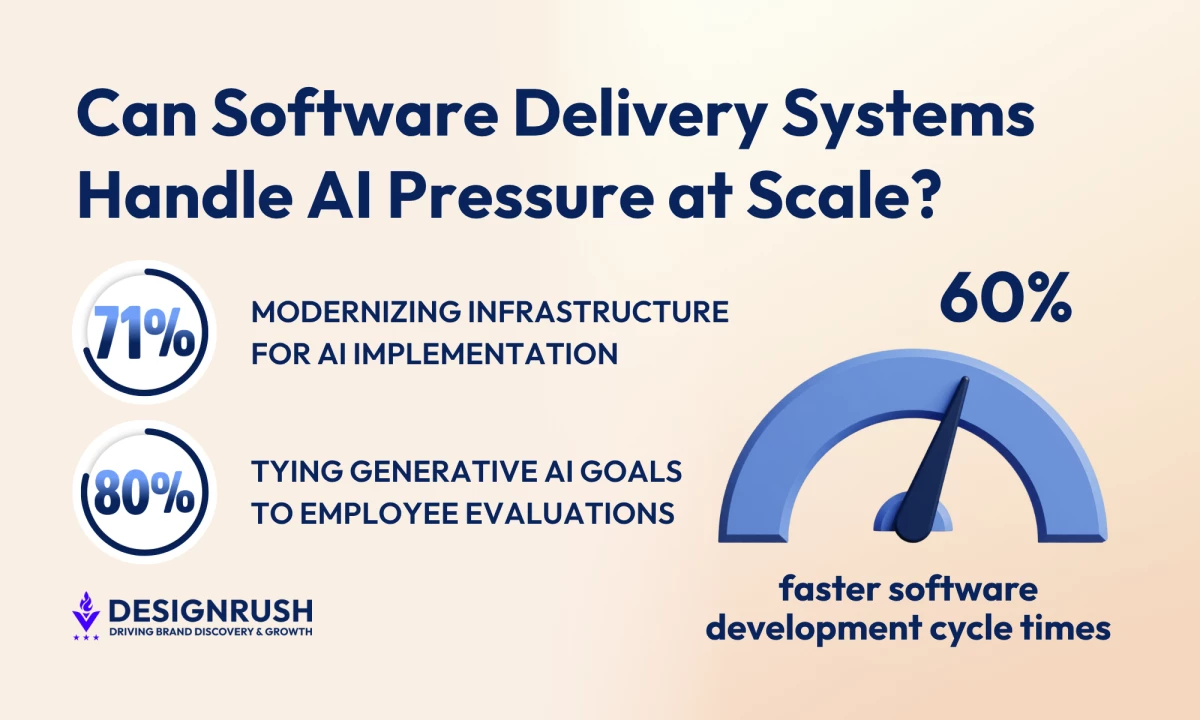
AI agents cut software development cycle times by as much as 60% and reduced production errors by half for a major retailer, PwC reported.
Faster output sounds attractive, at least until teams hit operational bottlenecks.
More generated code increases pressure on CI/CD pipelines, infrastructure monitoring, rollback planning, and testing coverage.
GitClear’s 2025 analysis of more than 211 million changed lines of code found code churn increased from 5.5% to 7.9%, a sign that maintainability may be getting worse as AI-generated code volumes rise.
Separately, CodeRabbit found AI-assisted pull requests contained roughly 1.7x more issues than human-written code, according to data cited by Panto.
"The data reinforces what many engineering teams are already experiencing in production," says Ashok.
"AI can accelerate code generation, but it also increases the burden on review, testing, and long-term maintenance. The problem isn't getting code written quickly; it’s ensuring the code holds up once it interacts with real systems, dependencies, and deployment environments."
And teams that fail to strengthen those systems risk piling instability into production faster than engineers can catch it.
This has led to some teams questioning whether AI belongs in the product at all.
“GitClear’s 2025 analysis of 211 million changed lines of code found a sharp rise in duplicated code and a continued decline in refactoring activity, raising concerns about long-term code quality as AI-assisted development scales,” Ashok said.
“If observability and testing are weak, AI amplifies the problem instead of fixing it.”
Furthermore, 71% of surveyed organizations are modernizing infrastructure to support AI implementation, Deloitte reported.
But that number also reflects how much of the work now sits in upgrading the systems around development rather than just adding AI features.
Beyond adding AI features to applications, engineering teams are rebuilding internal systems to handle:
- Larger workloads
- Faster deployment cycles
- More tooling that increasingly runs inside the development environment
That’s why reliability engineering, infrastructure automation, and runtime visibility are becoming more demanding requirements.
“The conversation has moved well past whether teams should use AI tools,” Ashok said.
“It now comes down to whether engineering systems were ever designed to handle this level of continuous generation, testing, and deployment in the first place.”
Engineering teams are being evaluated more directly on reliability under faster delivery cycles.
Top performers see gains between 16% and 30% in productivity, time to market, and customer experience, while software quality improves between 31% and 45%, McKinsey reported.
“Once AI enters the development loop, performance stops being a single-axis measure,” Ashok said.
“It becomes a system-level problem where speed, stability, and recovery time all sit in the same evaluation cycle, and most teams are not set up for that yet.”
McKinsey also found that around 80% of top-performing organizations tie generative AI goals directly to evaluations for product managers and developers.
That changes how engineering performance gets measured, as output alone carries less value if teams can’t maintain stability, reliability, and deployment quality under heavier delivery pressure.
What This Means for Engineering Teams
Astral’s integration into Codex points to a development cycle where AI tools are becoming part of the infrastructure developers rely on every day.
The challenge for engineering teams now is keeping systems scalable and reliable as development speed accelerates.
"Treating AI-generated code as a first draft that is subject to the same review standards applied to any code contribution is the most effective operational approach," Ashok says.
"Setting mandatory quality gates, automated testing thresholds, and architectural review checkpoints from project initiation is the most effective practice to sustain long-term scalability and reliability."
The companies that handle this well will build workflows, testing systems, and deployment practices that assume AI-generated output is already part of the stack.
Faster product updates, shorter development cycles, and tighter delivery expectations are becoming part of the client conversation as AI-native tooling moves further into software workflows.
AI is now also influencing how software is discovered and evaluated before users ever reach a product.
That puts more pressure on the systems surrounding development, especially QA, infrastructure management, deployment review, and long-term maintenance.
"In short, teams that successfully integrate AI tend to foster strong collaboration between developers, platform teams, and security specialists, invest in training programs, and establish communities of practice where engineers share insights," Ashok adds.
"Organizations that allow AI adoption to emerge purely through grassroots experimentation often struggle to scale its benefits."
Speed will carry less value if releases introduce instability once the code reaches production.