
Technical debt has long been associated with a codebase nobody touched for five years, a startup that shipped fast and never came back to clean things up, or a team that kept saying "we'll refactor it later" until later became never.
But what's showing up now is different.
The debt is forming inside teams that are well-funded, moving fast, and using the most current AI tools available.
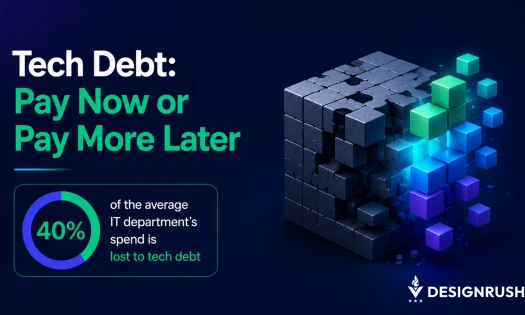
AI-assisted development is accelerating delivery. But when it’s deployed without operational discipline, these tools build technical debt that compounds over time.
YouTuber, Imran Gardezi, examines how AI-generated code contributes to technical debt when speed outpaces engineering discipline:
The Productivity Promise Faces Scrutiny
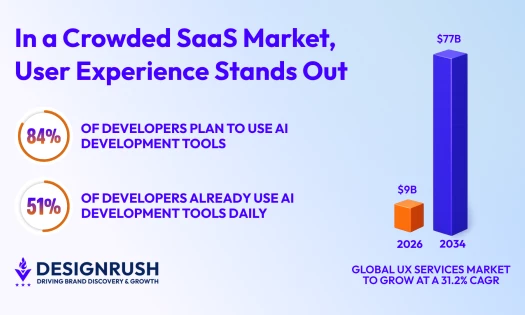
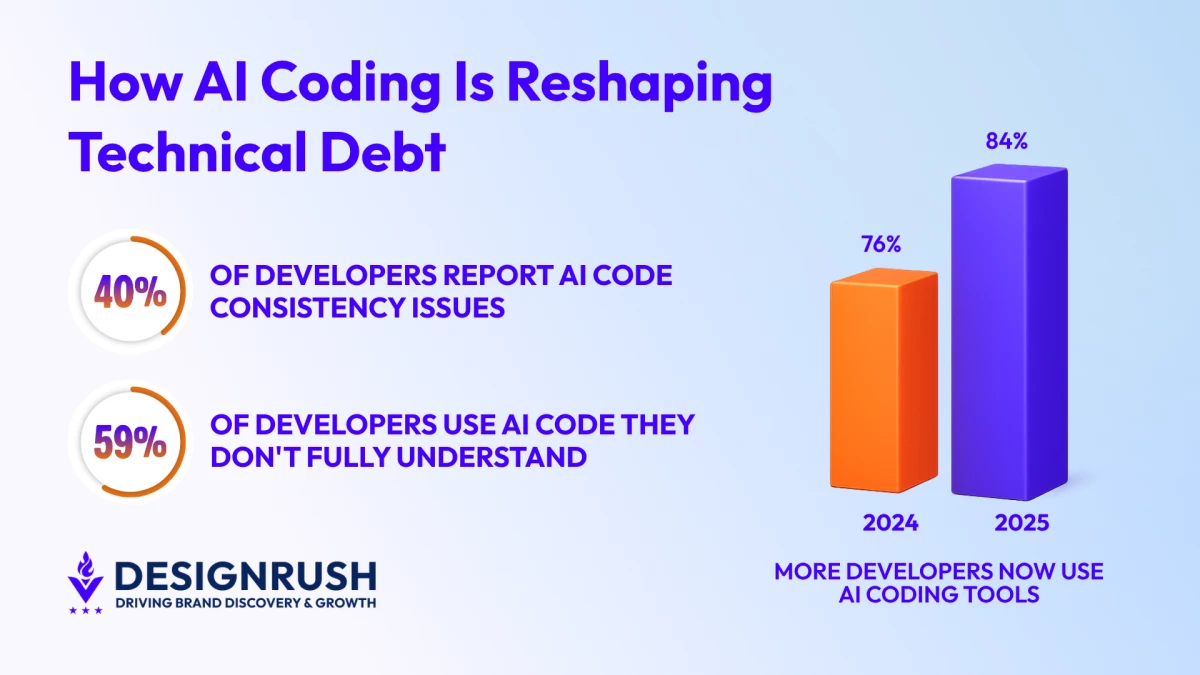
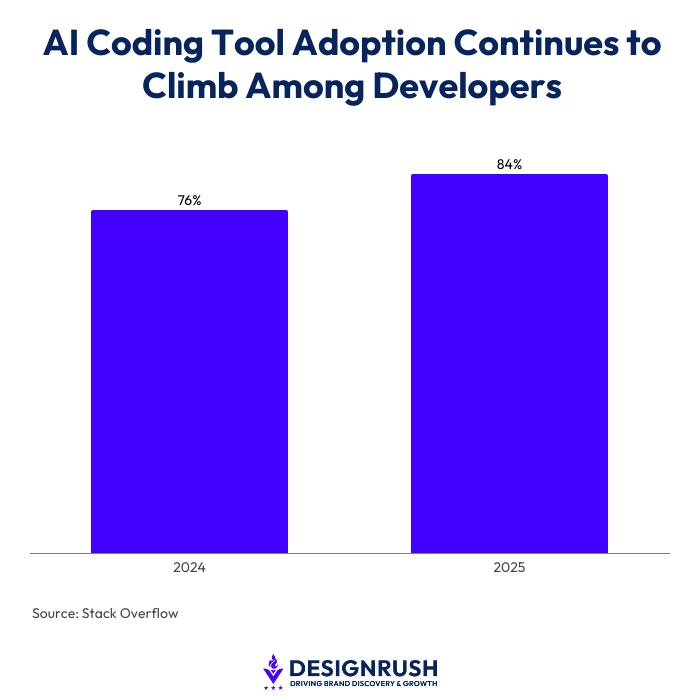
The adoption numbers are significant as 84% of developers now use or plan to use AI coding tools, up from 76% the year prior, according to the Stack Overflow Developer Survey 2025.
Furthermore, approximately 41% of all committed code across teams is now AI-assisted.
However, whether AI-assisted development contributes to productivity is a different question.
Case in point, experts found a 39 to 44% gap between perceived and actual productivity among experienced developers working within mature, complex codebases, as reported by Codebridge.
Here, developers felt approximately 20% faster, but measured task completion time was 19% slower than that of developers working without AI assistance.
LinearB's 2026 Software Engineering Benchmarks Report, as mentioned in ByteIota, analyzed 8.1 million pull requests across 4,800 teams.
It found that AI-generated code contains 1.7 times more issues per pull request than human-written code, and that technical debt increases 30 to 41% following AI tool adoption.
Workflow Inconsistency Is the Root Cause
The debt accumulating in AI-assisted codebases is not primarily the result of bad tooling. It’s the result of inconsistent workflows applied to those tools.
Roughtly 40% of developers cite inconsistency with team standards as a top frustration with AI-generated code, according to Qodo State of AI Code Quality, 2025.
Meanwhile, 65% identify missing context as the leading barrier during refactoring.
When different developers use different prompting styles, pull from different AI tools, and apply different review thresholds, the resulting codebase becomes a reflection of multi-system reasoning with no singular point of origin.
Each fragment may function in isolation, but together they create systems that are increasingly difficult to maintain, extend, or audit.
For example, 45.1% of 567 agent-assisted pull requests required human revisions to align with project-specific standards, according to Augment Code.
Qodo CEO, Itamar Friedman, explains why consistent workflows, review standards, and contextual understanding are critical to maintaining code quality in AI-assisted development:
Code Duplication Is Accelerating Across the Industry
One of the most measurable consequences of undisciplined AI-assisted development is the rise of code duplication.
GitClear AI Copilot Code Quality 2025 report analyzed 211 million lines of code changes drawn from repositories owned by Google, Microsoft, Meta, and enterprise organizations spanning 2020 to 2024.
The findings were hard to stomach as duplicated code blocks appeared eight times more frequently in 2024 than in prior years.
And for the first time in the dataset's history, copy-pasted code outpaced refactored or moved code.
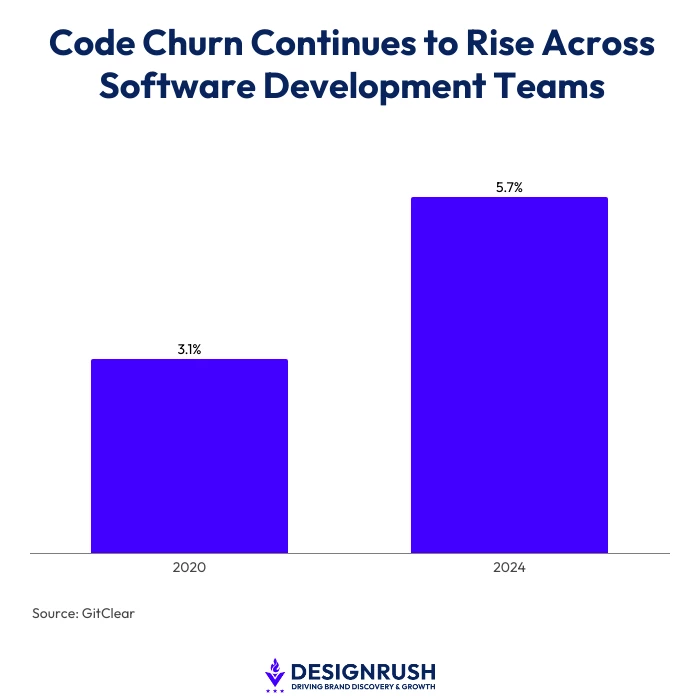
Code churn climbed from 3.1% in 2020 to 5.7% in 2024. That's code being revised within two weeks of being written, which is usually a sign that it wasn't quite right the first time.
A December 2025 DevOps.com report by GitClear founder Bill Harding describes the trend as "AI-induced tech debt," noting that AI tools excel at adding code quickly but systematically undermine long-term code health.
When duplicated code requires a schema change or security patch, every copy must be updated independently, and each copy becomes an independent divergence point for future failures.
Undocumented Decisions Create Structural Blind Spots
Deploying code without the author understanding the design decisions behind it makes it impossible to write code accurately.
Qodo's documentation research found that every undocumented decision forces engineers to reconstruct system history before taking action, slowing throughput and increasing the risk of regressions introduced through misunderstood boundaries.
In organizations where AI adoption has proceeded at uneven maturity levels across teams, the result is structural divergence.
One team documents API contracts and invariants, another leaves them implicit, and downstream services develop dependencies on constraints stored nowhere.
JetBrains explores why developers must critically evaluate AI-generated code to preserve context, maintain quality, and avoid costly knowledge gaps over time:
Review Processes Are Not Keeping Up with Output Volume
AI tools were supposed to help improve performance and efficiency.
Yet key delivery metrics, including lead time, deployment frequency, change failure rate, and mean time to recovery, have not improved alongside increased AI tool adoption, according to the 2025 DORA report.
Teams with the fewest change failures are also the least likely to use AI-assisted development tools.
Pull requests per developer increased 20% with AI assistance, but incidents per pull request increased 23.5%. Unmanaged AI-generated code drives maintenance costs to four times traditional levels by year two.
An empirical study, arXiv, "Debt Behind the AI Boom", tracked 304,362 verified AI-authored commits across 6,275 public GitHub repositories.
Unresolved technical debt introduced by AI tools grew from a few hundred issues in early 2025 to over 110,000 surviving issues by February 2026, per arXiv’s Debt Behind the AI Boom report.
LuxaK explores why maintaining software quality requires review processes that can keep pace with the growing volume of AI-generated code:
The Discipline Gap Is the Real Variable
Forrester Research 2025, via KBI.Media predicts that technical debt for 75% of organizations will reach a moderate or high level in 2026, driven by AI usage in software development without adequate safety controls.
ByteIota/LinearB 2026 shows that the development teams reporting the best outcomes share three practices:
- Tracking AI-generated code separately with specialized quality gates
- Measuring quality and speed together rather than output volume alone
- Enforcing governance standards configured to catch the predictable failure modes of AI tooling before code reaches the main branch.
Technical debt has always followed decisions made under pressure. What is new in 2026 is that the pressure is invisible. AI tools reduce the friction of writing code without reducing the complexity of maintaining it.
The debt accumulates not in a legacy system, but inside a fast-moving, modern development environment where the speed of delivery has outpaced the discipline of reviewing, documenting, and understanding what is being built.