
For many SaaS companies, the biggest budgeting conversations happen before launch.
Teams spend months discussing product development, design, engineering resources, infrastructure requirements, MVP timelines, feature prioritization, and go-to-market strategies.
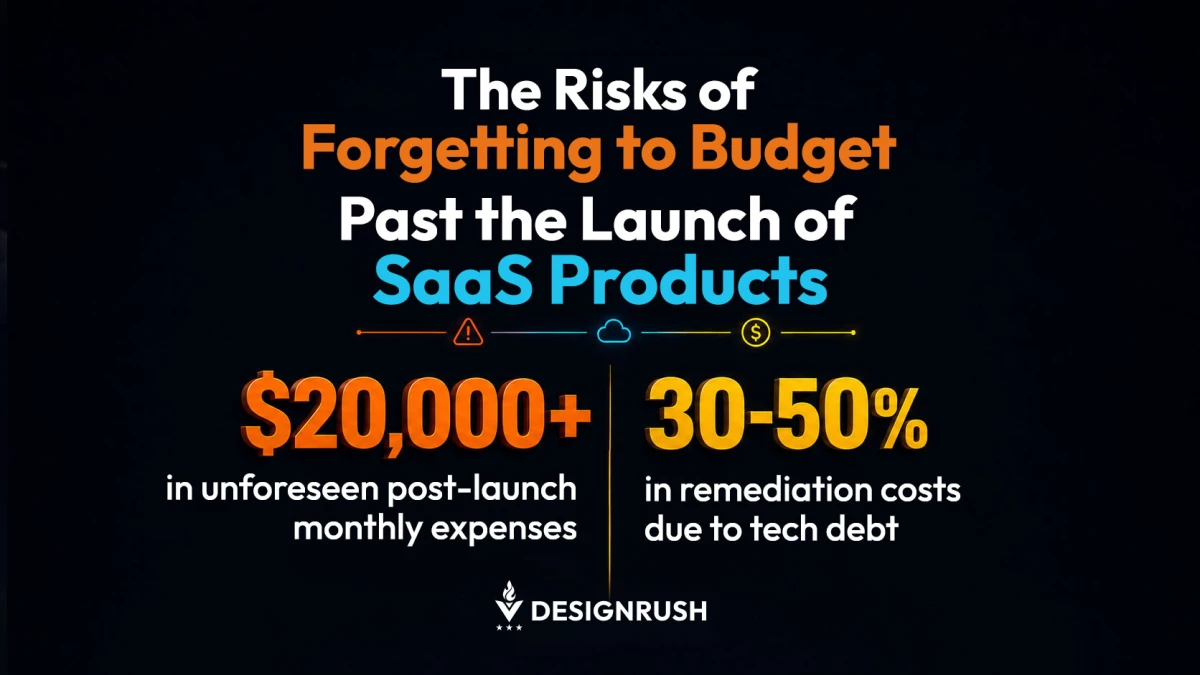
But many forget the ongoing operational investment for after the product goes live, which is one of the most overlooked SaaS costs.
At Essential Designs, we regularly work with organizations that underestimate what happens after deployment.
The software launches successfully, users begin onboarding, and momentum builds. Then the reality of maintaining and evolving a live product begins.
Because software is not a one-time project.
It is an ongoing operational system that requires continuous attention, improvement, and investment.
Launch Is The Beginning Of The Operational Lifecycle
Many SaaS companies unintentionally budget as though development ends at deployment.
In reality, launch is usually the beginning of a much longer operational cycle that includes:
- Ongoing maintenance
- Security updates
- Infrastructure scaling
- Performance optimization
- Customer support improvements
- Feature iteration
- UX refinements
- Third-party integration management
- Compliance updates
- Technical debt management
Many companies fall into this budgeting trap because launch feels like the finish line.
However, the operational demands of a SaaS product often increase after launch rather than decrease.
As user expectations evolve, products must evolve alongside them.
New customer requests emerge. Infrastructure requirements change. Security threats evolve. Integrations require maintenance. Competitors continue releasing new features.
That requires ongoing investment.
The Cost Of Neglect Is Usually Higher
When post-launch budgets are underestimated, teams often begin delaying important operational work in order to focus on immediate business priorities.
Initially, the consequences may seem manageable:
- Minor bugs remain unresolved
- Performance issues are tolerated
- Feature requests are pushed into future releases
- Infrastructure improvements are delayed
- Technical debt begins accumulating
Over time, however, these issues rarely remain isolated as small performance problems become larger user experience issues.
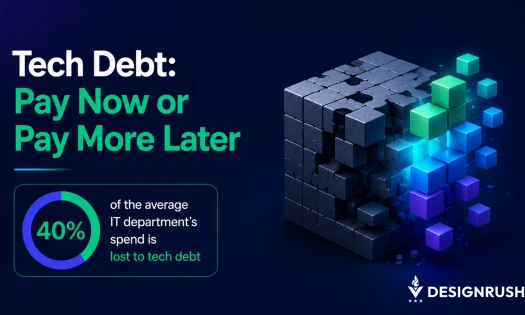
Technical debt makes future development slower and more expensive. Teams begin creating manual workarounds to compensate for system limitations.
These quickly lead to increases in customer frustration and a slowing down of product innovation.
We often see companies reach a point where they are forced to invest significantly more money fixing accumulated problems than they would have spent maintaining the product proactively.
In many cases, organizations end up rebuilding systems, replacing infrastructure, or redesigning workflows that could have been improved incrementally over time.
And that’s a problem since the cost of neglect is often far greater than the cost of consistent maintenance.
In fact, the tech debt associated with this neglect costs companies $2.41 trillion a year in the U.S. alone and would require $1.52 trillion to fix, according to data from Accenture.
SaaS Products Need Long-Term Operational Thinking
One of the biggest differences between successful SaaS products and struggling ones is operational planning.
The strongest software companies typically treat product development as an ongoing business function rather than a fixed project.
That mindset changes how budgets are structured. Instead of planning only for launch, companies begin planning for:
- Scalability
- Long-term support
- Infrastructure growth
- Product iteration
- User feedback cycles
- Security evolution
- Operational reliability
These investments are often less visible than launch milestones because they happen behind the scenes.
However, they directly impact product performance, customer satisfaction, operational efficiency, and the company's ability to grow without disruption.
Organizations that adopt long-term operational thinking are often able to respond more effectively to growth opportunities because they have already planned for the resources required to support them.
Customer Expectations Continue To Rise
Modern SaaS users expect products to continue improving over the course of their service life:
- Faster onboarding experiences
- More reliable performance
- More consistent product updates
- Better cross-platform functionality
- More responsive interfaces
- More reliable integrations
While these expectations used to be considered competitive advantages, they are now baseline requirements.
That’s why when products stagnate after launch, users notice quickly.
Customers compare products not only against direct competitors but also against the best digital experiences they encounter elsewhere.
And as expectations rise, maintaining a product becomes about more than fixing bugs.
It becomes about maintaining competitiveness.
Post-launch investment helps organizations improve retention, reduce customer frustration, respond to market changes, and continue delivering value long after the initial release.
Planning For Life After Launch
One of the most valuable exercises SaaS leaders can undertake is budgeting for the first year after launch with the same level of attention they give to pre-launch development.
This means setting expectations around:
- Ongoing maintenance
- Product improvements
- Infrastructure growth
- Security updates
- Customer-driven enhancements
- Operational support
Launch may be a major milestone, but it is rarely the end of the journey.
More often, it is the point where the real operational lifecycle begins.
Because in SaaS, one of the most important budgets is the budget required to keep the product improving after it goes live.