
Designli Impact Week Takeaways:
- Customer-obsessed companies grow 41% faster in revenue, 49% faster in profit, and retain 51% more customers than others.
- SaaS businesses that ignore early bottlenecks risk high churn, poor UX, and technical debt that slows growth and frustrates users.
- Designli’s Impact Week helps founders fix product issues by focusing on real user feedback and clear business goals.
In 2024, customer-focused organizations saw 51% better customer retention than their competitors, 41% faster revenue growth, and 49% faster profit growth.
Yet U.S. consumers experienced their worst service in a decade because companies struggled to keep up with the scale of changes needed to address user needs, said Rick Parrish, Forrester’s VP and research director.
The same goes for many SaaS founders, who only realized their products were off-track once churn rose or growth stalled.
That’s why spotting these issues early is key to scaling, meeting user needs, and retaining customers.
Editor's Note: This is a sponsored article created in partnership with Designli.
The Top 5 Signs a SaaS Founder Needs Help
Designli runs a one-week intensive called Impact Week for SaaS Founders to fix common product bottlenecks during concept development.
It helps diagnose common issues through a UX/UI audit, a codebase review, and a hard look at business and tech alignment.
After working with dozens of SaaS teams on these audits and reviews, Designli saw the same five red flags that signal it’s time for a strategic reset:
- The team codes without a plan or understanding of the bigger picture. Features ship, but user engagement is low, and feedback is vague.
- Users quit because the UX/UI is confusing or feels cheap.
- The business grows, but tech debt slows development and causes bugs.
- Development happens in a black box. Without a roadmap, you don't know what's going on, so you react instead of leading.
- Product vision is unclear. Decisions happen week-to-week with no long-term plan.
These problems get worse when founders build too soon without validating assumptions.
Keith Shields, CEO of Designli, noted how many invest heavily in features based on gut feelings or internal brainstorming instead of real user feedback.
That approach creates bloated products, scattered priorities, and costly technical debt.
Hypothesis-Driven Product Design
Designli’s solution uses a Hypothesis-Driven Methodology, where every feature is tied back to a business goal, a measurable metric, and a clear hypothesis.
“Impact Week helps bring this structure to the product process, shifting focus back to what truly matters: building based on evidence, not assumptions,” Shields added.
To show founders where they went wrong, Designli walks them through the product from the user’s perspective. This exposes pain points, inconsistencies, and missed opportunities.
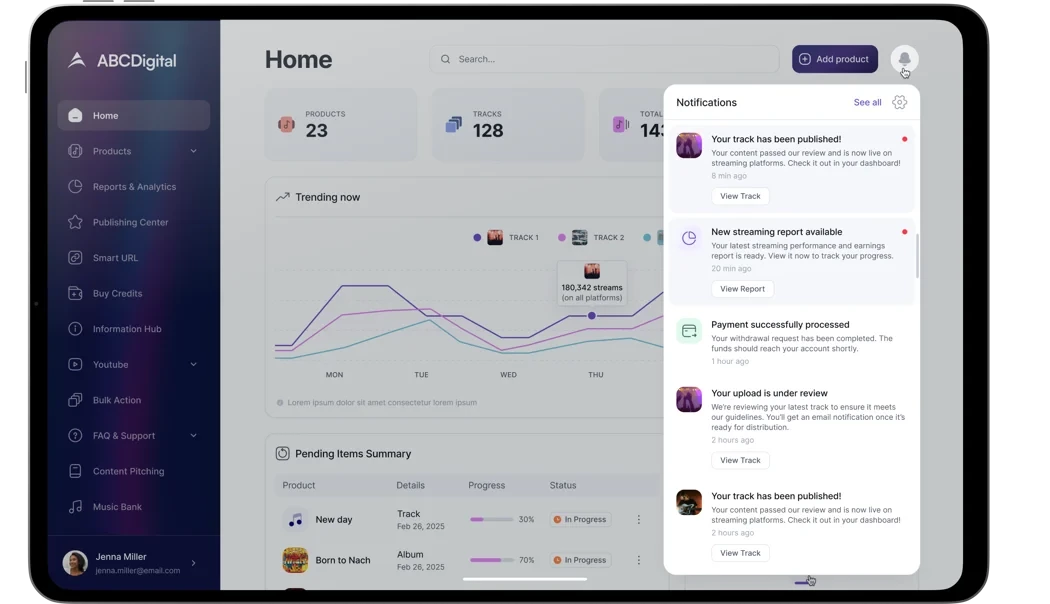
For example, ABC Digital struggled with a clunky, outdated interface that complicated an already complex process. While it needed a cleaner, more responsive experience, it didn’t know where to start.
Designli helped clarify ABC Digital’s business goals and user needs through a series of creative workshops during Impact Week.
Mapping the whole journey, the team pinpointed key workflows and documented the status and required improvements.
The whole process involved Impact Week’s structured, repeatable framework:
- Conducted a comprehensive UX/UI audit to identify usability and functionality improvements
- Designed intuitive interfaces that align with the existing brand identity
- Improved overall user experience through streamlined design and enhanced functionality
- Developed a clickable prototype to simulate the final product
- Enabled stakeholders to navigate the prototype, offer feedback, and refine the vision before development
“Impact Week isn’t just for troubleshooting; it’s for founders who want to move forward with purpose and confidence,” Shields noted.
---Copy-content-large-webp.webp "Designli’s Impact Week Turns Messy SaaS Teams Into Focused, User-Led Machines | To View an Enhanced Version of This Graphic, Visit: Designli")
Structure Meets Founder Mindset
What made ABC Digital’s turnaround possible was Impact Week’s structured, repeatable process:
- Product Intake & Discovery: Identify business goals, user personas, and product challenges
- UX/UI Audit: Assess usability, interface quality, and overall user experience
- Codebase Review: Evaluate architecture, scalability, and technical problem areas
- Story Point Sizing: Break down key features and estimate effort using the Hypothesis-Driven Methodology
- Action Plan & Roadmap: Deliver a tailored report outlining gaps, quick wins, and a clear strategic and technical path forward
And while this framework does give founders a clear direction, it works best when the right mindset is in place.
According to Shields, the founders who benefit most from this are willing to hear hard truths, even when they challenge their assumptions.
“They are willing to iterate based on real user insights and client behavior, which we uncover through our Hypothesis-Driven Methodology. They’re eager to build intentionally rather than quickly, and often seek clarity, whether starting from scratch or trying to untangle a product mid-build.”
Founders who benefit most also demonstrate these qualities:
- They have a collaborative mindset
- They provide context, input, and clear direction throughout the process
- They’re ready to take action when the time comes
- They focus on aligning their roadmap with long-term growth
Founders who commit to this process improve their chances of building something that lasts.
This is the foundation behind Impact Week, which gives founders practical tools to test ideas, find issues, and confidently plan growth.