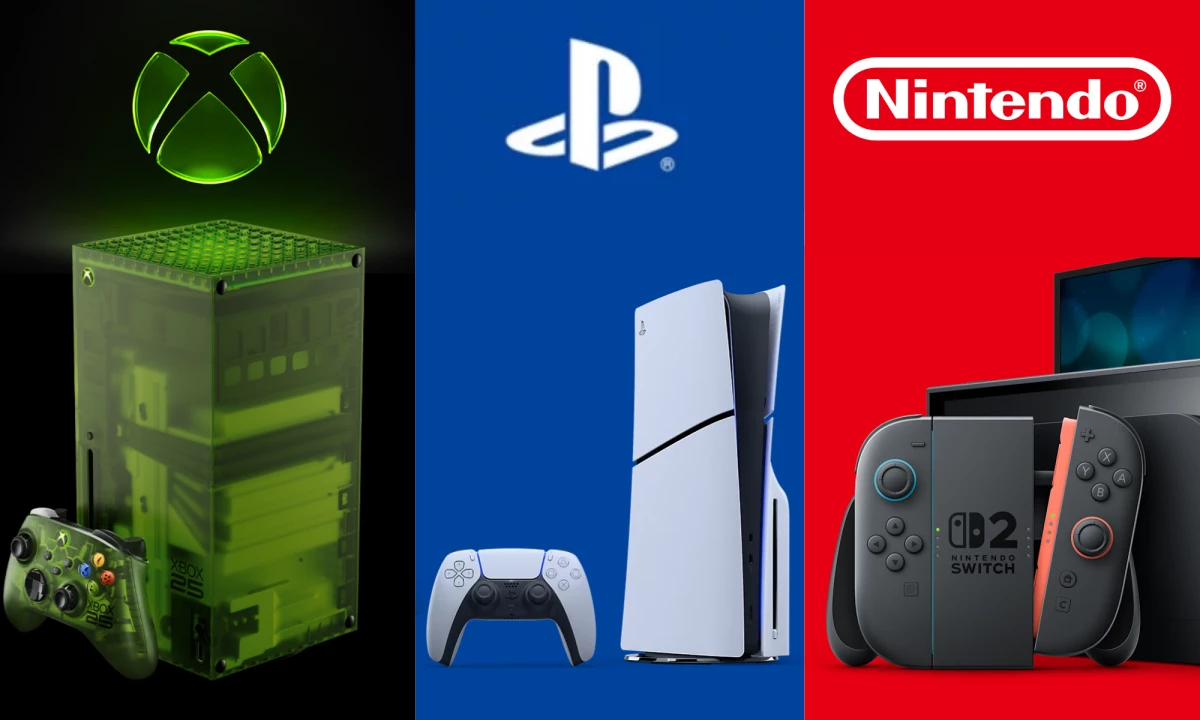

Microsoft announced 4,800 job cuts on July 6, and Xbox is absorbing 3,200 of them, roughly one-fifth of the gaming division.
These cuts are the largest in Xbox's history and come just months into the tenure of CEO Asha Sharma.
She took over from Phil Spencer in February, revived the green logo, and pledged a reset.
On the other hand, PlayStation is ending physical disc production for new games.
Nintendo, meanwhile, keeps pulling sustained profit from franchises that never stop selling.
All three are answering the same market pressure from very different angles, which shows the console wars have not ended.
Instead, they have become a contest over which business model can hold a player's attention and spending for the next decade.
Xbox Zeroes In on Six Franchises
Sharma laid out the plan in an internal memo she then posted on X.
Xbox's new model concentrates on six flagship franchises: Halo, Gears of War, Forza, Fallout, Call of Duty, and The Elder Scrolls.
Money and attention go to these titles, and management layers get cut to five at most.
Game Pass gets a new job too, keeping players inside the Xbox world between releases.
This is an important email I sent today to all employees at XBOX:
— ASHA (@asha_shar) July 6, 2026
Team,
We are beginning the most significant restructure in XBOX history. After careful consideration, I've made the difficult decision to reduce our team by approximately 3,200 throughout FY27. This will include…
Microsoft itself is not hurting for money. In Q3 FY2026, net income hit $31.8 billion, up 23% year over year.
This kind of growth is what makes gaming stand out, since a parent this profitable has little reason to keep carrying a division that's losing ground.
Xbox spent more than $20 billion over five years while revenue slipped by nearly $500 million.
Money is only half the problem, though, since the brand's recent messaging made the slump harder to ignore.
The 2024 "This Is an Xbox" campaign called any screen that could stream Xbox games an "Xbox," and it angered fans and employees alike.
Critics said it undercut the reason to buy the hardware that Xbox's console fans care most about.
Retiring the initiative was one of Sharma's first moves, and a Microsoft spokesperson said she killed it because "it didn't feel like Xbox."
D.A. Davidson analyst Gil Luria told CNBC the gaming business has become "almost irrelevant" to Microsoft.
Recent Xbox titles also drew mixed reactions from fans who felt the games had drifted from what made them popular.
The six-franchise focus is Sharma's answer to both problems at once.
Sony Goes Digital, Nintendo Stays the Course
Sony and Nintendo are making moves of their own, but in opposite directions.
On July 1, Sony said it will stop producing physical discs for all new PlayStation games starting January 2028.
Important updates:
— PlayStation (@PlayStation) July 1, 2026
News on physical discs for new games - https://t.co/BzZODXdWGY
News on PlayStation Store on PS3 and PS Vita - https://t.co/ev3mN6wj14pic.twitter.com/PWXTZGHAh6
After that, new games will sell only in digital form, through the PlayStation Store or at retailers.
Sony called the change a "natural direction" as players' preference for digital outpaces physical discs.
Its own data backs the move, with digital at 85% of full-game sales on PS4 and PS5 in the FY2025 Q4 results.
The decision still drew backlash from players who care about physical ownership, resale rights, and offline access.
Sony also stepped back from live-service games after several multiplayer projects failed.
It kept its reputation on a tighter slate of single-player exclusives.
Nintendo sits in a different place entirely.
The Switch 2 sold 3.5 million units in its first four days and neared 20 million worldwide by March 2026.
This makes it the fastest-selling console in Nintendo's history.
Nintendo's model runs on evergreen franchises like Mario, Zelda, and Pokémon, which keep selling years after launch.
This approach keeps it clear of the boom-and-bust cycle hitting rivals Xbox and PlayStation.
Nintendo doesn't need to restructure because it never over-expanded. The IP does the retention work.
Gaming's Diverging Models
Xbox's six-franchise plan points its marketing spend at fewer titles, with far more behind each one.
Its first big test is Halo: Campaign Evolved, a remake of the 2001 original, out on July 28.
Sony's move to digital strips physical retail advertising out of new launches after January 2028.
Any brand with deals tied to in-store activations, box art, or physical bundles should review its contracts now.
As physical retail fades as a launch stage, transmedia is where the growth moves, and Xbox has already proven it works.
Prime Video's "Fallout" series, drawn from Xbox-owned Bethesda's games, sent new players back to the franchise years after launch.
Minecraft, also under Xbox, has one of the widest cross-media footprints in gaming.
Sharma's six-franchise focus assumes a smaller, more popular slate is easier to carry across TV, film, and merchandise in the same way.
The sharper signal for marketers is the physical-ownership thread in both the Xbox and PlayStation stories.
The backlash came from the same core fans, players who buy games to keep and treat collecting as part of the hobby.
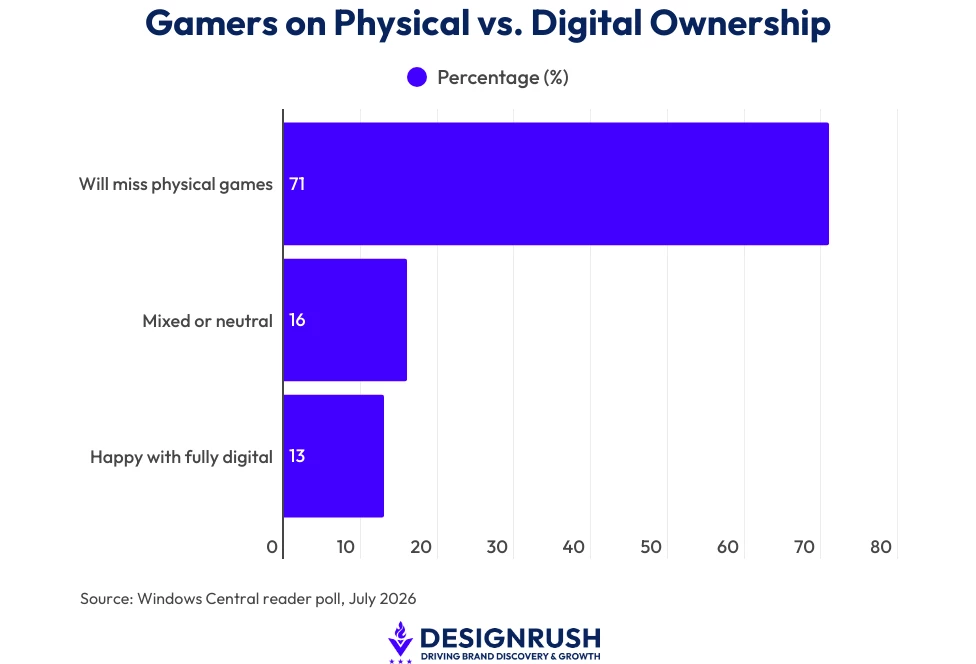
A Windows Central poll of 1,577 gamers found most were not ready to give up physical games.
Treating them like mobile players or digital-native subscribers misreads the room.
Nintendo has understood this fact for decades.
Fans actively collect its merchandise, from Mario figures to Pokémon cards, and stay invested between releases.
Nintendo still sells Switch 2 games in both formats, though since May 2026, physical copies cost $10 more than digital.
Players paying the premium are those who believe that ownership is still worth it.
Here are three observations from the gaming industry's current reset that apply to any brand or agency managing platform or portfolio complexity:
- Map your gaming partnerships to platform before 2028: Each platform's business model shift affects co-op budgets, placement deals, and community activations on a different timeline.
- Physical and digital gaming audiences respond differently to the same campaign: The backlash data from both Sony and Xbox this year makes this split visible and worth planning around.
- Franchise merchandise functions as a retention channel: Nintendo's merch successfully keeps fans emotionally invested between releases.
The platform with the most durable IP, the clearest audience relationship, and the most flexible monetization model will define gaming's next era.
Our Take: Which Gaming Giant Has the Right Long-Term Model?
The strongest long-term model is the one that keeps earning off the same characters for decades, well past any console cycle.
We think Nintendo already has it, and the Switch 2's record sales are just the latest proof.
We also see that Xbox is finally moving the right way, reviving the green logo, and shipping a transparent Series X that fans love.
The reset is earning Sharma points, and narrowing to six franchises gives Xbox something to grow from.
Sony is following its own data, but the backlash shows how much players hate losing the choice.
This behavior-versus-sentiment gap is Sony's to manage now.
Nintendo, meanwhile, keeps cashing in on cartridges, merch, theme park admissions, and movie tickets from characters it has run for 40 years.
This is the machine that Xbox and Sony are still chasing.
Any brand with gaming partnerships needs an agency that reads how these model changes rewrite the brief.
Explore these top digital marketing agencies in our directory.