
SEO Takeaways:
Following Google’s guidelines isn’t enough. Without technical audits and context, well-meaning SEO can still fail.
Metrics like crawl rate, time to first byte, and server log insights matter more than rankings or backlinks alone.
Technical SEO is the foundation of discoverability and long-term search performance, and most brands don’t go deep enough.
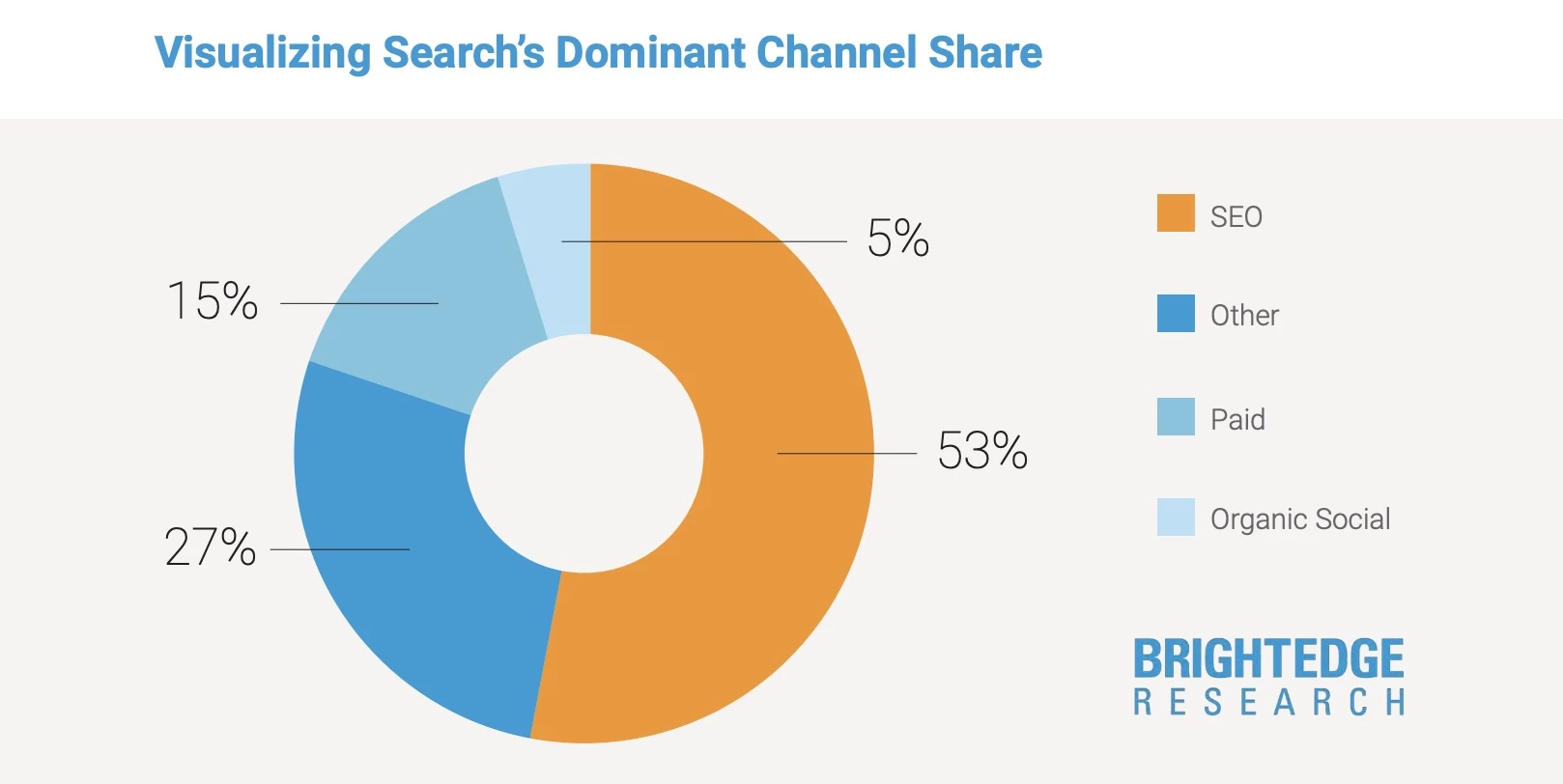
SEO drives over 1,000% more traffic than organic social media, but most brands still treat it like a checkbox, according to a report by BrightEdge.
It's no surprise, then, that even well-intentioned strategies often fail to deliver.
Or worse, they quietly sabotage a brand’s visibility.
While Google’s documentation offers broad guidance, the reality behind how search actually works is far more complex and far less understood.
Kaspar Szymanski, a former senior member of Google’s Search Quality team, has seen both sides of that equation.
Now, as co-founder of Search Brothers, he works with brands to help them recover from penalties, audit their SEO infrastructure, and make data-backed decisions that align with how Google truly operates.
Quick listen: What ex-Googlers wish more brands knew about SEO, in under 2 minutes.
I sat down with Kaspar to talk about the most common SEO missteps, what companies should really be measuring, and why technical SEO is the foundation of online visibility today.

Who Is Kaspar Szymanski?
Kaspar Szymanski is the co-founder of Search Brothers, an SEO consultancy led by two former senior Google Search team members. Kaspar spent more than seven years at Google, where he worked as a Search Quality Strategist, leading webspam detection, training global webmaster teams, and representing Google at major conferences such as SMX, DMEXCO, and Google Day. Today, Kaspar helps global brands navigate search penalties, uncover technical SEO opportunities, and build resilient online strategies grounded in real data and insider knowledge.
Why Google’s Guidelines Still Leave Brands Confused
Many businesses assume that simply following Google's official documentation is enough to succeed in search.
But that's a common misconception. Search guidelines are intentionally broad, offering principles over prescriptions.
That makes sense when you consider how different each website is in goals, technical setup, content depth, and business model.
But this flexibility can also lead to confusion, Kaspar explains.
“Google Webmaster Guidelines — now rebranded as Google Search Essentials — provide a general framework for website best practices. However, they are not a step-by-step tutorial for achieving online business success.”
This is the trap many businesses fall into. They either over-simplify SEO rules, apply them out of context, or chase outdated myths.
Misinterpretation can lead to poor SEO decisions, missed opportunities, and even long-term damage to a site's visibility.
That’s why Kaspar emphasizes the importance of conducting regular technical audits:
“Google’s algorithms evolve, websites continuously change, and SEO remains inherently complex... Conducting annual SEO audits should be considered part of standard corporate due diligence.”
4 Most Common (and Costly) SEO Mistakes
One of the most damaging assumptions in SEO is that what works for your competitor will work for you, especially if they’re cutting corners.
“Most commonly it’s trusting that because a competitor presumably cuts a corner here or there, this is something that one can get away with,” Kaspar notes.
“Occasionally, attempts to subordinate SEO to corporate schedules or structures leads unintentionally to ranking visibility loss.”
From Kaspar’s experience, these are among the most frequent and most damaging errors companies make:
- Imitating competitors without context
- Letting SEO take a back seat to internal politics
- Chasing outdated advice or myths
- Assuming short-term tactics will scale
What ties these together is a lack of strategic SEO thinking. In most cases, the brand is misinformed or misaligned.
That’s why Kaspar emphasizes third-party audits as a reset button to course-correct before lasting damage sets in.
Monitor the SEO Metrics That Actually Matter
Many teams obsess over surface-level KPIs like keyword rankings or bounce rates. But these alone rarely tell the full story.
For SEO efforts to be strategic, brands need to monitor the metrics that reflect how search engines interact with and interpret their websites.
That starts with crawlability and performance.
Metrics like crawl rate, time to first byte (TTFB), and click-through rate (CTR) offer a much more actionable view of a site’s search health.
“There are several [metrics] in fact,” Kaspar says. “Some of which can be glanced at in Google Search Console, others read from aggregated server log files. Yet others require third party tools. Crawl rate, Time to First Byte, CTR are all relevant and indeed important metrics to keep an eye on.”
These metrics reveal where search engines struggle to access or understand your content, which is often the hidden reason behind flatlining or declining traffic.
What Real SEO Impact Looks Like
Real SEO impact is about improving how search engines perceive, access, and trust your site, which directly affects revenue.
While Kaspar operates under strict NDAs, anonymized results from past client engagements show the scale of what's possible with a focused technical SEO strategy.
For instance, one retail portal increased its crawl depth fivefold, from 50 million to 250 million landing pages, which resulted in a major lift in online sales.
In another case, a travel brand deleted 60% of its outdated or irrelevant content, which dramatically improved user signals and effectively doubled year-over-year sales.
“These and similar experiences are most gratifying, and by far the best way to forge mutually beneficial, long-term business relationships with our clients,” Kaspar says.
Implement Backlinks or Technical SEO First?
For years, marketers have debated whether building backlinks or optimizing technical SEO should come first.
But from a former Google insider’s perspective, the answer is straightforward: technical SEO lays the groundwork for everything else.
Without a technically sound site, your content may never be fully discovered or understood by search engines.
That means backlinks, no matter how high-quality, won’t have the impact you expect.
“Without good technical SEO, your website's content may not be well crawled or understood,” Kaspar explains.
“Backlinks primarily contribute to content discoverability. It is technical SEO that makes that content accessible. Without it, backlinks have limited impact, if any at all.”
That foundational layer includes optimizing crawl budget, improving site architecture, addressing performance issues, and ensuring that signals are aligned across your pages.
It's the part of SEO that’s easiest to ignore and the costliest when overlooked.
How to Balance Brand Voice and Optimization
One of the most persistent myths in digital marketing is that SEO and creativity are at odds and that optimizing for search somehow dilutes a brand’s voice.
In reality, effective SEO doesn’t erase personality; it enhances visibility for content that already carries it.
That’s especially true with the rise of E-E-A-T — Google’s emphasis on Experience, Expertise, Authoritativeness, and Trustworthiness.
For brands in sensitive categories like health, finance, or legal (known as YMYL or “Your Money or Your Life” topics), strong editorial identity and a credible voice are now critical ranking factors.
“These objectives are mutually supportive and should be worked towards by the respective, yet different teams, the online marketing department on SEO, especially on E-E-A-T in this instance and the brand department on brand,” Kaspar says.
In other words, optimization and storytelling are a collaborative process, not separate ones.
Because when search signals and brand identity align, both users and algorithms respond positively.
Choose the Right SEO Partner
With every agency claiming to be “data-driven” and “AI-powered,” it’s harder than ever for brands to separate real SEO expertise from marketing fluff.
That’s why Kaspar recommends going beyond surface-level buzzwords and digging into the team’s actual track record.
True SEO performance depends on two things:
- A deep understanding of how Google Search really works, and
- the ability to turn that knowledge into action
This requires evidence: publications, credentials, case studies, and clear accountability for results.
“Technical acumen and a profound, deep understanding of how Google Search actually works are key elements,” Kaspar shares.
“A competent SEO agency should be capable of providing actionable results, not merely listing the most recent buzz words on their webpage.”
He also warns against bargain-bin SEO vendors who promise fast rankings with minimal investment.
In complex ecosystems, shortcuts often lead to long-term penalties and only data-backed strategies can provide sustainable growth.
“Simply put, data-driven SEO is only possible using a critical mass of real, relevant data. Anything else is dangerous guesswork,” Kaspar says.
What to Prepare for in the Age of AI
Many brands are scrambling to future-proof their SEO strategies, but while the tools are changing, the fundamentals remain the same.
And according to Kaspar, success still comes down to data quality and signal integrity.
“Anyone with an understanding of algorithms knows that we are fundamentally talking about data input and trends.
This is where the focus should be, always. Ensuring signal integrity of the website is the key to success in online sales, regardless of the industry or vertical.”
In practice, that means eliminating outdated pages, resolving crawl inefficiencies, and delivering content that search engines and users can trust.
With AI increasingly influencing how results are generated, sites that offer clear, consistent, high-quality signals will be best positioned to earn visibility.
Rather than chasing every new AI tool, brands should focus on making their websites as technically sound and semantically rich as possible.
Because in a world where algorithms are writing summaries and surfacing answers, only the strongest signals will make it into the spotlight.
Know Your SEO Baseline Before Making Big Moves
Not every business is in a position to implement SEO recommendations right away, and Kaspar is the first to say that’s okay.
In fact, forcing SEO on an unready organization can waste time and budget.
But for those with the resources and readiness, he strongly recommends starting with an in-depth technical audit.
Ideally, that includes server log data, which can uncover search behavior and crawling issues that aren’t visible through standard tools.
In other words: know where you stand before trying to climb.