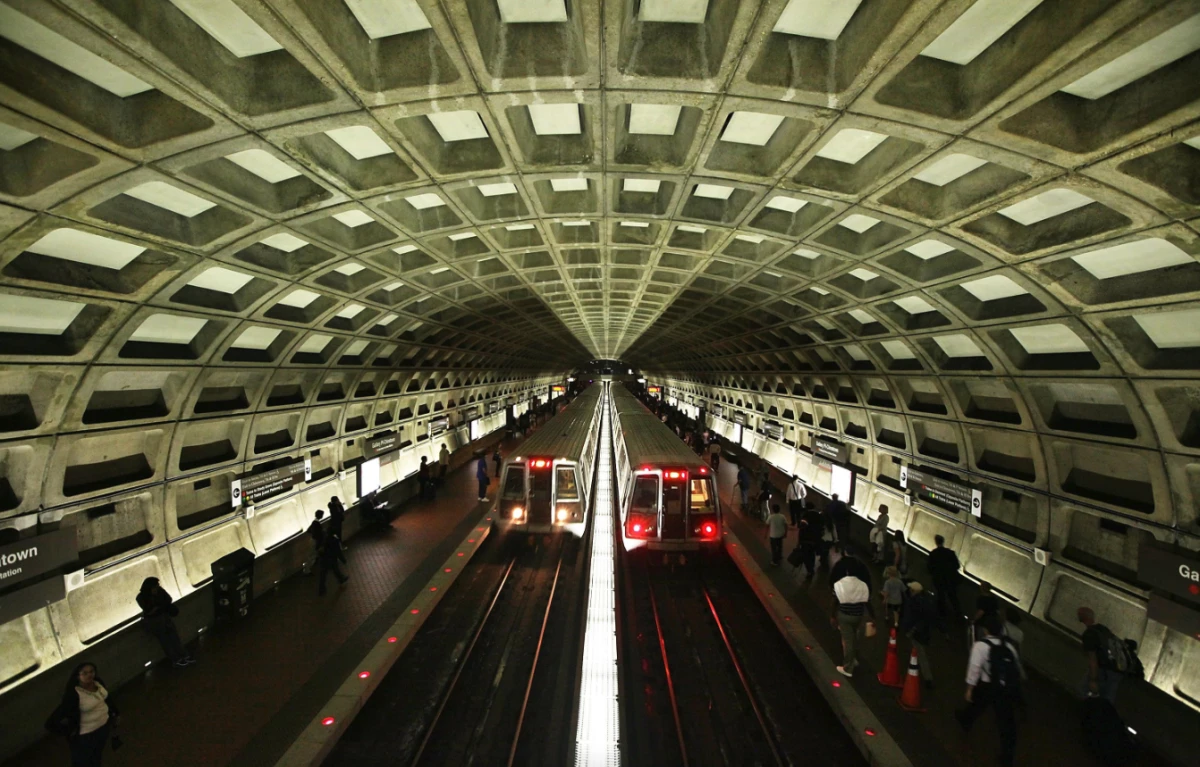

Washington Metro Rewind: Key Findings
- Personalized recaps turn routine travel data into year-end summaries, giving everyday trips cultural weight across WMATA’s 1.7M-rider system.
- Archetypes and badges use behavioral data to create character-driven identities that encourage sharing and repeat engagement.
- "25 Metro Rewind" spans OOH, social, merchandise, and events, reinforcing Metro’s role as a civic brand grounded in rider behavior.

Campaign Snapshot
The Washington Metropolitan Area Transit Authority (WMATA) just launched a year-end recap experience across its transit system.
The system, which serves more than 1.7 million riders, rolled out "25 Metro Rewind" on December 17 alongside the launch of its website, MetroRewind.com.
WMATA, more commonly known as "Metro," partnered up with full-service agency White64.
This collaboration allows transit users to have a personalized look at where they traveled, what patterns shaped their year, and which destinations defined their routines.
The mobile-first design lets riders enter up to five unique trip numbers to generate a slide-based sequence with up to 10 tailored panels.
Metro assigns each participant one of 21 archetypes based on their most frequent stops, from "The Headliner" for concert-heavy riders to "The Muse" for museum regulars.
The recap opens to the entire region, with a public version available to anyone in the DMV.
Teasers already run across the system, and the campaign sits within a larger mix of paid and organic social, digital OOH, and merchandise that drops the same day.
The work continues a long-running partnership between White64 and Metro.
A Familiar System With a New Cultural Role
The creative introduces a character-driven lens that turns trip history into a personal profile, giving riders a narrative that feels local and grounded.
The experience pulls from individual travel numbers, then layers destinations, frequency patterns, badges, and neighborhood cues, with key experience features including:
- Archetype assignments that create personalized context tied to the city’s cultural footprint.
- Data badges that highlight standout travel habits and reward exploration across the system.
- Local recommendations that surface Metro Bus access points and lesser-known stops.
The campaign runs through December 28, followed by a January reception for randomly selected members of the top 1% of riders.
White64’s internal brand ambassadors and data engineers built the system without AI tools, relying on regional familiarity to shape tone and storytelling.
The approach reinforces WMATA’s identity as a public service that maps directly to how people move through the DMV.
Transit Data as Cultural Signal
Personalized recaps have shifted from novelty to expected ritual, and riders respond to experiences that reflect real behavior.
As more organizations experiment with recap formats, the strongest executions stay anchored in specificity.
White64’s model shows how utility and cultural relevance can work together when the experience is structured with intent:
- Reveal identity through behavior, since recognition builds a stronger connection than performance metrics.
- Design for mobile-first consumption, because recap behavior lives inside the scroll and on social.
- Lean into place-based storytelling, which helps local brands expand their emotional footprint.
The strategy positions Metro as a civic partner that reads the city through its riders.
Our Take: What Makes This Format Work?
People are naturally curious about where they’ve been, especially when daily movement is tied to memory and routine.
"25 Metro Rewind" uses behavioral data to create a narrative that feels earned, not engineered.
The archetypes introduce personality, and the badges add dimension without crowding the experience.
White64’s approach shows how public systems can generate cultural relevance when brand storytelling respects the community and the data behind it.
In a recent recap, we broke down how the AWS outage rippled across digital infrastructure, revealing where brand resilience held and where system dependencies collapsed.
Find the right creative agency for your next campaign, browse the Top Creative Agencies on DesignRush.