
The FIFA World Cup has long been treated as one of the safest bets in global marketing.
Sponsors commit billions of dollars in advance, and broadcasters lock in years of programming.
Brands develop campaigns knowing the tournament delivers unmatched global reach, and this certainty is now under pressure.
FIFA now wants to sell a stake in the commercial rights to its competitions through a new $20 billion entity.
The proposed subsidiary, FIFA Forward Enterprise (FFE), would house the commercial rights to the FIFA World Cup and other tournaments.
FIFA says it would keep control of the sport while selling minority stakes in FFE to long-term private investors.
Outside backers would hold up to 20%, and the sale would unlock $10 billion for football development from 2027.
@jennyachiu •FIFA president Gianni Infantino’s private investment plans •UEFA to boycott World Cups •CONCACAF rejects FIFA’s proposal What do we think about this developing story?
♬ original sound - Jennyachiu
Thrive Capital, the firm founded by Joshua Kushner, is lined up as the cornerstone investor, with J.P. Morgan advising FIFA as a strategic partner.
The global outcry puts Gianni Infantino's FIFA presidency in jeopardy, revived by the same boycott threat that killed his biennial World Cup plan in 2021.
On July 30, UEFA and its 55 members voted to boycott FIFA competitions if the proposal proceeds as planned.
"Some things are simply too important to sell. The FIFA World Cup belongs to football. It always will.'
"And so long as Europe has a voice, it will never be for sale," UEFA said in its statement.
UEFA's Instagram announcement drew over 2.1 million likes and 43,400 comments within a day.
View this post on Instagram
CONCACAF and the Asian Football Confederation came out against the plan, too.
All 41 CONCACAF members voted it down, while the AFC called for an urgent review of FIFA's governance.
Football fans are now arguing about who should control the sport.
Brands, broadcasters, and host cities are asking something narrower.
They want to know whether the World Cup still offers the stability that made it the sport's most valuable marketing platform.
Sponsors Pay for Predictability
The FIFA World Cup earns its commercial value from predictability.
It has become a commercial powerhouse because brands know exactly what they're buying.
They get global audiences, the sport's biggest stars, and months of uninterrupted cultural attention.
View this post on Instagram
Advertising agencies design full campaign platforms for the tournament, while broadcasters negotiate long-term rights packages.
Retailers prepare merchandise launches, and tourism boards invest heavily in host city campaigns.
A dispute of this size changes the math.
If UEFA follows through on its position, future World Cups could lose England, France, Spain, Germany, and Portugal.
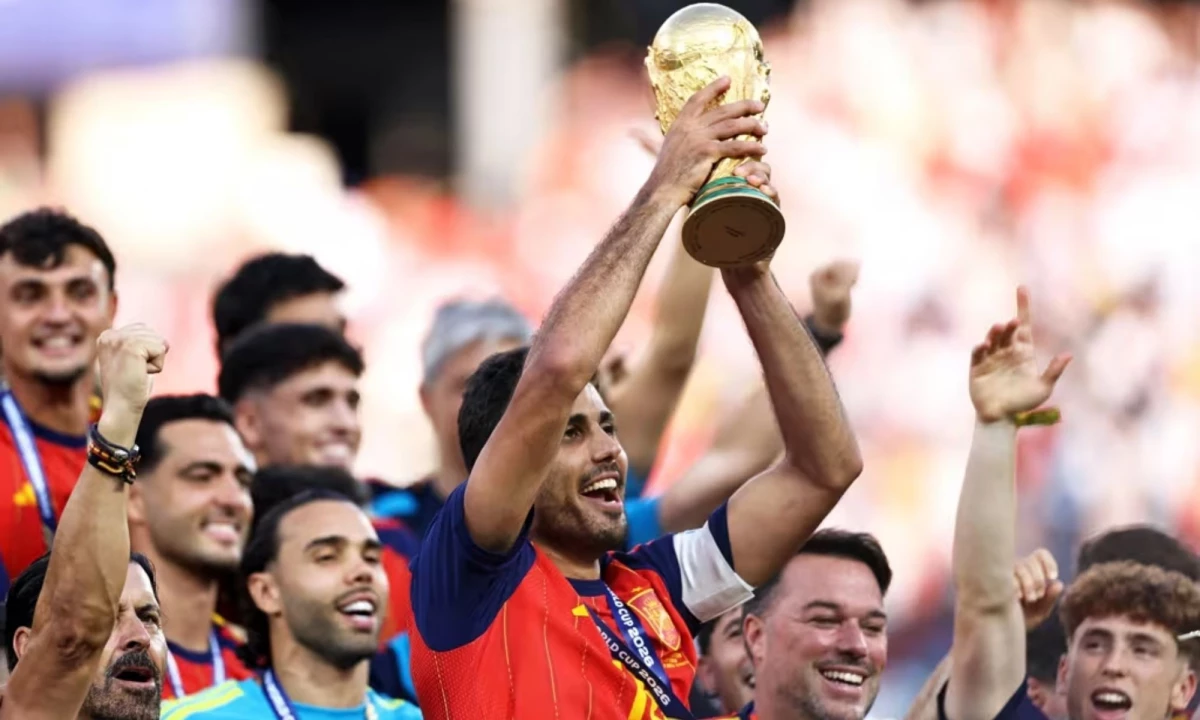
Three of those nations account for four of the last five World Cup titles, including Spain's win this July.
Europe also supplies several of football's largest broadcast audiences.
@ivansteff UEFA is threatening to boycott FIFA, while CONCACAF is pushing back against Gianni Infantino's proposal. This is the biggest World Cup controversy in years! ⚽👀 | #worldcup#fifa#soccer♬ Classical Cello Experience - Ted D'Souza & rest of the soul
CONCACAF's rejection raises the same question over the U.S., Canada, and Mexico, which co-hosted this year's tournament.
Meanwhile, the AFC's opposition puts Asia's fastest-growing football markets under the same cloud.
Even if a compromise is eventually reached, uncertainty has already entered long-term commercial planning.
Sponsors rarely build campaigns on a "maybe."
Any brand costing out a 2030 activation is now pricing governance risk alongside reach.
Sponsorship strategy now doubles as a due diligence exercise as much as a media buy.
Star Power Sets the Sponsorship Price
Many of football's highest-profile athletes represent global brands across fashion, technology, sportswear, luxury goods, and consumer products.
Kylian Mbappé, Jude Bellingham, Lamine Yamal, and Erling Haaland, to name a few, hold deals with Nike, adidas, Louis Vuitton, Beats, Oakley, and EA Sports.
The World Cup gives these partnerships a stage where nearly every market is watching at once.
If these players sit out, sponsors lose the cultural attention that pushes athlete endorsements into every market.
Hosting arrangements are also in doubt.
Spain and Portugal are set to co-host the 2030 FIFA World Cup alongside Morocco, with centenary matches in Uruguay, Argentina, and Paraguay.
Spain and Portugal are already setting destination marketing budgets that assume a tournament everyone shows up for.
A governance fight that drags into next year forces host cities to hedge spending they can't easily claw back.
FIFA Offers $40 Million per Federation
FIFA is pitching the proposal as a growth story, with FFE valued at roughly $20 billion.
The organization says outside investment would increase development funding while governance stays under its own control.
The incentive attached to the vote is drawing the loudest criticism.
FIFA told its 211 member associations that approving FFE would unlock up to $40 million each for the 2027 to 2030 funding cycle.
The total combines a one-off $20 million Fast Forward payment with $20 million from the existing FIFA Forward program.
View this post on Instagram
Associations receive just $8 million under the current cycle, so Infantino is dangling a fivefold increase.
He has given members until September 19 to take it.
UEFA argues that this works as an ultimatum dressed up as a consultation, while FIFA says that the process is democratic.
To go ahead with its plan, FIFA needs 106 of its 211 member associations to vote yes
UEFA and CONCACAF have already voted it down, which takes 90 associations off the board.
Infantino now needs 106 of the 121 that remain, or 88% of everyone still in play.
The AFC has declared against the plan without putting it to a member vote, and its 46 FIFA federations would end the count outright if they follow through.
The controversy highlights three business realities:
- Brands buy certainty. Marketing budgets depend on stable audiences, star players, and predictable media reach.
- Star power is an asset class. Removing recognizable and marketable faces weakens football's sponsorship value.
- Governance is part of brand due diligence. Companies increasingly evaluate whether an organization can protect long-term commercial stability.
The financial value of the World Cup rests on the confidence that advertisers place in it, and this is the one asset that FIFA can't sell a stake in.
Our Take: Can FIFA Protect the Product It Wants to Monetize?
FIFA is trying to sell a stake in an asset it does not fully own, and we think that the vote math already shows it can't protect the product on these terms.
The World Cup's commercial value sits with the federations that supply the teams.
Infantino needs 106 yes votes with only 75 federations still available to him.
View this post on Instagram
Thrive Capital would be buying rights whose worth depends on cooperation that FIFA has already lost.
Sponsors sat through the same fight over the Super League and the biennial World Cup, both of which collapsed without costing brands a cent.
The damage this time is the two years of noise sitting right on top of the 2030 planning cycle.
Sponsorship strategy now runs through a question nobody was asking last week, which is who actually owns the audience brands are paying to reach.
Infantino answering it wrong makes every federation a stakeholder in someone else's media buy.
Looking for an agency that knows how to run global sponsorships, athlete partnerships, and live event campaigns?
Explore these top sports marketing agencies in our directory to find the right partner for your next campaign.