
Twitter is back, sort of, and this version wants your credit card at the door.
Twitter.now charges for access, and the price tag is the most interesting thing about it.
Almost every social platform launches for free and sells to the audience later.
But Operation Bluebird is charging users first and skipping advertisers entirely.
Its business model puts members on the revenue side of the equation, and member fees fund the entire thing.
The platform asks early users to pay $20 for Founder access or $40 and up for Fighter status.
These payments fund the build, support the legal fight over the Twitter name, and create a paid barrier to entry.
Operation Bluebird says the fees also change who the platform answers to.
Its FAQ says member funding keeps the platform accountable to the people who pay for it.
The company also states that a paid door can help keep bots out and support an independent social app.
The launch comes as Operation Bluebird continues its legal dispute with X over the Twitter name.
In an April 2026 hearing, U.S. District Judge Colm Connolly made tentative comments from the bench suggesting X may have abandoned some IP claims.
Stephen Coates, a former Twitter intellectual property attorney, cofounded Operation Bluebird.
He argues that X abandoned the name when it rebranded in 2023.
But no written order has been issued yet.
X has not commented on the Twitter.now launch at the time of writing.
Twitter.now is a rare social platform launch where the revenue model is part of the product's pitch.
Paywall Gives Users Control Over Their Algorithms
Twitter.now positions paid membership as a filter for both people and business incentives.
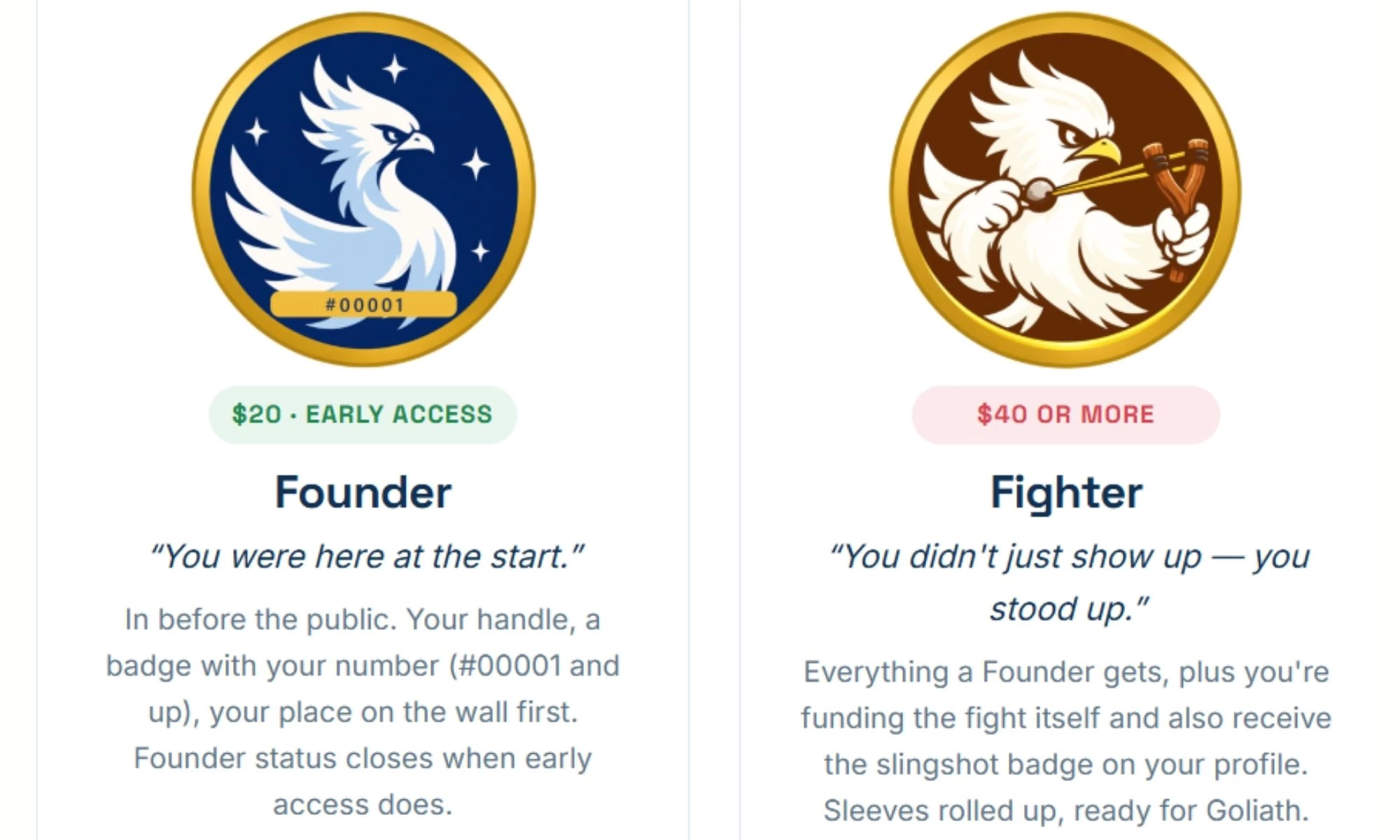
The $20 Founder fee gets users early access, secures a handle, and provides a numbered Founder badge.
A Fighter contribution of $40 or more adds the slingshot badge and helps fund the legal fight.
The fighter description adds, "You didn't just show up – you stood up."
The fee does three jobs at once.
It generates member revenue, creates friction for bots, and gives early users a reason to identify with the platform's launch.
Operation Bluebird designed the identity piece on purpose.
Twitter.now comes with trust signals and tools that allow users to decide how much "credibility and noise reach their feed."
The platform also runs Vera, an automated fact-checking tool built on Google's Gemini, against every post.
Trust is the product Operation Bluebird is selling, and the $20 fee is what pays for it.
Member fees also change who the product serves.
Users pay the bills, so Operation Bluebird answers to them when it makes product decisions.
This approach makes the membership fee a part of the platform's core brand positioning.
Paid Social Has an Audience, With Limits
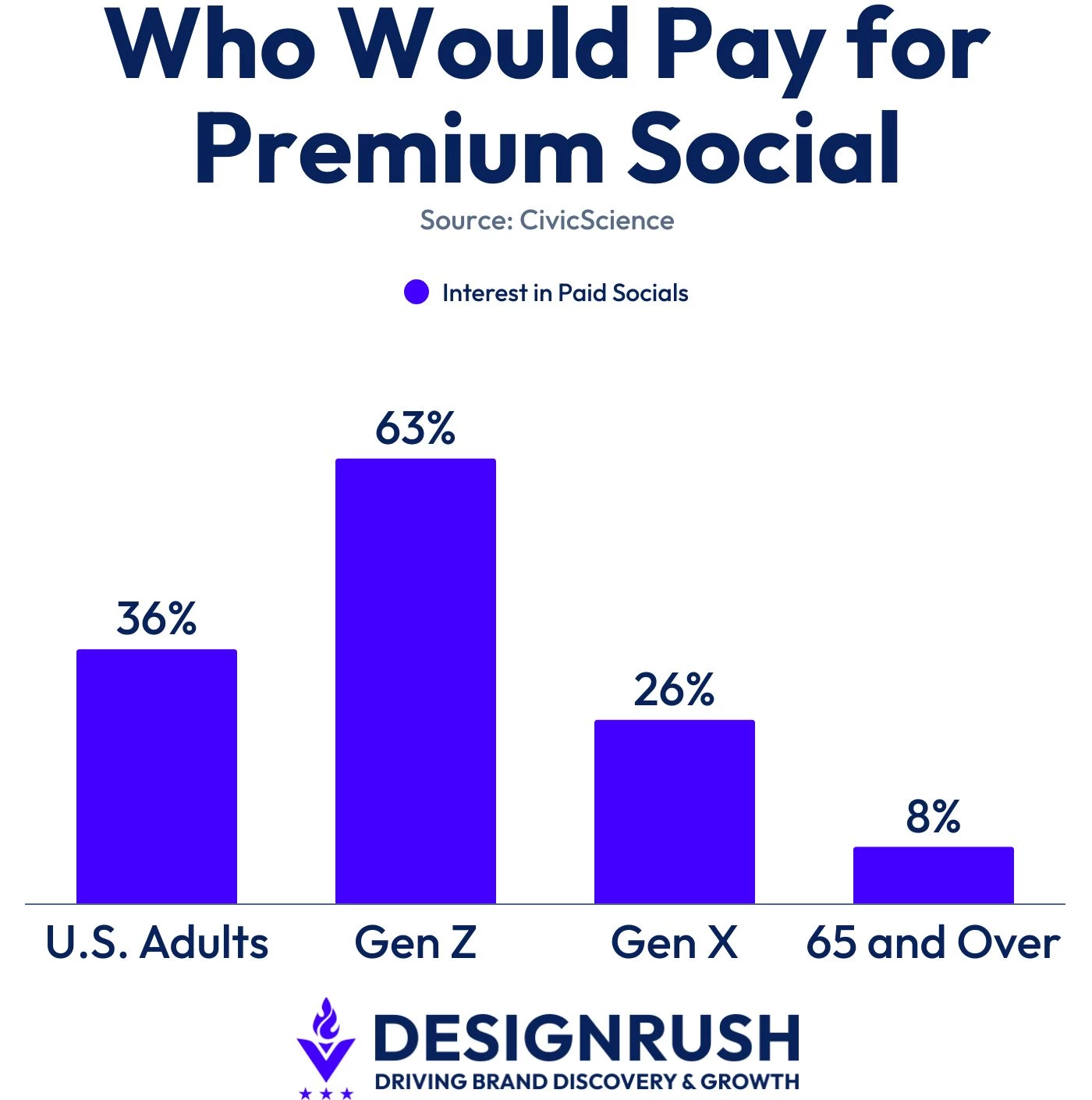
CivicScience found that 36% of U.S. adults would be at least somewhat likely to use a paid social subscription for exclusive features.
Younger users are far more receptive, with 63% of Gen Z respondents showing interest, compared with 26% of Gen X.
Usage frequency also complicates the picture.
Forty-four percent of people who spend less than two hours a day on social media expressed interest in premium subscriptions.
Meta is already testing this appetite, with paid tiers for Facebook, Instagram, and WhatsApp starting at $2.99 per month.
Subscribers still see ads; the fee just buys extra features on top of an advertising product.
The data points to three takeaways for member-funded social products.
- Exclusive features can justify payment. Teams should make paid features tangible to increase conversion.
- Younger audiences offer stronger subscription potential. Platforms should test paid products with audiences already receptive to subscription behavior.
- Heavy usage does not guarantee paid demand. Platforms should position member fees around intentional value to give occasional users a reason to pay.
Paid social has a viable audience, and the data suggests that people will pay for a better experience they can actually see.
Our Take: Can Members Fund a Social Network?
Twitter.now is selling badges and handles before it shows users a feed worth paying for.
Operation Bluebird wants members to see themselves as founders of the platform, and the numbered badge is the receipt.
Comment
by u/vgsa from discussion
in technology
We think members can fund a platform like this, though the test starts once the novelty fades and the X dispute closes.
The $20 fee pulls in people who want early access and scarce handles, and the same paid door keeps casual users out.
Operation Bluebird needs renewals to prove that people pay for the product itself, since nostalgia for the old name only sells once.
Meta still runs ads against its own subscribers, which shows how little weight major platforms put on subscription revenue alone.
A member-funded platform still needs acquisition, positioning, content, and community strategy.
Explore these top social media marketing agencies for teams that can help brands adapt as platform economics change.