
AI-Driven eCommerce & Search Visibility: Key Findings
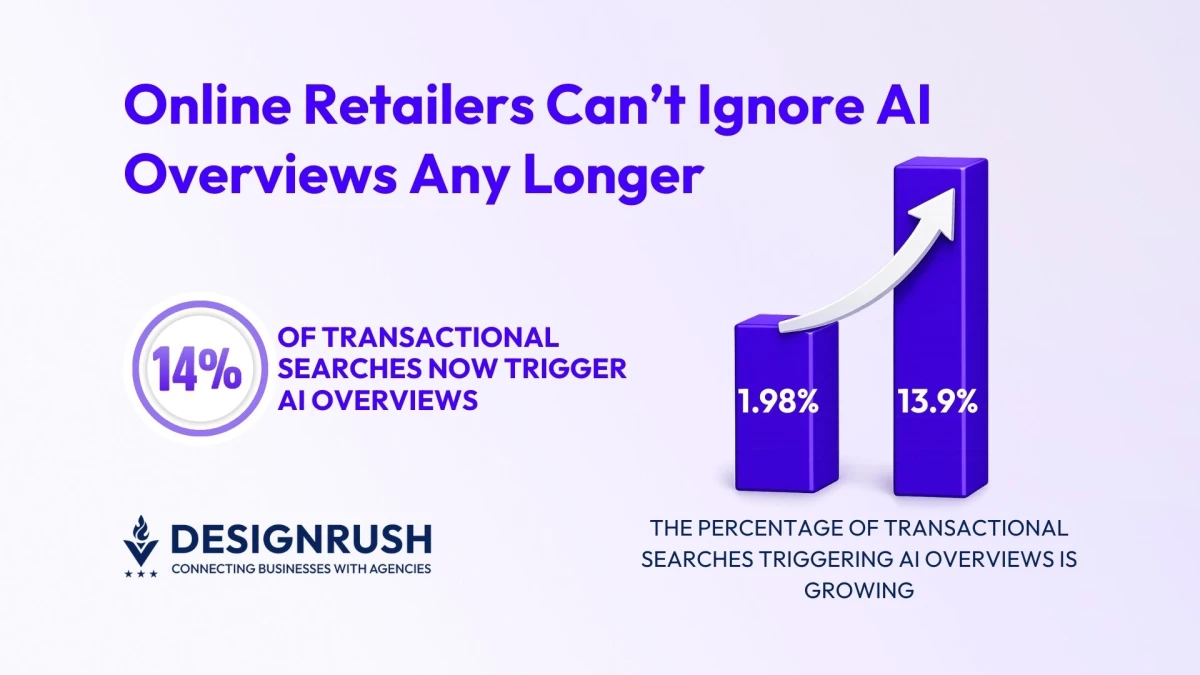
- Transactional queries now trigger AI Overviews nearly 14% of the time, marking a nearly 600% year-over-year jump.
- AI visibility tracking is now a baseline requirement, preventing retailers from optimizing blindly as transactional AI coverage expands.
- Retail discovery is collapsing into a single step, compressing research, comparison, and purchase intent into one AI interaction.
According to data from Semrush, transactional queries are triggering AI Overviews (AIO) at a sharply higher rate than before.
In October 2024, only about 2% of transactional searches surfaced AI summaries.
By October 2025, that figure jumped to nearly 14%.
This represents a YoY increase of close to 600%.
These figures matter because AI summaries have moved well past the research stage.
In fact, AI summaries are quickly becoming an integral part of purchase-driven searches like “best running shoes under $200.”
For retailers, this creates a new competitive reality as AI search is now the one that interprets and surfaces a brand at the exact moment buying intent peaks.
Digital marketing experts like Yagmur Ilgen, Creative Director at Baunfire, a Silicon Valley-based digital agency, say that this is a fundamental reset in eCommerce discovery.
But at the same time, she also reminds eCommerce brands that this presents brands with an opportunity to build a competitive advantage.
“AI Overviews have pretty much leveled the playing field and turned product discovery into a winner-take-most environment,” Ilgen says.
“Once a brand becomes the default source inside AI summaries, competitors have to work twice as hard to displace them.”
“Early optimization can quickly become one of the biggest advantages for eCommerce brands.”
How This Changes eCommerce Competition
AI Overviews are becoming a new decision layer between consumers and eCommerce sites.
They sit above traditional results and compress multiple stages of the buyer journey into a single interface.
Instead of browsing ten tabs and comparing pages manually, users are now handed a pre-filtered narrative of “best options” before they’ve even scrolled to the actual search results.
And the brands that aren’t included in those AIOs?
They might as well be invisible if users don’t bother scrolling down.
Of course, this is only taking Google’s AIOs into consideration.
With platforms like ChatGPT ramping up its eCommerce features, brands that aren’t included in the AI’s response essentially don’t exist.
But the changes don’t stop there.
This situation also means that the traditional marketing funnel, as we know it, is changing.
Awareness, evaluation, and purchase intent are now happening all at the same time.
Case in point?
An online shopper can ask a question, receive curated recommendations, and move directly into transactional decisions without ever touching a category page.
As a result, the margin for error is even slimmer now for eCommerce brands.
Prepare for AI-Driven Shopping as a Long-Term Channel
Retailers who treat this as a short-term fix often repeat a familiar mistake. They wait until visibility drops before acting, instead of preparing while the opportunity is still open.
So what should online retailers do to ensure their shopping websites stay visible?
Agency experts, like those at Baunfire, often advise eCommerce brands to start with these two steps:
1. Measure Where You Stand Inside AI Overviews
Before optimization begins, retailers need to know where their brand stands on the AI front.
“Retailers should treat AI Overviews like a new search surface with its own rules,” Ilgen says.
“If you don’t know which queries trigger AI summaries, which products appear, and why competitors are being selected instead, you’re optimizing blind.”
AI models mention brands in 26% to 39% of responses, and those mentions can shape buying decisions because users trust LLM answers.
— Semrush (@semrush) December 25, 2025
For SEOs, that means your brand’s digital footprint and relevance in training data and live web results directly affect whether AI assistants… pic.twitter.com/JbBCQe0hHa
Practical starting points include:
- Tracking AI-triggering keywords by identifying commercial and transactional queries that now surface AI Overviews, especially category searches and comparison-style prompts.
- Monitoring brand and product mentions to see whether AI summaries reference specific SKUs, category pages, or competitors instead.
- Studying competitor inclusion patterns to understand what types of product structures, review signals, or attributes appear most frequently.
- Auditing content gaps where missing specifications, thin category copy, or unclear naming conventions may be blocking AI selection.
2. Optimize Content and Signals for AI Inclusion
Once visibility gaps are identified, the next step is making product and category content easier for AI systems to extract and trust.
After all, AI shopping summaries favor clarity over creativity, and completeness over clever phrasing.
That typically means tightening several core areas:
- Product and category content quality should prioritize clear specifications, use cases, compatibility details, pricing context, and availability signals instead of vague marketing language.
- Structured data and feeds must remain consistent across schema markup, inventory feeds, and on-site content so AI systems receive one coherent version of the truth.
- Authority signals such as verified reviews, expert content, and consistent brand identity reinforce credibility and reduce uncertainty for machine selection.
Position for Purchase Visibility in an AI-First Funnel
AI Overviews are quickly becoming the new shelf space in digital commerce.
They determine which products appear first, which brands gain early trust, and which options shoppers never see at all.
“For eCommerce brands, visibility inside AI Overviews is becoming the new point of sale,” Ilgen says.
“If your product isn’t surfaced in that first layer, you’re probably losing traffic while also being at risk of losing trust, consideration, and conversion.”
This is why eCommerce brands that optimize for it now can secure a significant competitive advantage.