
'Fruit Love Island' Format Risk: Key Findings
- The series hit 300 million views in nine days, making @ai.cinema021 the fastest-growing account in TikTok history.
- 12 of the 22 episodes were removed from the platform, and the creator halted production on March 28, citing hate and no revenue.
- The show went viral because of its format, with daily episodes, fan voting, and audience-submitted plot ideas driving engagement.
For three weeks in March 2026, the most-watched series on TikTok was a dating show starring anthropomorphic fruits.
"Fruit Love Island," posted by user @ai.cinema021, launched on March 13 and hit 300 million total views in nine days.
Individual episodes averaged around 10 to 15 million views each.
The premise was exactly what the title implies.
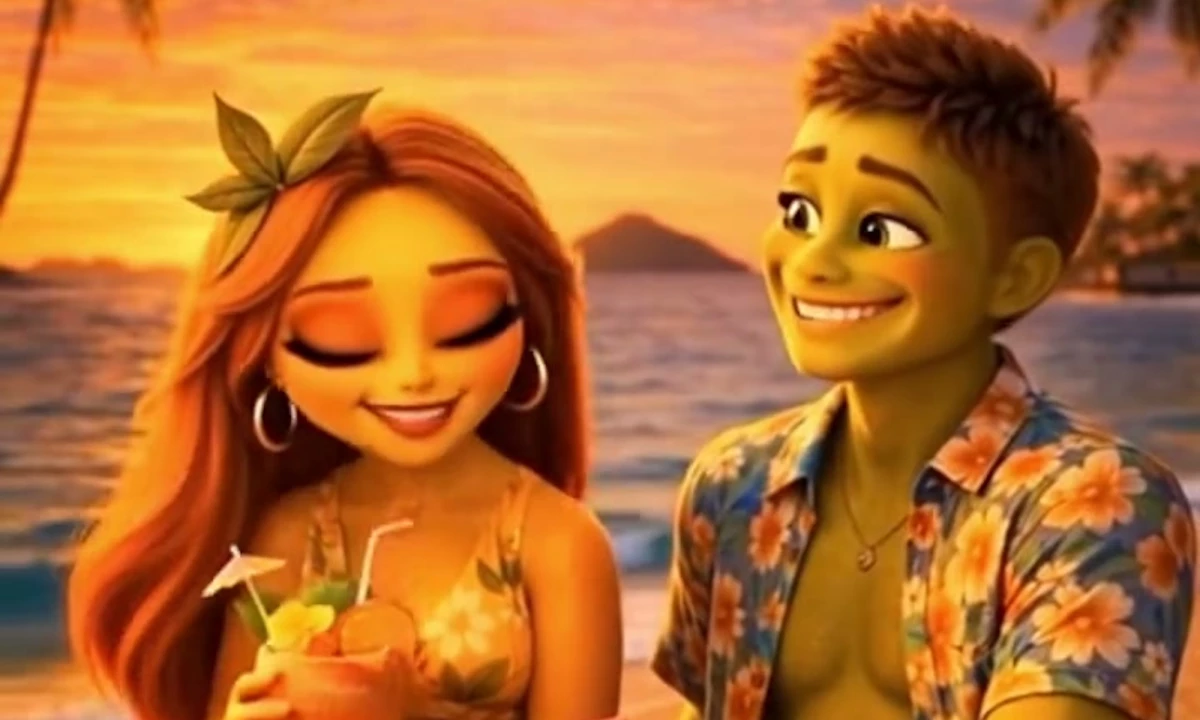
It was an AI recreation of reality TV series "Love Island" featuring humanoid cherries, pineapples, and a buff, open-shirted banana named Bananito.
It ended abruptly on March 28 after mass reporting brought down 12 of 22 episodes, with the creator posting a series of TikTok Stories announcing they were finished.
The more instructive question here isn't why this went viral but what the format reveals about where social media attention and behavior are heading.
Entertainment Is the Point, AI Is the Tool
"Fruit Love Island" didn't go viral because it was an AI-generated show.
Its popularity exploded because of its serial format and participatory structure.
Viewers could vote on which fruit characters coupled up via a Google form, while the host read viewer comments aloud during episodes.
This meant that fan-submitted plot ideas focused on drama, messiness, and backstabbing were written into the storyline.
The participation mechanic, combined with daily episode releases and cliffhanger endings, is what made audiences want to return.
"Fruit Love Island" draws from other popular trends like Italian Brain Rot characters, fruit soap operas, and AI cat dramas.
In this case, the appetite for AI-generated social content was already established, and "Fruit Love Island" simply scaled it.
The Brand Risk of Audiences Pushing Back
The temptation for brands is there, as 300 million views in three weeks represents an audience that most campaigns couldn't possibly reach.
However, the dynamics that made "Fruit Love Island" successful for a solo creator are the same ones that also made it a hostile territory for brands.
When a major brand uses AI-generated content, the subtext is usually that it had the budget to pay a real artist and chose not to.
This calculation doesn't apply to an anonymous TikTok creator running a show out of a laptop.
The audience gives individual creators latitude it doesn't extend to companies.
The "Fruit Love Island" comments section was already flooded with criticism about generative AI's environmental impact and the series' animation quality.
As we've seen from recent AI campaign failures and dwindling consumer trust, a brand inserting itself into this conversation would have walked into an audience primed to push back.
Here are some tips for brands observing what "Fruit Love Island" reveals about social content strategy:
- Analyze the format: The signal here is audiences' appetite for serialized, participatory social content.
- Give audiences a stake in the story: Fan voting and plot submissions kept "Fruit Love Island"'s engagement high across every episode.
- Read the room before entering the conversation: Viral AI content tends to attract audiences already prepared to push back on brand participation.
A brand's first question about any viral marketing trend should be what is making it work, and the answer is often not what it appears to be on the surface.
Our Take: Should Brands Be Watching 'Fruit Love Island'?
We think they probably should, but not for the reasons they think.
The AI angle is by far the least interesting part of the story.
What's interesting is that a solo creator with no budget, no team, and no distribution strategy built the fastest-growing TikTok account ever by giving people a show they could be a part of.
That is a lesson on format, and it applies whether a brand uses AI, animation, live action, or creator partnerships.
Serialized content that gives audiences something to do keeps people coming back, and that's unlikely to change anytime soon.
Brands building social content strategies around emerging formats need agencies that understand what makes a brand's participation work.
Take a look at the top viral marketing agencies in our directory.