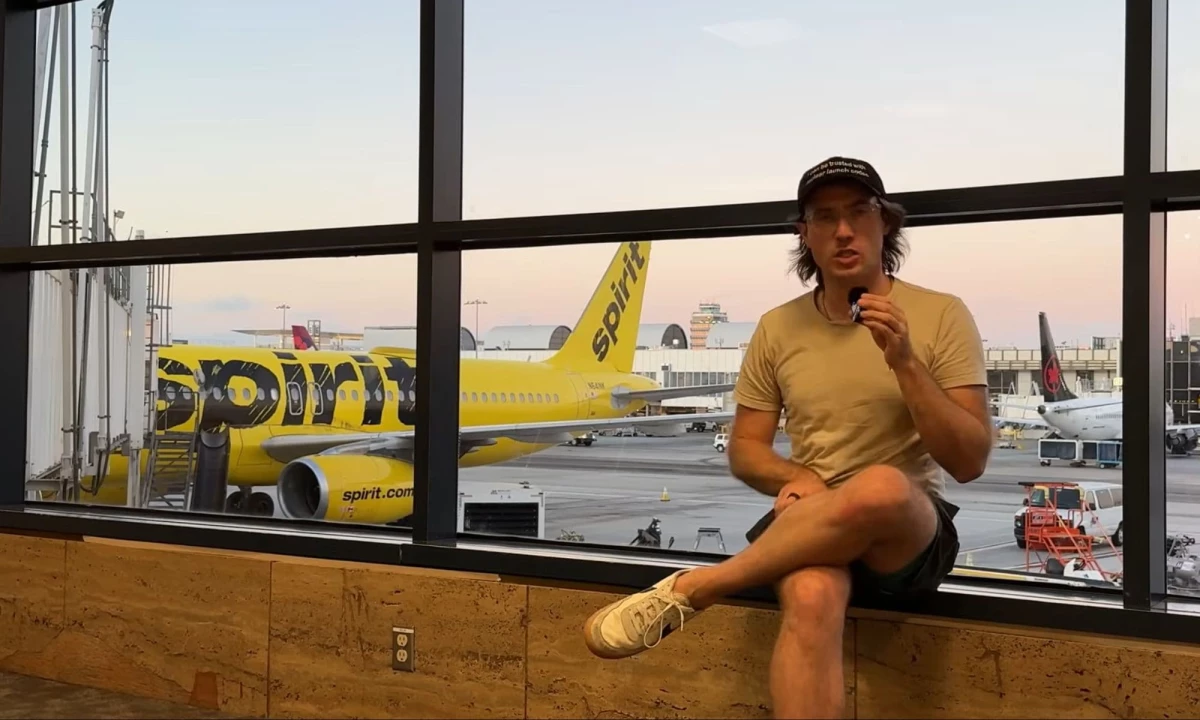

When Spirit Airlines shut down at 3:00 a.m. on May 2, Hunter Peterson posted a TikTok.
Within days, letsbuyspiritair.com had accumulated $337 million in non-binding commitments toward buying the airline back.
No money has changed hands, and no formal bid has been filed yet.
But the campaign that Peterson built from a single video made people feel like co-owners before anything actually existed.
Peterson is a Los Angeles-based voice actor and content creator.
He proposed a simple model borrowed from the Green Bay Packers, the NFL's only publicly owned team, with each American pledging $45 to collectively buy the airline.
"This started as a joke, and this is rapidly going out of control in the best possible way," he said in a follow-up video.
The campaign has since drawn backing from Spirit's 5,500-member flight attendant union and interest from aviation investment firms.
This momentum reflects how a social media marketing strategy can build community faster than traditional brand campaigns.
A Community Buyout
The audited total as of May 9 stands at $337 million from 371,552 pledgers, with an average pledge of $907.
The target amount to be raised to actually be able to buy Spirit Airlines is $1.75 billion.
The pledges are non-binding, and no money moves until a formal bid structure is in place.
Legal experts have flagged significant regulatory barriers.
Current SEC crowdfunding rules, for instance, cap non-accredited investor contributions at $5 million per year.
But capital raise platform DealMaker published a breakdown of two legal paths that could make the campaign viable.
The first stacks SEC exemptions to address roughly $80 million from non-accredited investors alongside unlimited accredited capital.
The second mirrors the Packers' non-profit model, where retail volume is uncapped.
I was just on @MTSlive, the new @a16z backed and hosted live streaming tech show, built around @eriktorenberg's bet that the "main characters of the moment" show up there first.
— Rebecca Kacaba (@RKacaba) May 13, 2026
From the movement to buy @SpiritAirlines, to @SpaceX offering 30% allocation to retail in its… pic.twitter.com/WunEqGtORq
DealMaker CEO Rebecca Kacaba framed the scale of the response as unprecedented in the capital markets industry.
"Five hundred thousand people pledging $400 million in less than a week is the largest, fastest signal of retail appetite for a single business the industry has ever seen," she wrote.
For context, the Green Bay Packers' most recent public offering in 2021 raised $66 million.
Spirit 2.0 drew five times that in pledges within a week.
The TikTok Strategy That Beat Traditional PR
Peterson has turned down media requests, including one from The New York Times.
Every update goes directly to his audience on TikTok and Instagram, which now has a cumulative following of over 850,000.
He built his following through aviation and travel content, including a challenge where he flew Spirit Airlines for 24 hours straight.
This niche credibility is what made the Spirit 2.0 pitch land differently than a random crowdfunding idea.
When he wanted angel investors, he said, "Mark Cuban? What's up, man? Get in my DMs."
When he needed aviation lawyers, he looked into a camera, and when the website crashed, he filmed it and posted it, too.
The campaign runs as a daily show, with each episode covering a real development:
- A union endorsement
- A legal call
- A server crash
- A regulatory wall
The creator proved that episodic content with real stakes gives audiences a reason to come back every day.
Peterson applied this same structure to his content marketing storytelling from the beginning, and it worked.
Here are three moves worth studying from Peterson's success so far:
- Build episodically. Brands should treat launches as daily shows, giving the audience a development to return to.
- Show the failure. Marketers should post the crashes and unanswered questions, because transparency pulls people in more than polish.
- Build audience momentum first. Owned channels should create early visibility and participation before press outreach begins.
Audiences gravitate toward brands that build in public, according to social media community management research. The Spirit 2.0 push shows what this looks like at scale.
Our Take: Can Viral Momentum Survive Regulation?
Most funded startups spend years trying to manufacture the kind of audience investment Peterson generated in a week without spending a dollar on distribution.
But we think that viral momentum becomes harder to sustain once regulation, legal structure, and investor expectations enter the picture.
Part of the campaign’s appeal is that it still feels spontaneous, community-driven, and slightly unrealistic.
The moment Spirit 2.0 becomes a real company, it stops behaving like internet participation and starts being more like a real business.
This is the tension Peterson still has to solve. But whether the airline ever flies is almost secondary at this point.
A creator with a clear idea and daily consistency just outperformed traditional PR strategies without buying attention first.
Brands that want to build campaigns with real audience investment need agencies that understand community building at scale.
Find top social media marketing agencies in our directory.