
2025's AI Advertising Fails: Key Findings
- High-emotion moments like holidays exposed AI missteps, as audiences quickly sensed when automation replaced genuine human connection.
- Transparency around AI use did not prevent backlash in categories built on craft and artistry, as fashion brands like Vogue and Valentino learned.
- Short-term production savings unraveled once brands faced takedowns, negative press cycles, and longer-term reputational damage.
2025 marked the year audiences stopped tolerating AI in advertising.
McDonald's removed a holiday ad after viewer outcry, while Coca-Cola faced ridicule for glitchy AI-generated trucks.
Brands also learned that automation without human oversight creates credibility problems faster than it solves production challenges.
However, what connects these failures isn't just poor execution.
It's the fundamental disconnect between what AI can generate and what audiences emotionally need from brands during significant moments.
Here are seven of 2025's worst AI advertising backfires:
- McDonald's: AI-generated satirical holiday ad removed after backlash
- Coca-Cola: Glitchy AI trucks in "Holidays Are Coming" reboot
- Meta: AI granny swapped into top-performing ad via Advantage+
- H&M: "Digital twins" of models raise ethical concerns
- Vogue/Guess: AI-generated models in print ad triggering social backlash
- Valentino: AI-generated luxury campaign called "cheap" and "tacky"
- Friend AI: Subway ads vandalized, Heineken piles on
1. McDonald's "Most Terrible Time of the Year" Holiday Ad
McDonald's Netherlands launched an AI-generated ad filled with chaotic holiday mishaps meant to be satirical.
The spot showed Christmas going wrong in ways that felt depressing rather than funny, with AI-generated visuals that looked creepy instead of clever.
Viewers slammed it as tone-deaf during a season associated with joy and nostalgia.
In response to the backlash, McDonald's removed the ad within just three days of its launch.
This mishap shows how brands can risk alienating audiences when AI is used to mimic satire or emotion without nuance.
This is especially true during emotionally charged seasons like the holidays, when people value authenticity over experimentation.
2. Coca-Cola's Shape-Shifting AI Holiday Trucks
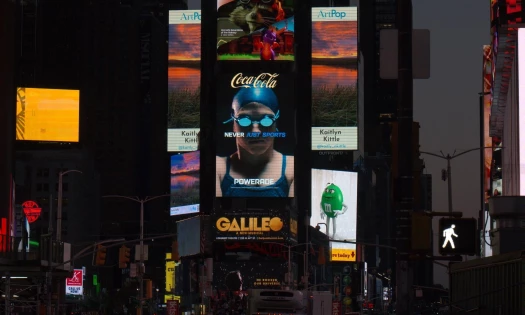
Coca-Cola released three AI-generated holiday ads, including a reboot of its iconic "Holidays Are Coming" campaign featuring the brand's signature red trucks.
The visuals suffered from obvious continuity glitches where trucks changed shape mid-scene, wheel counts shifted, and background elements morphed unnaturally.
The creative community ridiculed the execution, pointing out that AI tools couldn't maintain visual consistency across frames.
Coca-Cola's case shows how using AI to mess with legacy brand assets risks throwing away decades of emotional connection.
When your most valuable creative has been running for 30 years, algorithms shouldn't rewrite it.
3. Meta's AI Grandma Incident
Meta's Advantage+ ad platform replaced True Classic's high-performing ad creative with an auto-generated AI image of an elderly woman wearing the brand's apparel.
The "AI granny" instantly sparked reactions, while advertisers complained that Meta's ad tool toggled AI image generation even when they had disabled the feature.
The incident revealed how automated creative features can override advertiser intent, creating brand safety issues and destroying campaign performance.
This is what Meta’s AI did to my top ad. pic.twitter.com/AxE6K2wVda
— Bryan Cano (@BryanECano) October 24, 2025
4. H&M's "Digital Twin" Models
Last summer, H&M announced it would use AI-generated "digital twins" of real models for ads and social content, positioning the technology as a way to scale creative production.
Fashion influencers and labor advocates flagged immediate concerns about worker displacement.
Criticisms were also raised around using model likenesses and perpetuating unrealistic beauty standards through AI manipulation.
The backlash demonstrated how replacing human talent with AI sparks ethical debates in industries where aesthetics and identity actually matter.
5. Vogue's AI-Generated Guess Ad
Vogue ran a Guess ad featuring AI-generated models created by an AI agency, with disclosure buried in fine print.
Social media erupted with criticism over unrealistic beauty standards and potential job losses for models and photographers.
Some readers even threatened to cancel their Vogue subscriptions.
The controversy showed that, even with disclaimers, inserting AI models into high-fashion platforms reveals how sensitive audiences are to authenticity in visual branding.
6. Valentino's AI-Generated Handbag Campaign
Valentino released an AI-generated campaign for its DeVain handbag line with surreal, hyper-stylized imagery.
It was widely panned for looking "cheap," "tacky," and "uncomfortable", the opposite of what audiences expect from a heritage luxury brand.
Critics argued that AI stripped the campaign of artistry, human touch, and the prestige cues that justify premium pricing in luxury fashion.
This shows how, when luxury brands use AI as a shortcut instead of a tool, the result can actively devalue brand equity.
7. Friend AI's Subway Ads and Heineken's Response
Startup Friend AI launched an aggressive out-of-home campaign across New York City subway stations promoting an AI companion designed to replace human relationships.
The ads were defaced, mocked, and vandalized by commuters.
Eventually, they became a viral symbol of public resistance to AI hype and techno-solutionism.
The controversy escalated when Heineken referenced the backlash, with its U.S. marketing VP publicly emphasizing that "a refreshing social life matters more than we realize".
Three patterns emerge from these failures that brands should note for 2026:
- Cost savings don't justify cultural damage: Brands traded production budgets for reputation costs, discovering that negative press from AI backfires erases any efficiency gains.
- Legacy brands have more to lose with AI experiments: McDonald's and Coca-Cola faced harsher criticism than startups because audiences hold established brands to higher creative standards.
- Category context determines AI acceptability: Tech and fashion audiences showed different tolerance levels, with luxury consumers rejecting AI most immediately, while tech-adjacent brands faced less immediate backlash.
The brands that avoided backlash in 2025 understood one thing clearly.
The efficiency AI offers isn't worth the cultural damage it causes when you let it make creative decisions that require human judgment.
Our Take: Is AI in Advertising Worth the Risk?
We think 2025 proved that AI in advertising works best as a tool, not a replacement for human oversight.
The brands that faced backlash shared a common mistake, in that they let AI lead their creative decisions instead of supporting them.
McDonald's and Coca-Cola discovered what happens when legacy brands trust algorithms with their most emotionally charged campaigns.
Meanwhile, Meta and H&M found out how automation without review can lead to brand safety issues.
Valentino and Vogue also learned that audiences can tell when brands are prioritizing efficiency over craft.
In our opinion, 2026 should see AI amplify human creativity, not supplement it.
Brands that understand this distinction will be the ones to avoid joining next year's AI fails list.
In other news, 2025's holiday ad trends showed the sharp divide between brands using AI to automate creative and those investing in human craft to connect emotionally.
Find agencies that understand how to use AI as a tool rather than a replacement among the top creative agencies in our directory.