Divine App, the Vine Revival Platform: Key Findings
- Divine bans AI-generated videos and verifies uploads to help confirm human-made content.
- The company restored more than 500,000 Vine clips and lets original creators reclaim their accounts to repost and curate content.
- The platform runs on the Nostr protocol, giving creators full ownership of their audience and content so they can monetize independently.
Divine, a six-second looping video platform inspired by Vine, has launched on iOS and Android.
Built by Rabble Evan Henshaw-Plath, it restores archived Vine clips while enabling new human-made content in the same short format.
The platform bans AI-generated media and uses a decentralized system to give creators control over their content and audience.
The platform positions itself as an alternative to algorithm-heavy social feeds.
"By bringing back Vine on a decentralized network, they are finally correcting every mistake," Jack Dorsey, grant funder of Divine, said in a press release.
"A founding principle for Divine is that creators will always be in full control of their content and followers, enabling them to create and grow their own revenue streams."
The brand’s marketing strategy is to rebuild short-form video around creator ownership, authenticity, and constraint-based creativity.
6 Second Loops Introduces a Human-First Filter
The app merges nostalgia with new creation.
Users can scroll through more than 500,000 restored Vine clips and create new videos in the same short-form format.
Original creators like Lele Pons, JimmyHere, and MightyDuck have reclaimed their accounts to curate old content and publish new videos for followers.
Each video carries a verification layer to confirm it is human-made, enforcing the social platform’s strict no-AI content policy.
"Divine began as a personal project to reconnect with a time when the internet felt creative, open, and unquestionably human," said Rabble, founder and CEO of Divine.
"The app launch is less about nostalgia, and more an antidote to what social media has become."
Time constraints sharpen creativity, and the short loops demand immediate engagement.
Most short-form content still gives you time to settle in. Six seconds doesn't. You barely register what you watched before the next thing is already playing.
The format reflects how social platforms continue competing for attention through increasingly compressed content experiences.
Decentralized Design Returns Control to Creators
Divine builds on the open Nostr protocol, giving creators ownership over their content and audience without locking them into a single platform.
It also uses an invite-only rollout to grow through creator networks and fan communities, restoring social discovery patterns driven by relationships.
"Networks used to grow because people chose to be where their friends and favorite content creators were, not because they were pulled in by an advertising algorithm," Rabble said.
"An invitation-only approach lets us rebuild that dynamic from the ground up."
According to Mordor Intelligence, the short-form video market is valued at USD 2.17 billion in 2026 and is projected to reach USD 3.37 billion by 2031.
This signals sustained demand for bite-sized video formats across social apps.
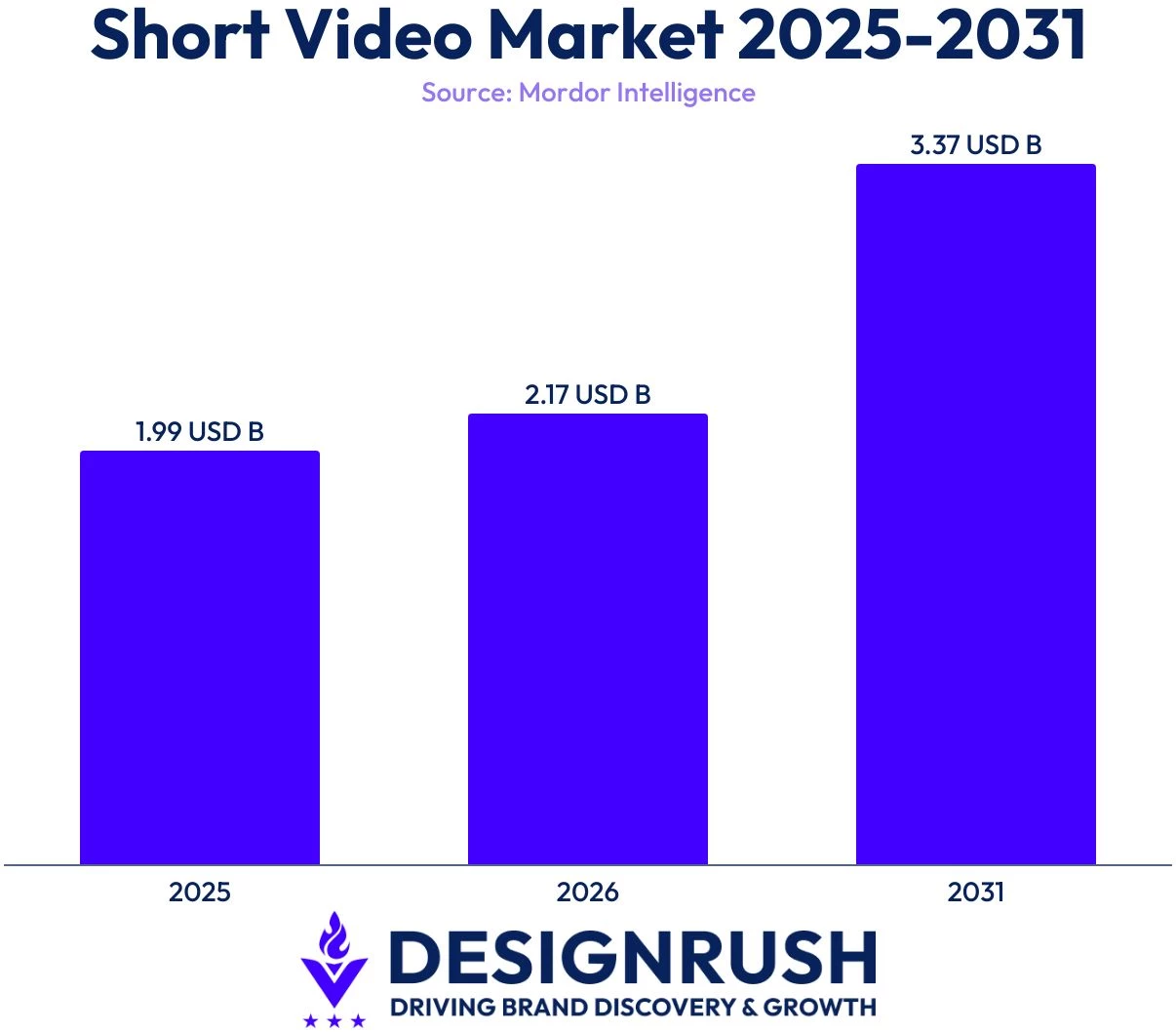
The projected increase also indicates rising competition among platforms for creator activity and viewer time.
It highlights how app design choices can directly shape audience behavior and engagement.
- Constraints sharpen creativity. Brands can limit UX options to force clearer ideas and faster audience engagement.
- Ownership drives commitment. Platforms should give users control over content and distribution to increase long-term participation.
- Network-based growth builds trust. Teams can use existing communities to strengthen retention and organic reach.
When product features reinforce creator incentives, platforms rely less on algorithms to sustain activity.
Our Take: Can Divine Grow Without Algorithms?
If creator momentum outweighs onboarding friction, we think it can.
Divine’s stance against AI-generated content and feed-driven engagement offers an alternative positioning strategy in a crowded social media market
Its limited format, verified human content, and decentralized ownership make Vine’s revival a coherent execution.
Here's the potential problem. Invite-only access can slow down early network adoption, especially for younger audiences who have yet to experience the six-second loop.
Despite this, if it does gain traction, Divine could reshape expectations on how social apps balance control, creativity, and distribution.
Pinterest took a different approach with its "How Did They Do It?" brand campaign, as it urges users to log off and live.
Social brands need partners who understand the types of creators that use their apps and how to reach them.
Explore these top app design companies in our directory.