-details-webp.webp)

Key Takeaways:
- The subscription economy has experienced 437% growth since 2012, but this doesn’t mean a subscription model alone guarantees long-term revenue.
- AudiobooksNow’s hybrid model of offering both subscriptions and pay-as-you-go services ensures flexibility for casual and loyal customers.
- Striking the right balance between pricing, incentives, and customer retention is crucial, as over-discounting can undermine subscription value.
The subscription economy is booming, as evidenced by its 437% growth since 2012. However, it’s not a one-size-fits-all solution.
While many digital businesses push recurring revenue models, AudiobooksNow has taken a different approach by offering both a subscription service and a pay-as-you-go model.
“Not everyone is an avid audiobook listener, so to have a pay-as-you-go model was important for the more casual audiobook listener,” AudiobooksNow President and CEO Bryan Stafford tells DesignRush.
However, balancing these two revenue streams isn’t simple. Many digital content businesses struggle with pricing, customer retention, and ensuring that one model doesn’t cannibalize the other.
In our interview, Bryan shares how the company found the right balance, the challenges of monetization in the digital space, and what other businesses can learn from his experiences.

Who Is Bryan Stafford?
Bryan Stafford is the President and CEO of AudiobooksNow, a digital audiobook download and streaming service offering over 350,000 titles. Prior to leading AudiobooksNow, Stafford served as Vice President at BookLender.com, where he managed internet support and business development. Under his leadership, AudiobooksNow has expanded its offerings, including the launch of AudiobookLender, a digital audiobook rental service providing users with a cost-effective way to access audiobooks.
AudiobooksNow’s dual model wasn’t only a strategic choice, it was also a necessity.
Carrying out this hybrid strategy, the platform carved out a unique position in the audiobook industry, catering to the different types of listeners.
“[Listeners] still get a great deal on their audiobooks and have the option to upgrade to a plan if they start purchasing more audiobooks. Even some avid audiobook listeners just don’t like signing up for any type of plan,” Bryan shares.
This flexibility has been key to attracting new customers who may not be ready to commit to a monthly fee.

By allowing users to test the waters without an upfront obligation, what AudiobooksNow has created is a low-friction entry point for first-time listeners.
“There are a lot of new people discovering audiobooks each year for the first time, so having a ‘no plan required’ option has been important for them,” Bryan explains.
“It allows them to try audiobooks without making any commitment. Some of those customers become avid audiobook listeners over time.”
In today’s market, customers are often hesitant to commit to subscriptions or long-term plans without fully understanding the value of a product or service. Offering a low-friction entry point perfectly counters this hesitancy, offering consumers more flexibility and control.
This strategy allows for more personalized experiences, giving consumers the freedom to engage with a brand on their own terms.
As customers become familiar with the offering, they may be more likely to opt for a plan or subscription, ultimately converting them into long-term, loyal customers.
And keeping customer retention rates high is key to scaling a business. After all, a Harvard Business Review study showed that acquiring a new customer can cost 5 to 25 times more than retaining an existing one.
A Balancing Act
Running both a subscription and a pay-as-you-go model means finding a balance between customer incentives and business sustainability.
According to Bryan, giving a good discount to pay-as-you-go customers is critical, but it’s also important for the discount not to be so big to a point where “the subscription does not look appealing.”
“We have added other benefits to the subscription, like [doubling] the reward points and access to exclusive sales and content that add value.”
Many businesses assume that subscriptions guarantee long-term revenue, but Bryan warns against this misconception.
“Nothing is guaranteed, you have to earn those subscription customers’ business each and every month,” he emphasizes.
With regards to retaining these subscribed clients, Bryan shares that one of the biggest challenges AudiobooksNow faces includes failed payments.
“You will lose a lot of subscribers because their monthly payment will fail,” he says.
“Credit card delinquency is currently at record-high levels because of inflation. Even now that inflation has come down, prices still remain high.”
The Solution to Subscription Fatigue
Pricing and bundling mistakes can lead to high churn rates, especially in digital content platforms.
According to Bryan, businesses often overuse sales as a retention tactic — but this can easily backfire. Such is the case for having too many audiobooks on sale.
While a portion of customers wait for audiobooks they’re eyeing to drop in price, Bryan says having books on sale frequently and all at once can make you lose subscribers.
Instead of relying on frequent discounts, AudiobooksNow focuses on value-driven incentives that encourage long-term retention, keeping its subscription price low and value high.
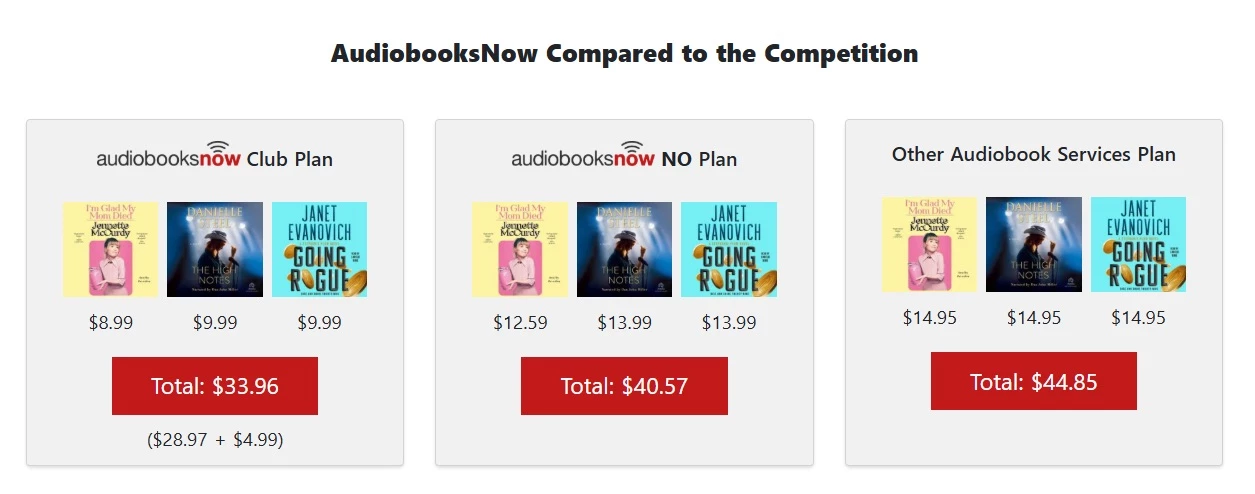
By keeping prices stable and offering consistent, non-discount-driven value, businesses can build a foundation of trust and satisfaction. Likewise, it creates a more sustainable pricing model that aligns with both customer expectations and business goals in the long run.
The Power of Customer Feedback
One of AudiobooksNow’s biggest strengths is its ability to listen to its customers and adapt accordingly. For Bryan and his team, customer feedback has always been critical.
While AudiobooksNow gets a bulk of its feedback from email and surveys, Bryan believes talking to customers on the phone is essential to the process.
“You can easily gather feedback and ask follow-up questions on a phone call,” he adds.
“It is those follow-up questions that really allow you to zero in on what the customer's exact issue or concern is.”
Customer feedback and an eye on purchasing trends are AudiobooksNow’s secret weapons to a fine-tuned approach.
By ensuring that both casual listeners and dedicated subscribers find value in their platform, it stays afloat amid industry saturation.
Words of Advice for Digital Businesses
For business leaders looking to optimize their digital content platforms, Stafford highlights two key performance indicators (KPIs) they can keep an eye out for: customer satisfaction and churn rate.
“You obviously need to have happy customers — if you don’t, your churn rate will be high. You need to keep a close eye on a lot of metrics, but these two are very important.”
When it comes to evaluating potential partners, Bryan also emphasizes reputation and referrals.
“The reputation of a partner is very important. If their reviews are not good, then we move on. Referrals are also important. If you have a lot of happy customers, you should not have any trouble with us talking to some of them,” he explains.
AI in the Future of Audiobooks
There's no doubt that AI has vast capabilities. Only recently, it developed the ability to produce accurate Ghibli-style art out of any image.
This begs the question: How does AI technology affect the future of audiobooks?
Congratulations to the 2025 Audie Award Winners! Get your copy today! #AudiobooksNow#AudieAwardshttps://t.co/p6bj11Rae9pic.twitter.com/TErR0DNQhk
— AudiobooksNow (@audiobooksn) March 14, 2025
Looking ahead, Bryan sees AI playing a bigger role in audiobook production — particularly for nonfiction content.
“Not every book is turned into an audiobook. I think with AI, that could change,” the CEO shares.
“It makes a lot of sense for nonfiction books since the narrator is not telling a story and trying to draw the listener in. A lot of nonfiction is just information, where the narrator is not as important as it is with fiction.”
For businesses in digital content, AudiobooksNow’s success offers a key lesson: flexibility wins.
By giving customers multiple options and continuously refining its approach based on real feedback, the company has built a model that sustains both growth and customer loyalty.
AudiobooksNow’s hybrid approach proves that businesses can get the best of both worlds.