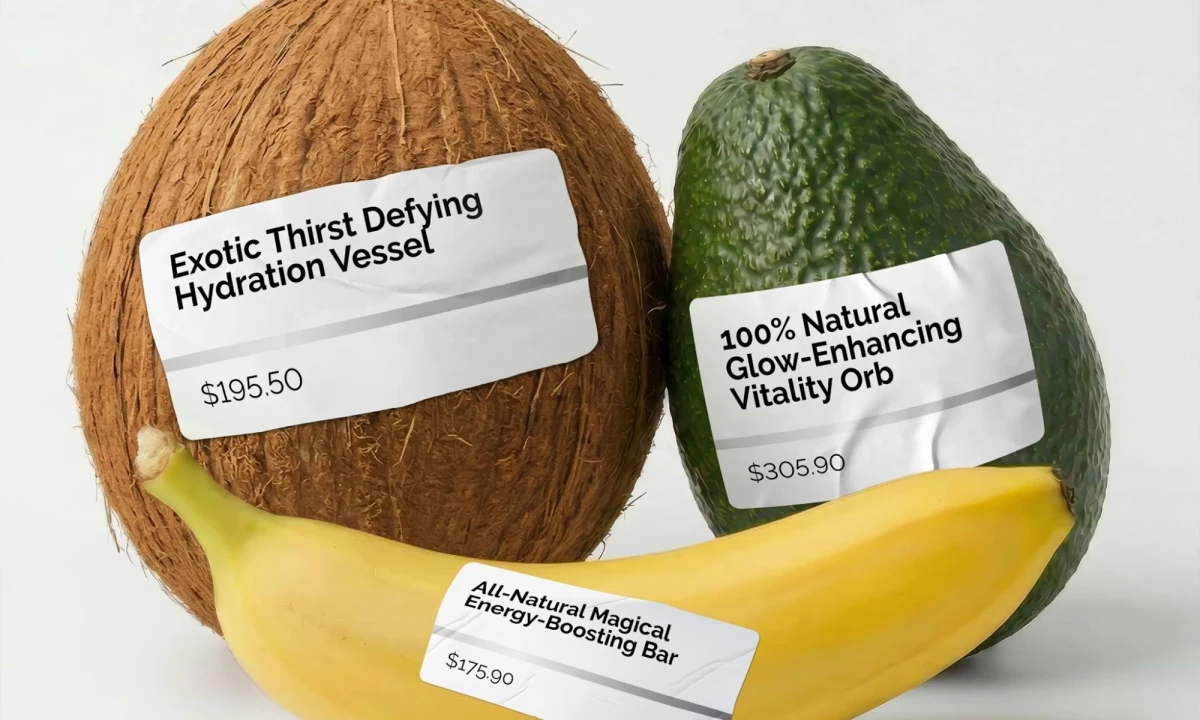

Customers walking into The Ordinary's latest retail activation were met with a $175 banana, a $305 avocado, and toilet paper priced at nearly $100.
The "Markup Marché," created with Uncommon Creative Studio, replaced ordinary grocery item names with exaggerated beauty-style product descriptions.
It is the brand’s latest critique of inflated skincare pricing and jargon-heavy marketing.
The global pop-up stores will appear in Toronto, London, Paris, Melbourne, SãoPaulo, and MexicoCity.
The campaign continues the brand’s long-standing reputation for transparency while tapping into growing frustration with luxury markups and economic pressure.
"There’s something powerful about walking into a store and seeing all these exaggerated, overpriced groceries in front of you[.]
[I]t becomes almost confronting, and undoubtedly more memorable as a takeaway message," The Ordinary told Media in Canada.
The retail mockup is designed to force consumers to reconsider what they're actually paying for.
Beauty Satire in Grocery Aisles
The concept stores include fruits with beauty-product labels and overpriced tags, including:
- Bananas became "All-Natural Magical Energy-Boosting Bars."
- Avocados were relabeled "Natural Glow-Enhancing Vitality Orbs."
- Coconuts appeared as an "Exotic Thirst Defying Hydration Vessel."
Every shelf represents the visual language of prestige skincare, from minimalist packaging to ingredient-heavy descriptions that sound scientific and exclusive.
The experiential activation also invited visitors to invent exaggerated product names and enjoy juice products packaged like skincare serums.
Social media also played a central role in the campaign strategy.
The installations were intentionally structured for creator content, consumer participation, and earned media circulation across platforms.
Amy Bi, VP of brand at Deciem, parent company of The Ordinary, told Women’s Wear Daily that luxury beauty markups can reach 700%.
The brand's satirical messaging aligns closely with its longstanding focus on ingredient transparency and stripped-back branding.
The activation translates an abstract pricing debate into something consumers can immediately recognize and question.
Beauty Pricing Faces Scrutiny
Growing demand for transparency gives the campaign strong timing.
Dupe culture and price-conscious shopping continue to influence beauty purchases.
Business of Fashion and McKinsey's 2025 beauty report found that 63% of consumers don't believe premium beauty products perform better than mass alternatives.
This increases pressure on prestige brands to justify pricing through real results.
The activation shows how brand perception today increasingly depends on proof of work.
- Transparency drives trust. Brands should explain pricing and formulation decisions clearly to strengthen credibility during economic pressure.
- Familiarity sharpens critique. Marketers can use devices such as satire to make industry standards easier to question.
- Social participation extends reach. Teams should create interactive retail experiences that encourage sharing and discussion online.
When pricing conversations become public, brands will need stronger evidence to justify premium markups.
Consumers are increasingly comparing price, formulation, and branding side by side instead of accepting luxury positioning at face value.
Our Take: Does Anti-Markup Messaging Have Limits?
Yes, especially when transparency claims are not backed by product performance.
The Ordinary’s argument works because the brand has spent years positioning itself around ingredient clarity and accessible pricing.
We also think the campaign avoids sounding overly aggressive because it relies on satire and participation.
This approach invites consumers into the conversation without making the critique feel heavy-handed.
As price clarity becomes more central to beauty marketing, prestige brands may need stronger evidence to justify premium positioning.
This pressure aligns with the seven industry trends we recently highlighted from IPSY's 2026 Beauty Discovery Report.
For beauty brands exploring experiential retail marketing, explore these top beauty marketing agencies to find partners specializing in branding and consumer engagement.