
Ford is making sure people remember the feelings faster than horsepower numbers.
The automaker has relaunched "Ready Set Ford," this time as a new European platform spanning 19 territories that moves away from the usual category clichés.
Previously, Ready Set Ford sought to sell its vehicles by lifestyle, highlighting doers, explorers, and performance seekers instead of its models alone.
For the platform's latest iteration, Ford goes back toward something more primal: movement, instinct, and the urge to compete.
Created by Wieden+Kennedy London, the campaign establishes Ford as a company building tools for people who chase excitement, hard work, or adventure.
Internally, the platform is divided into three areas:
- "Thrill"
- "Build"
- "Adventure"
All tied together by the idea of capability in motion.
The first campaign under the "Thrill" pillar is "Born to Compete," a cinematic 60-second film built around an unexpectedly simple visual.
It pulls directly from Ford’s history.
The company traces its origins back to Henry Ford’s 1901 Sweepstakes victory, a race win that helped secure the investment needed to launch the business and begin what Ford describes as a 125-year motorsport legacy.
Today, many automotive campaigns still default to polished road footage and feature-heavy messaging.
This is why Ford sought to pursue emotion and physical tension in the front of the frame.
Doing so gives the company a clearer brand voice at a time when legacy automakers are struggling to differentiate themselves within the electric and hybrid markets.
Racing Without Cars
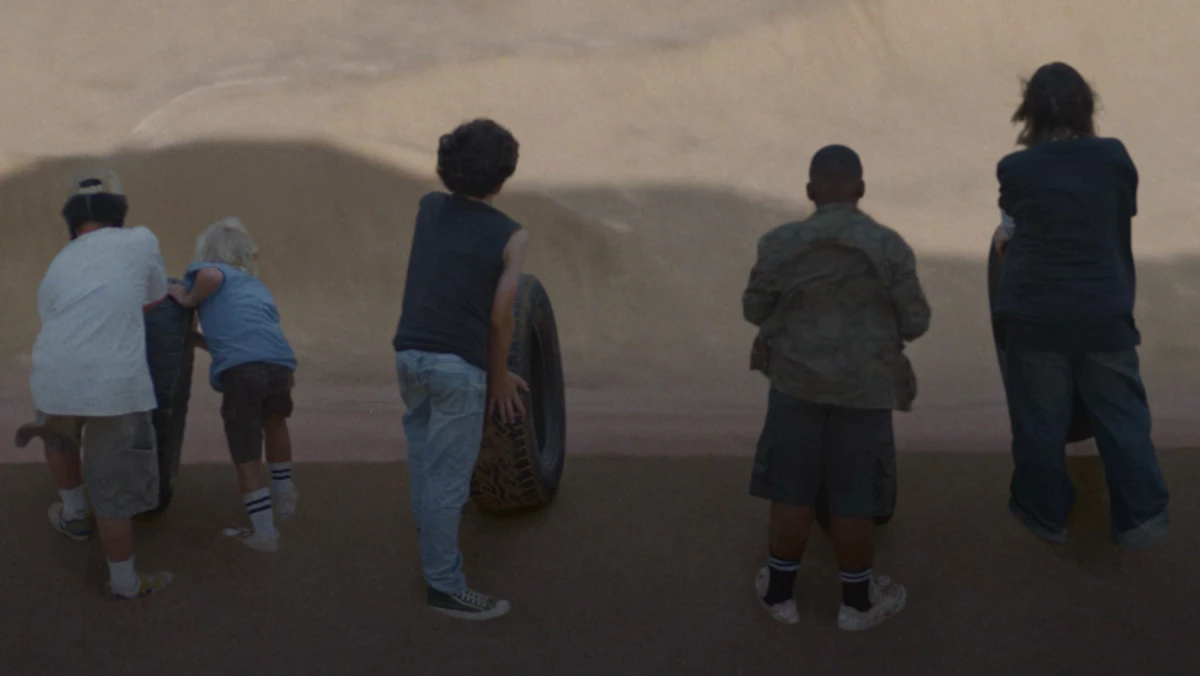
"Born to Compete" kickstarts with four children racing tyres down dunes.
The spot gradually escalates from playful competition into something more intense as the tyres gather speed across the desert.
With the tyres becoming the stars and the dunes becoming the racetrack, viewers are made to focus on the emotional instinct behind competition instead of the machinery itself.
The campaign launches across Europe as Ford attempts to unify its messaging under a global platform.
It also continues the company’s recent creative relationship with Wieden+Kennedy, which previously developed Ford’s Daniel Ricciardo desert campaign centered around the Raptor and Formula 1.
While this earlier effort focused on personality and freedom, this latest work goes even more stripped-back by reducing competition to its rawest form.
Ford’s 'Ready Set Ford' Relaunch
Ford seems less interested in listing what its cars can do and more interested in how they make you feel watching them.
Its latest campaign offers a useful reminder that emotionally engaging the audience often beats overloading them with features:
- Strong campaigns simplify big brand histories into one memorable visual that people immediately understand.
- Emotional storytelling can create stronger recall than technical messaging, especially when you're reintroducing a brand platform to the market.
- Consistent storytelling across films, digital assets, and global markets helps sharpen long-term brand positioning.
Last year, Ford made an estimated $187.3 billion in global revenue, with a market share of 10.8% in the U.S.
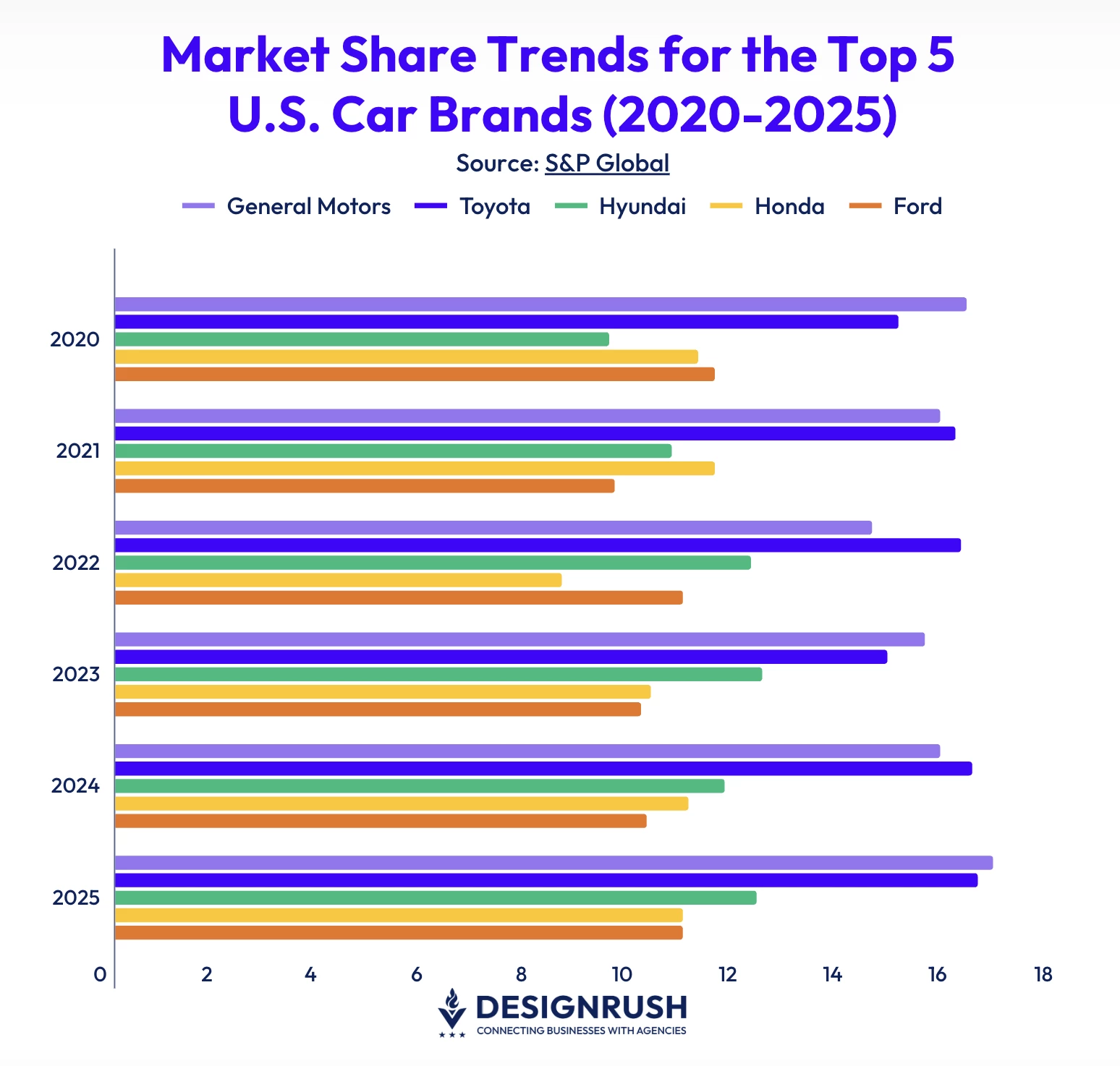
Its latest shift towards a story-driven approach allows it to stay competitive among its legacy competitors.
Our Take: Can Instinct Sell Cars Better Than Specs?
People rarely dream about torque numbers.
They dream about movement, escape, and adrenaline.
Ford's latest push gets that and visualizes it to a tee.
The image of kids racing tyres down dunes feels ancient in a way modern car ads rarely do anymore.
It harnesses the same instinct that made racing compelling long before sponsorship logos and dashboard screens took over everything.
Overall, Ford is trying to reclaim an emotional territory that the category slowly abandoned, while other brands get obsessed with tech specs and futuristic dashboards.
Recently, Lexus took almost the opposite approach by selling craftsmanship and refinement to push its latest luxury EV lineup.
Automotive brands need partners who understand how to build campaigns for diverse audiences.
Find top automotive branding agencies in our directory.