
SXSW 2026 AI and Storytelling: Key Findings
- Serena Williams told founders at Axios House that poor storytelling is why strong products fail to raise funding.
- Fox Entertainment's president of marketing cited audience backlash after his team posted AI-generated content without disclosing it.
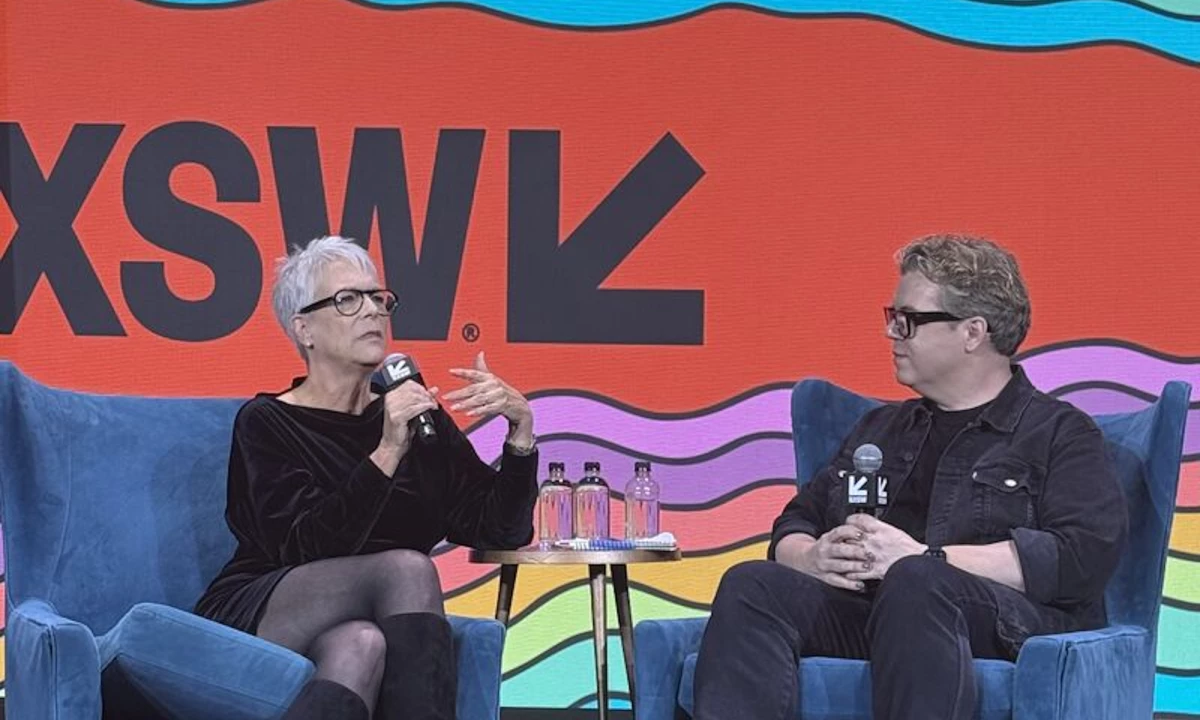
- Jamie Lee Curtis and Morra Aarons-Mele both argued that transparency and human connection create strong storytelling.
SXSW 2026 had no shortage of AI talk, but some of its biggest sessions cut through with human-led arguments.
Tennis legend Serena Williams, speaking at Axios House as entrepreneur-in-residence at Reckitt Catalyst, told founders that the most underestimated skill in business is the ability to tell a compelling story.
Actor and producer Jamie Lee Curtis, closing her own session later in the week, made a parallel case.
She explained that films exist because people need to tell stories and others need to hear them, and that no tool changes that fundamental truth.
Elsewhere at the festival, executives from Adobe and Fox worked through a harder version of the same question, including what happens when brands deploy AI without telling anyone.
Both threads ran through most of SXSW 2026, sharpening the question at the center of it all.
Where does human storytelling sit in a moment defined by rapid technological change?
Storytelling, Funding, and the Human Pitch
Williams said she has believed in founders who had genuinely strong products and still couldn't raise funds.
The reason in most cases, she claims, was the same:
"They had probably some of the best products I've seen, but they never were able to raise money because they weren't able to kind of get that idea across to other people," she said.
Her session focused on underinvested entrepreneurs, including women and people of color, who bring real solutions to real problems but lack the mentorship to communicate them effectively.
Curtis made her point from the production side.
Now working as a producer through Comet Pictures, she reflected on the film "Everything Everywhere All at Once."
It was shot in 38 days on a $12 million budget in a repurposed office building, and Curtis used it as an example for what's possible when a story is strong enough.
Her focus now is on finding and supporting talent that the industry tends to overlook.
For brands and agencies, both sessions pointed toward narrative clarity as a commercial asset that drives trust, investment, and conversion.
This is also where the AI conversation at SXSW became most relevant.
AI, Transparency, and the Creator Economy
At Variety's New Frontiers in Entertainment panel, presented by Adobe, executives from Blumhouse, Fox Entertainment, Mattel, Adobe, and the NFL worked through what AI actually looks like in practice.
Adobe's VP of generative AI, Hannah Elsakr, described AI as the next wave of that same democratization, drawing a link from Photoshop's early backlash in the 1990s to where the industry sits now.
Fox Entertainment's president of marketing, Daren Schillace, also offered the panel's most candid moment.
He discussed how his team had previously posted AI-generated content internally without disclosing it, assuming audiences would recognize it.
However, the move was met with backlash instead.
"It became about, 'You're taking jobs from artists.' There were artists who actually made this. We didn't provide any context or the transparency that we should have," he explained.
Fox's story is another example of how people expect honesty about AI use, and how brands that skip that step are learning the hard way.
Morra Aarons-Mele, author of The Anxious Achiever, also addressed the internal version of the same problem in a separate session.
AI anxiety in the workplace, she argued, is a normal response when people feel their skills are being challenged, and leaders who ignore those concerns only deepen the problem.
Transparency, she said, is what actually moves teams forward.
This is especially relevant as consumer trust in AI advertising remains low, with audiences increasingly attuned to when brands are using the technology and expecting them to say so upfront.
The sessions at SXSW 2026 pointed toward a few things brands and agencies should take note of:
- Storytelling is a commercial skill: Narrative clarity drives investment, trust, and conversion at every level of a business.
- Disclose AI use proactively: Schillace's experience at Fox is a live case study in what happens when teams assume audiences will fill in the gaps.
- Treat AI anxiety as a leadership issue: Honest conversations about AI integration are what keep teams engaged and productive.
The brands and creators that will come out on top in 2026 are the ones who use AI tools honestly and keep the human story at the center.
Our Take: Is the Industry Finally Getting Honest About AI?
We think the Fox story provided one of the best lessons at SXSW this year.
A major studio's marketing team made an assumption about what audiences would accept, got it wrong publicly, and then were honest about the fallout it caused.
What Williams and Curtis added was the longer view, in that the fundamentals of storytelling, clarity, authenticity, and emotional connection, are not being replaced by AI.
They are, if anything, becoming more valuable as the volume of AI-generated content increases and audiences get better at spotting what feels artificial.
The brands that will thrive in this period are the ones building genuine brand narratives alongside AI tools, and not treating one as a substitute for the other.
Brands navigating AI integration in creative and marketing workflows need agency partners who understand both the technology and the human dynamics around it.
Check out the top AI companies in our directory.