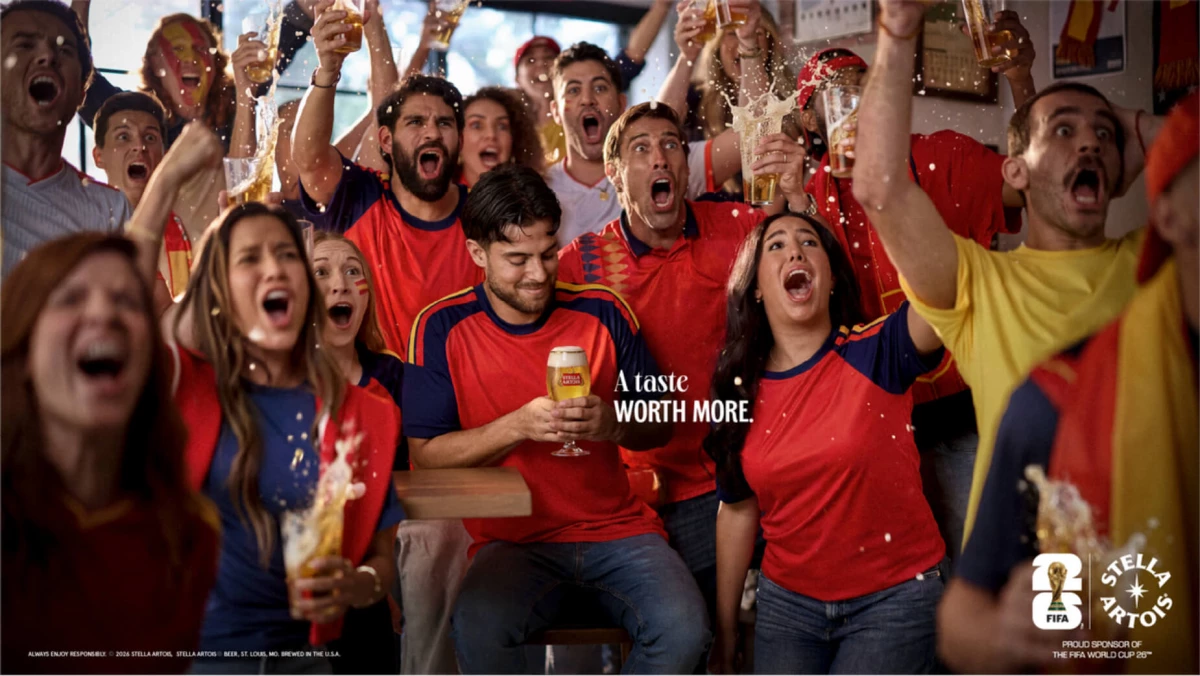

Every World Cup ends the same way, with the champion's captain kissing the golden trophy on live TV.
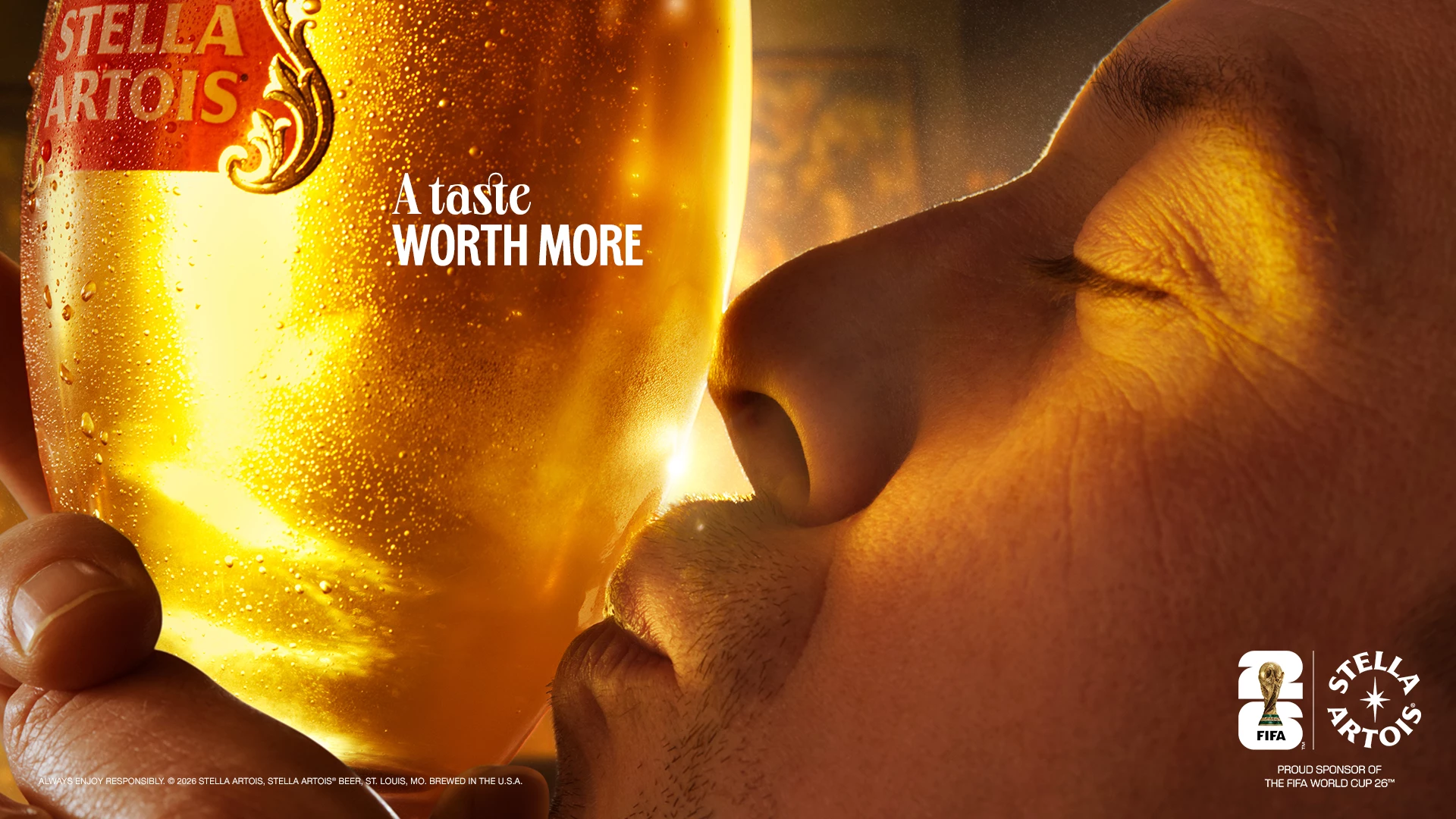
Stella Artois recreated this image for its final tournament ad, handing the kiss to a fan and its own golden chalice.
As Official Sponsor of the FIFA World Cup 2026, the AB InBev brand is closing out the tournament with a new limited-time ad from GUT New York.
"Kissing the Gold" shows a fan kissing the chalice the same way a winning player might kiss the World Cup trophy itself.
It debuted at 5:00 p.m. ET immediately after the Final, taking over digital boards in Times Square and at LA Live for 24 hours.
Then, it landed as a full-page ad in the New York Times Sports section the following morning.
This year's tournament spanned 48 teams and 104 matches across three host countries, making it the largest edition in World Cup history.
It also gave sponsors months of touchpoints and plenty of room to decide how to cap their campaigns.
Stella Artois used this runway to plant its golden chalice as the recurring symbol.
"This World Cup belonged as much to the fans as it did to the players on the pitch," Chris Jones, Group VP of Marketing for premium brands at Anheuser-Busch, said in a statement.
"This new creative is our way of highlighting chalice as the 'fan's gold,' raising a glass to both the fans and the champions who made this tournament truly unforgettable."
The last round has been played, but there are always more rounds of Stella.
— Stella Artois (@StellaArtois) July 21, 2026
Until next time, @FIFAWorldCup. pic.twitter.com/lvEaANsIUg
Calling its chalice the "fan's gold" makes a regular beer glass feel like a prize that fans can claim as their own.
It's an advertising strategy that puts Stella Artois at the center of every World Cup celebration, glass in hand.
Stella Hits Two of America's Busiest Screens
The ad's rollout mirrored how fans lived the tournament's final hours, with a scroll, then a screen, then something they could hold the next morning.
The digital takeovers hit two of the country's busiest viewing hubs within the hour of the final whistle.
The print placement, meanwhile, gave the campaign a slower, more collectible close the next day.
It reached readers over their morning coffee, once the phones were finally down.
View this post on Instagram
"Kissing the Gold" also serves as the bookend to a months-long push tied to Stella's "Taste Worth More" platform.
The tournament run started with a TV commercial starring David Beckham and the "All Rounds on Beckham" sweepstakes.
The brand then moved into its "Work From Bar" initiative.
This effort reimbursed fans' matchday tabs during the knockout rounds and opened a WFB HQ pop-up in New York City.
Each phase carried versions of the same brand message that the real celebration happens wherever the pour is being served.
Read together, the four activations trace a single continuous idea rather than four separate campaigns.
Beckham's commercial introduced the chalice as a stand-in for the trophy.
The sweepstakes and "Work From Bar" gave fans a reason to keep drinking Stella, specifically while they watched.
"Kissing the Gold" simply closes the loop by putting the same chalice on the same stage as the actual trophy, one day after it was lifted.
And by doing this, Stella Artois hands the final word of its sponsorship to the object fans already associate with the brand instead of to a spokesperson.
A Tournament-Long Play Pays Off Late
Most World Cup advertisers spend their biggest media push before kickoff, but Stella Artois saved one for the end of the tournament.
This gamble for attention holds up because the brand spent the entire tournament training fans to look for its rituals in the first place.
"Kissing the Gold" doesn't have to introduce the chalice as a symbol. It just needed one image and a logo, at the right hour, to close the loop.
Most FIFA World Cup 2026™ weekday games will be played during office hours — but if your team works from bar, they won't miss a thing.
— Stella Artois (@StellaArtois) June 2, 2026
Work From Bar and expense your Stellas on us when the games begin on 6/11. When will your team be WFB during the @FIFAWorldCup? pic.twitter.com/6IMQM9B3hU
This offers a few lessons for sponsorships that run the length of a sport's season:
- Save a beat for the ending: A campaign that spends months building a symbol earns the right to cash it in in one image once the event is over.
- Match the media buy to the moment: Times Square and LA Live get seen after work hours on the final day in a way that no scheduled buy can replicate.
- Let the object do the talking: The chalice needed no new spokesperson to close the story, because the prior campaigns already did the work.
Stella Artois wasn't the only Anheuser-Busch brand chasing screen time this tournament, and the tonal gap between them is wide.
Budweiser went full nostalgia, marking 40 years as FIFA's beer sponsor with an 11-bottle "Budstalgia" anniversary pack and archival-footage ads.
Michelob ULTRA went full narrative, reuniting 1994 World Cup stadium stewards to watch a match for the first time after decades of working with their backs to the pitch.
Stella Artois sits in between the two, less backward-looking than Budweiser, and less story-driven than Michelob ULTRA.
Chalice included, it focused more on building a connective thread across four months of activations.
Our Take: What Does a Sponsorship Owe Its Last Day?
Putting your own chalice next to the actual World Cup trophy is a bold move, and we mean that literally.
This comparison only works if you've built years of brand awareness and the audience already loves you.
Try this stunt without months of goodwill built up first, and a fan just sees a beer brand cutting in line during the biggest night in sports.
Some stars are worth more. pic.twitter.com/jdlCDaQbEn
— Stella Artois (@StellaArtois) July 21, 2026
The years of chalice ownership Stella banked were needed before it could get away with this kind of comparison at all.
We'd love to know if Stella tracked any lift in chalice or glassware sales around the World Cup Final.
Because this is where this idea either becomes a real asset or just a clever ploy to keep the brand top-of-mind.
Brands need agencies that understand how to connect talent credibility with consumer and retail campaign objectives.
Explore these top sports marketing agencies in our directory.