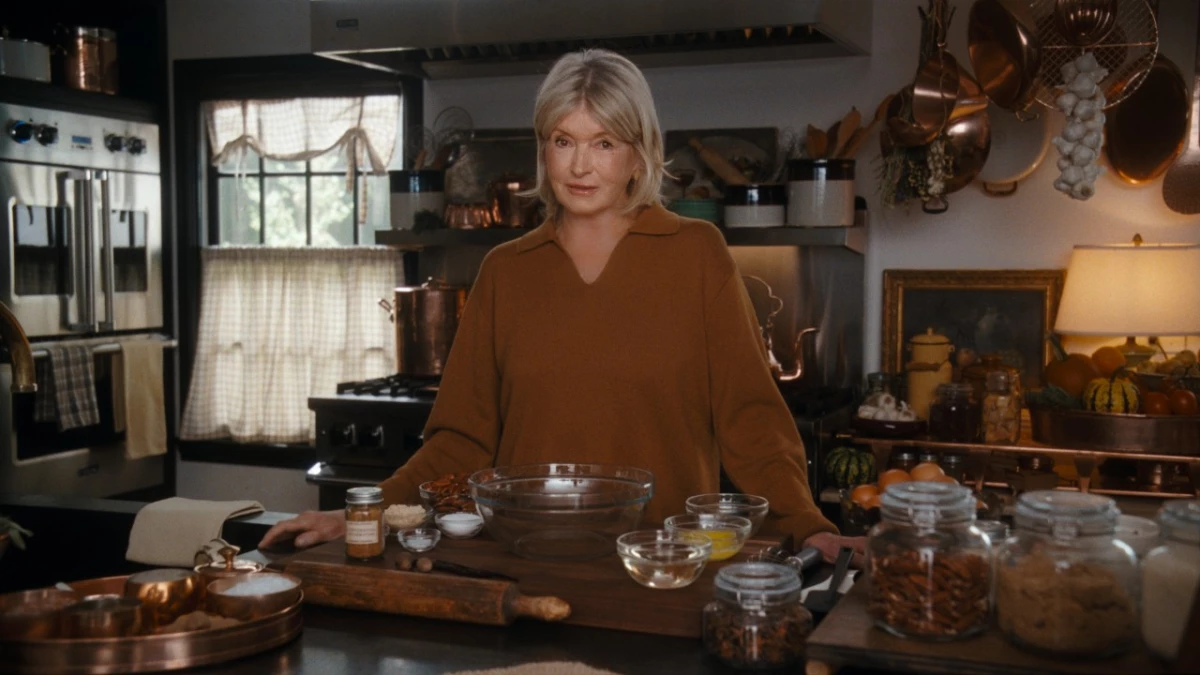

Martha Stewart is baking a pecan pie to tell Kalshi’s users that insider trading isn't allowed on the exchange.
Kalshi launched the campaign on Nov. 17 across TV, digital, social, and out-of-home placements.
The work comes from Es Muy Good, an independent four-person agency that opened last December.
According to iSpot data cited by The Wall Street Journal, Kalshi has spent an estimated $50 million on linear TV media over six months.
Within that period, the agency has made more than 35 spots for the exchange.
The idea draws on Stewart’s early years as a Wall Street stockbroker, before she built her business empire.
Kalshi connects her eye for detail to its position as a federally regulated exchange where, it says, every user plays by the same rules.
Stewart was never convicted of insider trading, though she went to prison for lying about a stock sale.
Kalshi describes this as her first time talking about insider trading.
Stewart explained what drew her to the exchange.
"I was drawn to their model of being a financial exchange, similar to the stock market, where you can trade on anything from sports to tech to real-world events," she shared.
"But with the core principles that I stand behind: fair and transparent exchanges and healthy incentives."
Brands in regulated categories often reach for celebrity marketing to borrow credibility, and Kalshi picked a spokesperson whose history gives the warning extra weight.
The campaign launched alongside Kalshi’s acceptance of the third-quarter report from its independent Market Integrity Committee.
Kalshi will add risk ratings to its surveillance program as a result.
Robert DeNault, Kalshi’s head of enforcement, said the changes will let the team "zero in on bad behavior faster and with higher priority."
Stewart’s Pecan Pie and Kalshi’s Audit
The spot is an ode to Stewart’s 1990s cooking show.
She invites viewers to bake a pecan pie with her while she explains why fair and transparent markets matter, while the set replicates her own show kitchen.
At one point she says, "Kalshi doesn’t stand for insider trading, and neither do I."
The agency's creative leadership includes founder Steve Gonzalez and executive creative director Steven Nasopoulos.
Its earlier Kalshi work includes a Timothée Chalamet series shot on 35mm by cinematographer Linus Sandgren.
The surveillance review behind the announcement was broad.
It covered 500 million historical trades, nearly 900,000 alerts, and 5,585 market series across 421 subcategories, per Kalshi's press release.
The Committee found that markets making up about 98% of trading volume carry lower risk of access to material nonpublic information, including live sports, weather, and crypto prices.
For the rest, it recommended tailored alert thresholds, and Kalshi is building a tiered system that sends most alert capacity to higher-risk markets.
The exchange also disclosed more than 50 referrals to law enforcement for suspected insider trading in the second and third quarters.
Kalshi Holds 15.3% of Wagering TV Spend
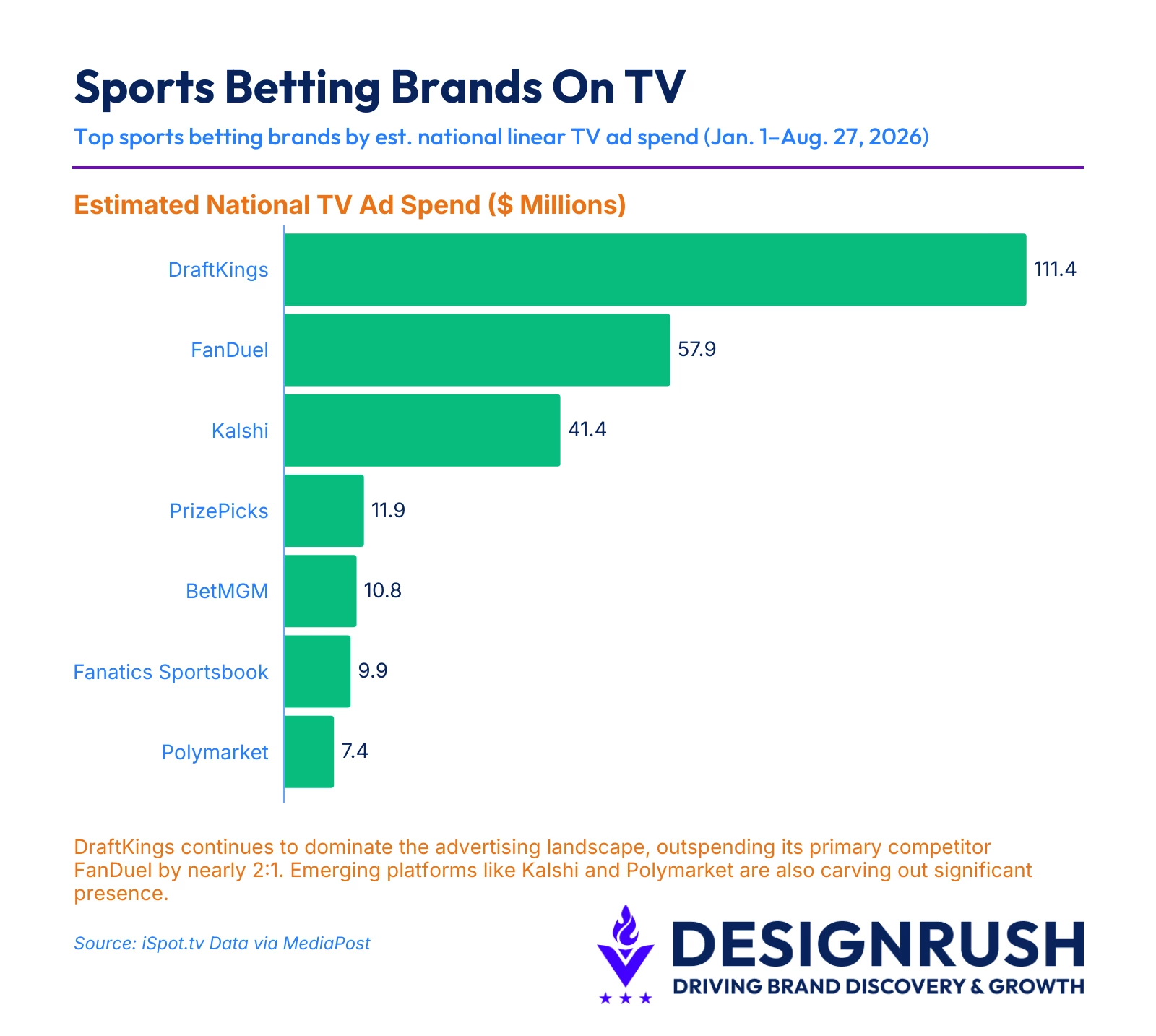
Kalshi ranks third in national wagering TV ad spend at $41.4 million through Aug. 27, a 15.3% share, according to iSpot estimates reported by MediaPost.
 The American Gaming Association says Kalshi is the most visible sports wagering brand by digital ad impressions, with about 5.2 billion this year against 2.9 billion for FanDuel.
That volume leaves three lessons for any brand that hands a TV schedule to a small agency.
Judge Agencies on Output
Brands should ask how many finished spots a shop can deliver on a deadline.
Es Muy Good’s four people have made more than 35 Kalshi spots in six months, according to the Journal.
Script the Rules Into the Spot
Brands in regulated categories should write legal limits into the creative itself.
Stewart states that insider trading is banned, monitored, and referred to law enforcement.
Release Proof Alongside the Ad
Brands should publish data on the day a spokesperson makes a claim.
Kalshi announced the Committee’s 98% lower-risk finding and its 50-plus referrals as the Stewart campaign launched.
All in all, Kalshi’s enforcement review gave Es Muy Good a real policy update to dramatize.
Our Take: Who Is the Real Audience for This Spot?
We read the Stewart ad as a message for Washington as much as for customers.
The Intercept reports that Congress is expected to launch probes into the industry, and a show-kitchen ad gives Kalshi a public record of its enforcement pledge before hearings start.
Es Muy Good chose a host who knows firsthand what a securities case costs.
We also credit the agency for picking a familiar TV format that makes a policy message easy to watch.
If it were up to us, the next flight would show Stewart citing a real enforcement outcome from Kalshi’s referrals.
Want a campaign that hits this hard without renting someone else's controversy?
Explore these top sports marketing agencies to find partners for campaigns tied to live sports and fan behavior.