
Starbucks' Bearista Cup Craze: Key Findings
- Starbucks' $30 Bearista Cold Cup sold out nationwide within hours on November 6, with resellers immediately listing cups for $1,000+ on eBay.
- Walmart and ALDI launched copies within days, generating viral social buzz through humorous brand commentary.
- The cups' scarcity created a huge ripple effect, including overnight queues, in-store conflicts, and massive media coverage.
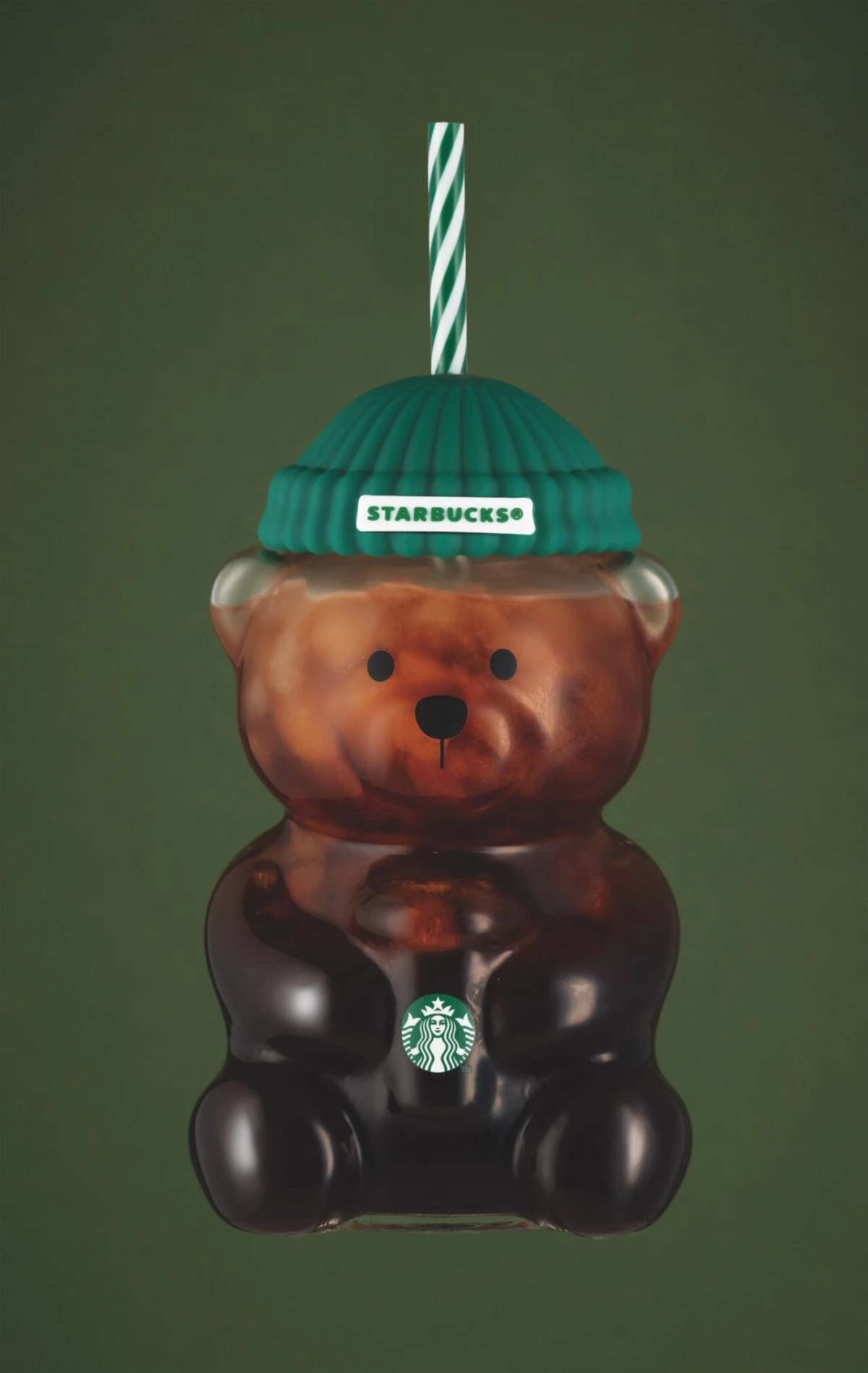
A glass bear-shaped cup wearing a green beanie is all it took for Starbucks to break the internet this week.
The coffee brand's limited-edition Bearista Cold Cup launched on November 6 for $29.95.
And within hours, they disappeared from stores all across the U.S.
The 20-ounce glass container shaped like a honey bear, holding its own tiny Starbucks drink, has become one of the season's biggest cultural phenomena.
What started as holiday merchandise quickly escalated into people camping outside stores overnight.
Unwanted altercations and a resale boom with cups listed for over $1,000 on eBay came next.
Has what appeared to be a retail supply failure become one of Starbucks' best marketing moves?
Breaking Down the Bearista Obsession
The way this moment unfolded shows how a simple product drop can move past retail and turn into a huge cultural event.
Starbucks distributed minimal inventory of the Bearista cups per location, with some stores receiving as few as one or two items each.
This extreme scarcity triggered immediate FOMO that spread across social media like wildfire.
And within 48 hours, competitors took full advantage of the Bearista craze.
Walmart started selling near-identical bear cups for $14-24.
Meanwhile, ALDI announced a $4.99 gingerbread alternative with the cheeky tagline, "That Seattle-based coffee chain could neva."
The speed of these responses shows how product drops now function as real-time marketing opportunities for retail brands.
The resale market exploded instantly, with eBay listings of $170 to $1,050 for the original $30 cup.
The frenzy got messy enough that Starbucks had to issue an apology on the same day.
Customers flooded social media platforms to complain about short cup stocks and employees allegedly snatching them up before stores even opened.
"The excitement for our merchandise exceeded even our biggest expectations," Starbucks said in a statement to People.
The coffee giant insisted it shipped more Bearista cups than almost any other holiday item, but acknowledged the disappointment of not having enough caused its fans.
However, with no restock of the cups planned, this only drove resale prices higher.
A Closer Look at Scarcity Marketing
When limited-edition merch hits stores, it can tap into psychological triggers that drive consumer behavior beyond rational purchase decisions.
According to research from Eventbrite, nearly 7 in 10 millennials experience FOMO regularly, making scarcity drops especially effective with younger consumers.
The global collectibles market itself has blown up, reaching $412 billion in 2024, demonstrating consumers' willingness to pay high prices for exclusive items.
Making the cups an in-store only offering also shows how physical retail exclusivity creates a sense of urgency among customers, which can't be replicated by online sales.
Studies have found that perceived scarcity increases product desirability by up to 200%.
This explains why limited drops generate far more engagement than regular product launches.
Thanks to the cups' extreme demand, customers filmed themselves rushing to and camping outside storefronts.
And in return, they gave Starbucks millions worth of free marketing.
For brands watching this event unfold, here are some key points to pay attention to:
- Don't fake scarcity: Real shortages create real urgency (Starbucks actually ran out of Berista cups to sell).
- Expect the knockoffs: You might get copied, but treat it as validation of your success instead of a threat.
- Don't just measure sales: The Bearista cup's real value was in the earned media, social frenzy, and brand heat it generated.
Moments like this can be used to spark online conversations that spark actual attention and interest.
Our Take: Why Did a $30 Cup Become a Cultural Event?
I think the Bearista cup phenomenon showed us what can happen when timing, scarcity, and design all hit at once.
What mattered more here was that a lot of people became part of a shared moment.
The craze took off because it felt spontaneous and real, driven by social media buzz and the chance to collect something rare.
ALDI and Walmart's quick response showed us how timing and humor can help you turn another brand’s moment into your own.
In the end, the Bearista moment tells us that culture moves fast, and the smartest brands move with it.
In other holiday-related news, Boots UK's holiday campaign featured Puss in Boots as its festive hero.
This proves that character-driven storytelling can also drive emotion and sales during the retail rush.
Smart product drops and seasonal campaigns work when brands understand consumer behavior.
These retail advertising agencies create strategies that turn merchandise into cultural moments and drive measurable results.