
SEO Roundup: Key Findings
- Google search ranking volatility continues to rise, making traffic forecasting less reliable for sites dependent on organic discovery.
- AI brand and product recommendations rarely repeat, weakening consistency and predictability, according to new research from Rand Fishkin.
- Strong local search performance often fails to carry into AI results, limiting visibility for brands that already rank well, based on findings from SOCi’s 2026 index.
Each week, DesignRush's SEO team analyzes the most important changes shaping search and paid media. Companies seeking expert support can browse our complete directory of vetted SEO agencies.
The past seven days have brought renewed ranking volatility, a formal warning from Google on search data access, and new evidence of inconsistent AI recommendations.
Here's the latest on this week's search industry movements.
January Search Volatility
Google search ranking volatility has remained elevated since January 21, with many SEO practitioners reporting traffic fluctuations.
The friction appears unrelated to any confirmed update, suggesting that Google is testing ranking changes or running smaller, unannounced adjustments.
Sites across multiple niches are experiencing position shifts, with severity varying significantly by industry and query type.
Google Search Data Warnings
Google's head of Search warned that "sharing our search index, ranking data, and live results would cause immediate and irreparable harm to us, our users, and the open web."
This is a response to regulatory pressure requiring the tech giant to provide competitors access to search infrastructure.
The warning argues that exposing ranking signals would invite manipulation and spam, reflecting Google’s opposition to antitrust remedies.
#Google says forcing it to share its search index and rankings would cause “immediate and irreparable harm.”
— Search Engine Land (@sengineland) January 26, 2026
Why? IP exposure, spam abuse, and user privacy risks.
Read the full affidavit 👇https://t.co/4w455oooBLpic.twitter.com/d4twW7XVaI
Click Loss in AI Mode
Google AI Overviews now lets mobile users ask follow-up questions that take them directly into AI Mode, making it even harder for websites to get clicks from search.
The feature creates a pathway from initial search to extended AI conversation, keeping users inside Google's interface without having to go to individual sites.
This represents another step toward zero-click searches, where AI answers eliminate the need to visit the source content.
Inconsistent AI Recommendations
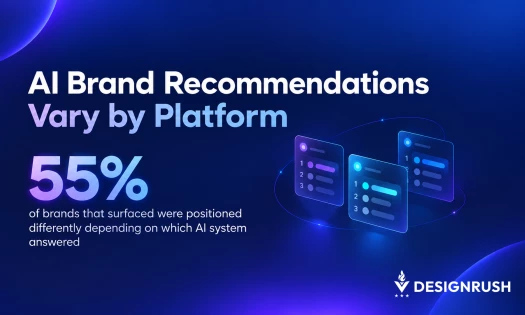
SEO expert Rand Fishkin's new study reveals that AI tools like ChatGPT and Claude rarely return the same brand or product list twice.
For businesses investing in AI visibility, this makes brand inclusion and order within recommendations difficult to predict or reproduce.
It reflects recommendation systems that refresh outputs frequently, reducing businesses' ability to build sustained visibility over time.
NEW research: https://t.co/yE1LogIFHO
— Rand Fishkin (follow @randderuiter on Threads) (@randfish) January 28, 2026
If you give ChatGPT the same request for product recommendations 100X, will you ever get the same list twice?
And what does that answer mean for folks who try to track their brand presence in AI tools?
Finally, some real answers 🧐 pic.twitter.com/r8R7IMSJm5
Local Search's Blind Spots
Most brands performing well in local search fail to appear in AI results, according to SOCi's newly released 2026 local visibility index.
The finding shows that strong local rankings don't carry over into AI-generated results, leaving even top map-pack performers absent from recommendations.
This points to AI systems relying on a different and more limited set of signals that determines which local businesses they surface.
Industry Pushback on AI Overviews
A poll by Barry Schwartz shows that 33% of website owners would block Google from using their content for AI Overviews if given the option.
This reflects growing frustration among publishers who see AI features as traffic cannibalization.
Chris Long also shared that Google will be required to allow sites to opt out of AI Overviews, properly attribute sources, and demonstrate how they rank sites fairly.
This regulatory pressure reflects growing limits on how much control AI features can exert over publisher content.
The updates this week create three immediate action items:
- Develop separate AI visibility strategies for local search, as traditional local SEO performance doesn't guarantee inclusion in AI results.
- Test AI recommendation consistency for your brand by running identical queries multiple times to understand visibility variance and patterns.
- Monitor January volatility impact on commercial keywords to identify whether fluctuations represent temporary testing or permanent ranking changes.
The gap between local search success and AI visibility suggests that optimization for different systems is key to solving this issue.
Our Take: Can AI Search Deliver Repeatable Results?
Repeatable results allow businesses to measure performance, users to compare options with confidence, and search to function as a dependable decision tool.
I think the AI recommendation inconsistency reveals a fundamental reliability problem that traditional search solved decades ago.
When identical queries produce different brand lists each time, AI search fails the basic requirement of repeatable results that users depend on for decision-making.
The 33% willing to block AI Overviews shows publisher patience is wearing thin as traffic cannibalization accelerates without a clear value exchange.
I suspect that regulatory pressure forcing opt-out mechanisms and source attribution will change AI search more than voluntary industry standards can.
For insights on measurement challenges and ChatGPT keyword behavior patterns, check out last week's SEO roundup.
Need support navigating ranking volatility and AI visibility strategies? These leading SEO agencies develop approaches that adapt to fragmented search environments.