
Ads on ChatGPT: Key Findings
- OpenAI has expanded ChatGPT ads to all Free and Go users in the U.S., increasing competition for visibility inside AI search experiences.
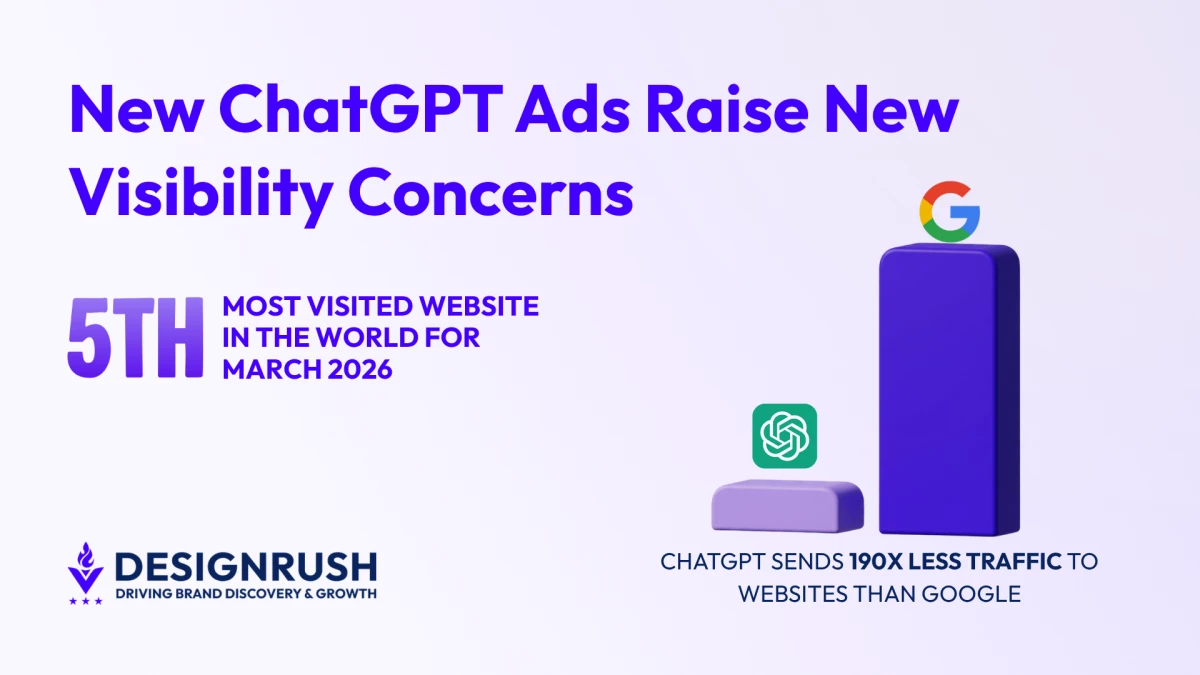
- ChatGPT reportedly sends around 190x less traffic to websites than Google, showing how AI discovery often ends inside the platform instead of through clicks.
- Baunfire says brands should prioritize conversion-ready websites, since owned channels matter more when AI controls discovery.
Digital visibility has slowly moved away from Google’s results page to AI platforms like ChatGPT. And with OpenAI’s latest move, even more visibility may be lost.
According to a Reuters report, OpenAI has rolled out ads to all free and Go ChatGPT users in the U.S. The move expands monetization across one of the web’s fastest-growing platforms.
We’re starting to roll out a test for ads in ChatGPT today to a subset of free and Go users in the U.S.
— OpenAI (@OpenAI) February 9, 2026
Ads do not influence ChatGPT’s answers. Ads are labeled as sponsored and visually separate from the response.
Our goal is to give everyone access to ChatGPT for free with… pic.twitter.com/S9BV24uJLb
It’s a timely development as OpenAI has faced significant financial pressure over the last few months due to operational losses and a high burn rate.
At the same time, OpenAI continues to expand its commercial partnerships, including a reported $1-billion investment and licensing agreement with Disney tied to its Sora platform.
Why Ads in ChatGPT Matter
This all matters because ChatGPT is no niche product.
According to Semrush, the platform drew nearly 1 billion monthly visits through early 2026. A March 2026 study by Semrush also has ChatGPT as the fifth most visited website globally.
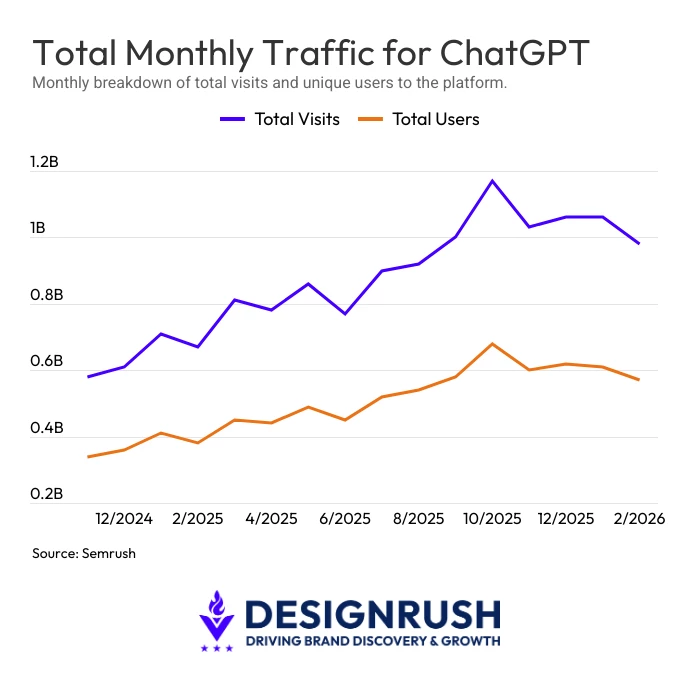
Despite this, extrapolated Ahrefs data suggests ChatGPT sends roughly 190x less traffic to websites than Google.
While this might sound like a flaw with ChatGPT, assuming such would be a mistake.
Unlike traditional search users, who often click through several links, ChatGPT users typically arrive with a specific intent and receive answers directly inside the interface.
As such, few users have a reason to click on any links to other websites. This is one of the reasons why organic traffic has plummeted for many websites.
“AI platforms compress discovery into fewer, higher-intent moments,” says Pedro Aviles, project manager at award-winning digital agency Baunfire.
“That makes every downstream interaction more valuable. When a user chooses to visit after receiving an answer, the expectation level is already higher.”
Now, the introduction of ads takes another layer of potential discoverability and visibility away from Google.
\
From Broad to Precision Visibility
Given the situation, some brands may decide to allocate a larger share of their budgets to ChatGPT ads. However, Aviles cautioned against this knee-jerk reaction.
That’s because putting all your eggs in one basket often backfires. In the case of AI platforms and visibility, overinvesting can lead to real structural risks:
- Loss of control: AI decides how, when, and in what context your brand appears. Messaging and placement may no longer be fully yours to shape.
- Commoditization: AI can present competitors side by side with little distinction. Without strong positioning, brands risk becoming interchangeable.
- Data opacity: Visibility inside AI environments often comes with limited reporting, making it harder to understand how users discover you or why they convert.
- Volatility: Platform rules, ranking logic, and ad formats can shift quickly. A strategy that is too dependent on a single ecosystem may lose everything overnight.
Instead, Aviles said that brands should pay more attention to aspects that they can control and design a home-run experience.
“Brands should shift from broad visibility to precision and conversion readiness. You may not control where discovery happens, but you still control what happens next,” he explains.
“The opportunity is not to compete inside AI interfaces alone, but to ensure that when you are referenced, the experience behind it holds up.”
To be more specific, Aviles and his team at Baunfire recommend brands take the following steps:
1. Invest in Websites That Convert Decisively
While AI can introduce a brand, it can’t fully express it to users.
Depth, credibility, and conversion still happen on owned digital surfaces, which makes websites even more important.
According to Aviles, a modern website should become a “system of record” which serves three critical roles:
- Validation: Reinforce trust quickly through clear messaging, proof points, testimonials, and substance that confirms the recommendation was justified.
- Expansion: Give visitors the depth AI summaries cannot provide, including nuanced service details, case studies, pricing context, and expertise.
- Conversion: Turn high-intent visits into action through frictionless UX, clear calls to action, and obvious next steps.
2. Structure Content for AI Discoverability
AI systems favor content that is easy to interpret, organize, and retrieve. That’s why brands that publish useful information in confusing formats often lose visibility.
Fortunately, structuring content more strategically can fix this issue. In particular, Aviles recommends focusing on:
- Flexible content architecture: Build site structures that support both human users and AI. Clear hierarchies, logical page groupings, and consistent terminology help both.
- Semantic clarity: This focuses more on the technical side. Use headings, FAQs, schema, and direct answers that help AI systems understand what the page is about.
- CMS environments built for speed: Use content systems that allow rapid updates, testing, and iteration without requiring full rebuilds or technical bottlenecks.
3. Build a Differentiated Point of View
AI has a habit of flattening competitors into a shortlist based on the “search” intent of users.
Unfortunately, this makes competitors sound the same. And when that happens, price becomes the biggest deciding factor.
To differentiate from competitors, brands should focus on building a recognizable, credible, and hard-to-imitate point of view.
This can include:
- Original research or data
- Strong opinions backed by expertise
- Clear positioning around who the brand serves best
- Consistent messaging across channels
- Case studies that prove real outcomes
AI can summarize information, but it struggles to replicate genuine authority and perspective.
Brands that stand for something clear are more likely to be remembered after the prompt ends.
Own the Experience Even If You Don’t Own Discovery
AI platforms may increasingly control who gets surfaced, but they can’t fully control which brands earn trust, preference, or conversion.
As such, brands looking to better position themselves should invest in owned channels and conversion-ready systems, rather than chase platform visibility alone.
“You likely will not outspend or out-position competitors inside AI platforms. But you can out-execute once users engage,” Avlies says.
“That’s why future-proofing is less about predicting platforms and more about building a durable foundation.”
Because in the new attention economy, getting noticed is nice. But being chosen is what keeps the lights on.