
Our analysts track developments that are reshaping organic visibility and AI discovery. Brands building search programs can partner with vetted SEO agencies for strategic implementation.
Recent platform changes altered what brands can see about their own search traffic.
- WebmasterWorld posters reported traffic swings after the spam update, while two Rank trackers differed fivefold on swapped Google results.
- ChatGPT links lost their UTM tag after GPT-6, and Adobe’s Cedric Huesler measured Direct visits rising on the same pages where ChatGPT visits fell.
- Google announced on October 15 that AI Overviews and AI Mode show more inline links higher in responses, and the announcement gives no figure for visits.
Over the span of a week, two platforms changed how AI answers handle links, and neither change told brands how many visits followed.
Our Take: Does SEO Reporting Have a Data Problem?
ChatGPT's attribution gap sent some AI referrals into Direct in analytics reports.
SEO expert Chris Long has also reported that Google's anti-scraping measures are returning inaccurate results to rank trackers.
We read both as collateral damage, since neither change had SEO teams as its target.
Budgets and rewrites already run on these numbers. A team can audit its pages and its links. But can it audit the instruments that grade them? Not easily.
Rank Trackers Falter as Traffic Swings
A week after Google's September spam update ended, WebmasterWorld posters described traffic swinging every hour or two on October 15.
SEO news editor Barry Schwartz wrote that the chatter stayed heated through the weekend, calling it an unconfirmed update.
This unconfirmed Google update chatter is still pretty heated through the weekend
— Barry Schwartz (@rustybrick) October 19, 2026
Teams usually confirm an update with rank-tracking data, but that data is in doubt.
Utah-based rank-tracking platform Nozzle labeled8% of the results pages it judged since mid-September "poisoned."
Those pages looked normal but lacked most of a keyword's usual sites.
The size of the problem depends on who collects the data. Cloud-based rank-tracking platform AccuRanker saw a smaller share.
From Oct. 1 to 9, about 1.5% of its sampled keywords returned a different set of sites on page 1 each day, a fifth of Nozzle's rate under the same rule.
AccuRanker also stated that Google tightened its detection again on October 15, mostly on mobile, without any statement from the search engine.
Schwartz assumed it was going after AI bots and SerpApi.
Chris Long wrote on LinkedIn that Google appears to block scrapers with wide IP bans and more CAPTCHAs.
He also wrote that it feeds them normal-looking pages with bad data, leaving rank trackers "a large casualty."
Until that settles, Nozzle and AccuRanker both advised checking Search Console, where a site that dropped from a tracker but kept its impressions and clicks had not changed.
That leaves the search engine's own report as the referee for a problem the two blame on the same company.
GPT-6 Raised Direct Links to 42% of Answers
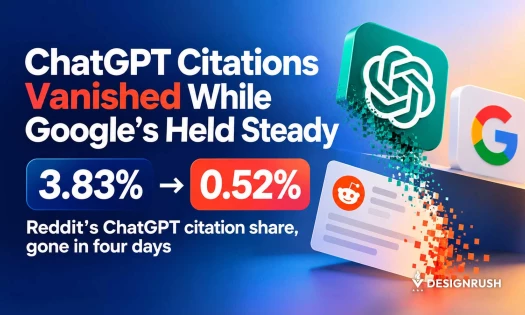
Adobe's Cedric Huesler reported that GPT-6 links lost their UTM tag and referrer on October 8, so analytics filed visits under Direct, its channel for visits with no identifiable source.
Adobe measured the effect on about 500 pages where ChatGPT drove at least 5% of visits.
From October 9 to 13, ChatGPT visits there fell 31,000 a day while Direct rose 26,000, in sampled data.
The cause turned out to be a bug. Huesler later wrote that OpenAI confirmed it on October 14 and that the fix began rolling out early on October 15.
OpenAI’s release notes contain no entry about the tag, the bug, or the fix.
GPT-6 also changed what ChatGPT links to, according to Tomek Rudzki, who works on GEO and AI search optimization at the AI search analytics platform Peec AI.
He ran the same 1 million prompts before and after GPT-6, from October 2 to 7 and from October 9 to 13.
In Rudzki's data, ChatGPT put a direct link to a website in 42% of answers, up from 8% to 10%, and 54% of those links pointed to a homepage.
Those links carry no tag, so the visits they drive arrive as Direct.
Since the prompts never changed, a GEO team that claims credit for a post-GPT-6 rise in ChatGPT visits is taking a bow for a model update.
Google Pushes More Links in AI Answers
Google announced in an October 15 blog post that AI Overviews and AI Mode now show more inline links and place them higher in responses.
The search engine is testing a top block for the one or two official pages a task needs, plus clickable creator names on AI Mode videos that open Search profiles.
Carousels for timely articles are spreading to more locations and languages, and they highlight a user’s Preferred Sources.
Google’s SVP of Knowledge and Information, Nick Fox, wrote in his post that the number of people using that feature has grown 7x since the beginning of the year.
One of the areas we’ve been pushing on in Search is making it easy for you to find relevant sites, first-hand perspectives, and content from sources you love. And we’re seeing that this work is resonating - the number of people who’ve used Preferred Sources to select sites they want to hear has grown by 7x since the beginning of the year. Today we’re sharing some new and upcoming updates to AI Overviews and AI Mode to help you find links to click out and dive deeper: ➕ More inline links embedded directly in the response ➕ A new section at the top of a response that prominently highlights the 1-2 links you need to complete a specific task or find exact info ➕ News carousels available globally for timely topics — which also highlight your Preferred Sources (see image below) ➕ Dive Deeper section that features a more clickable design with image thumbnails ➕ Clickable publisher and creator names in video results to see more of their work We’ve also continued to expand and evolve our commercial partnerships with news publishers, and now over 400 publications worldwide are part of our News AI pilot licensing program where we pay for the delivery and use of enhanced content to develop new AI features. We’re committed to iterating and improving as we learn and hear feedback, so give these new features in Search a try and let me know what you think!
— Nick Fox (@thefox) October 15, 2026
Publishers are joining the push, too. More than 400 now take part in the News AI pilot, which pays them for enhanced content that Google uses to develop AI features.
Search Console’s AI report counts impressions of those placements, and DesignRush noted in June that its first version carried no click data.
The platform discloses what it pays for and where it places links, and its announcement gives no figure for visits.
So if a link moves higher in an AI answer, who will show a brand whether a reader clicked? For now, only the brand’s own analytics.
SEO Industry Insights
Glenn Gabe wrote on X that Google’s test of an AI Mode sidebar on the main results page is another step toward making AI Mode the default, or some form of it.
The next phase in AI Mode migrating to default Search. I'm sure it's just another step in the roadmap towards AI Mode as the default (or some form of it).
— Glenn Gabe (@glenngabe) October 14, 2026
SEO researcher Damien Andell said on X that the sidebar now appears on every search for him. That means links inside AI answers could reach far more searchers.
Meanwhile, Dan Taylor, founder of 10 Spurs, wrote in a Search Engine Journal column that his prediction model puts the chance of a Google core update within 30 days at 96.8%.
He expects scaled content and fake authors to be the target, which Google's updated documentation already lists as quality problems.
Taylor argues Google could again judge whole sites on quality, as it did with its 2011 Panda update, so padding a thin page fixes nothing.
In turn, the audit worth doing before late October covers templated pages and invented author bios.
What SEO Teams Should Check Before Changing Strategy
Before changing budgets or rewriting pages, teams need to establish whether the numbers reflect a real shift in search performance.
- Compare rank trackers. Check sudden drops against Search Console clicks and impressions before changing pages or blaming a Google update.
- Reconcile ChatGPT traffic. Compare changes in ChatGPT referrals and Direct visits on the same landing pages to identify traffic misclassified after the UTM tagging change.
- Separate AI visibility from traffic. Track AI Overview impressions, referral sessions, and conversions separately, since more prominent links don't guarantee more clicks.
Google keeps expanding AI search, but as our last SEO roundup showed, reporting still misses key details about how users encounter and click links in AI Overviews.
If ChatGPT sends a reader to your homepage first, what does the homepage ask that reader to do?
These leading SEO agencies help brands check platform reports against the visits their own sites record.