
We run a lot of audits. Technical, content, backlink, local. Every agency does.
Each one answers a real question.
Can search engines crawl and render the site? Is the content covering what it should? Does any one credible, link here? Is the local footprint consistent across the places that matter?
Those are good questions and I'm not about to argue they've stopped mattering.
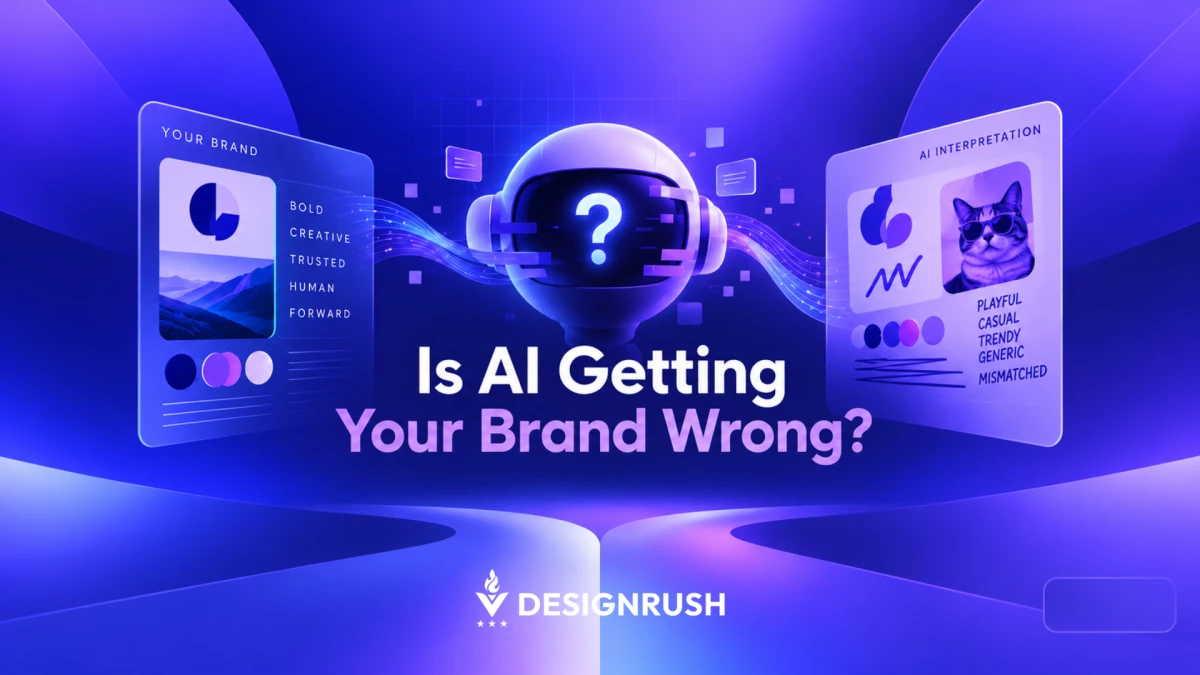
But over the course of my work at ForeFront Web I've started noticing that a client can pass all four and still get described wrong, or vaguely, or not at all, when you ask an AI assistant about them.
Every component checks out. But the thing the components are supposed to add up to don't.
Tutorial Stack’s 2026 walkthrough shows how brands can check their visibility across ChatGPT and other AI search experiences:
Why SEO Audits Miss AI Brand Visibility
The four standard audits share an assumption, which is that AI search visibility is built out of pages.
That held up when the output was ten blue links. A page ranked or it didn't. Fix enough pages and you fixed the site.
It holds up less well when the output is a recommendation.
Before any AI system can suggest your company, compare you to an alternative, or explain why you might be the right fit, it has to have some working model of what you are.
Not what your pricing page says, but what you are.
And nothing in a standard audit measures that.
neuroflash explains why strong traditional search visibility does not guarantee that a brand will appear in ChatGPT, Google AI Overviews or Perplexity:
What Google’s LLM Patent Reveals About Brand Entities
A 2023 Google patent called "Data extraction using LLMs" describes a system for building what the filing calls a deep, holistic characterization of a particular entity, where an entity can be a company, a product, a place, or a person.
A few things in it are worth sitting with.
The system generates an interpretation of the content it extracts rather than a copy of it. So it isn't storing your sentences, it's forming conclusions about you from them.
It organizes what it learns into a hierarchical graph, connecting services to audiences, locations, reputation signals, and differentiators, rather than keeping facts in a list.
And it explicitly pulls from beyond your website. The filing names maps data, business information, user reviews, and job listings as additional inputs.
Job listings. Your recruiting copy is a signal about what your company is.
Patents aren't products and plenty never ship. But this one lines up with where Google's search experiences have obviously been heading, and the underlying question it's built to answer is the one nobody's auditing.
YouTuber, James Dooley, explains how knowledge graphs and consistent digital footprints help AI systems understand and verify brand entities:
What an AI Entity Audit Should Check
To make sure your brand’s AI entity lines up with how you actually want the company understood, there are four things I’d look at first:
1. Consistency
This involves how your business is described across your site, your Google Business Profile, your directory listings, your social profiles, your press coverage, and your job postings.
Not identical wording, which would be strange. Just a coherent story.
Most companies I look at have three or four different versions of what they do floating around, usually because different departments wrote them years apart.
2. Corroboration
This investigates whether anything outside your own domain backs up your claims.
You can say you specialize in something on every page of your site.
But if there are no reviews, case studies, press mentions, or third-party listings saying the same thing, it's an unsupported assertion, and a system building a model from multiple sources will weigh it accordingly.
3. Topical associations
This includes what subjects you're actually connected to in public information, versus what you'd like to be connected to.
This is where companies find out they're understood as the thing they used to do.
4. Factual completeness
This looks at whether basic answers about you exist in machine-readable form.
What you do, who you serve, where, since when, who runs it, what it costs. A surprising number of sites can't answer at least two of those without a phone call.
Search Engine Journal explores how Google builds entity understanding from brand information and corroborating sources across the web:
How to Run a Five-Minute AI Brand Audit
The fastest version of this audit takes five minutes and no tools.
Open a few AI assistants and ask them to describe your company. Ask who it's for. Ask how it compares to two competitors by name. Ask what it's known for.
Then read the answers as evidence rather than as a verdict.
You're not looking for whether the AI is impressed. You're looking for what it got wrong, what it hedged on, what it left out, and where it pulled a detail from something you didn't expect.
I've done this with clients and the results are usually more instructive than the audit deck.
One had a full page of services that never came up, because the page existed but nothing anywhere else on the internet corroborated any of it.
Another got described accurately in terms of a market they'd left three years earlier.
But neither of those shows up in an AI crawl.
CrowdReply shows how to audit a brand’s AI visibility across ChatGPT, Gemini and Perplexity using prompts, mentions and citation sources:
Why Entity Audits Belong in SEO Strategy
I don't think entity audits replace anything. Technical problems still need a technical audit, and a site nobody links to still has a link problem.
What I think is that there's a layer above all of them that nobody's been checking, because until recently it didn't determine much. Now it determines whether you're in the set of options at all.
The question to add to your next audit cycle is pretty simple.
If a machine had to describe us using only public information, what would it say, and is that what we'd want a customer to hear?
Go find out. The answer takes five minutes and it'll probably annoy you.