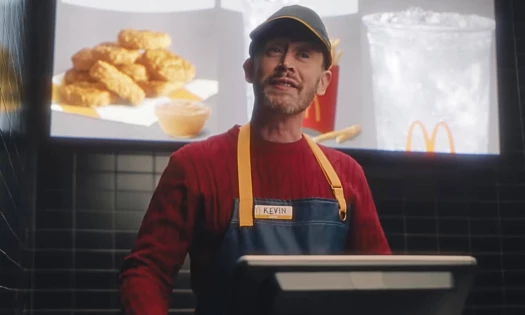


SAP's latest Joule ad puts workplace frustrations at the center of its humor.
Its production also gives creative agencies a practical example of how to use generative AI without handing over the entire filmmaking process.
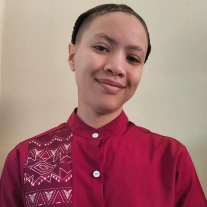
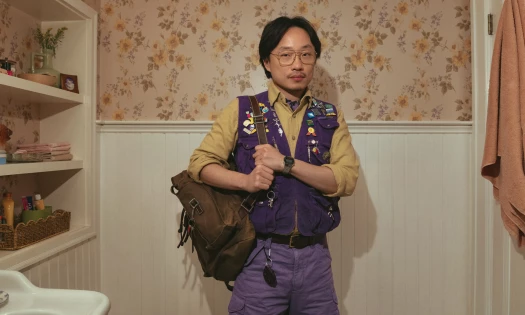
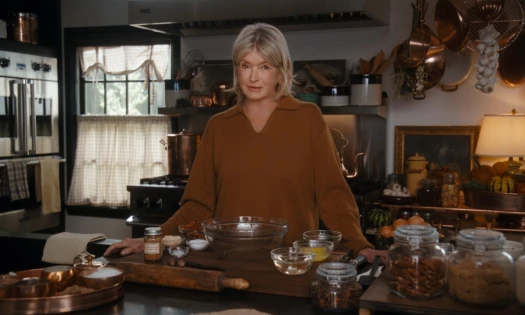
Produced by Venice-based creative content studio NoSLATE, "That's Better" features a dozen actors filmed on a single Hollywood stage.
The team then used AI-enabled tools to create international settings, and artists blended those backdrops around the live-action performances.
The project gives the studio a clear position in the expanding AI production market.
NoSLATE argues that brands can achieve the visual scope of an international shoot with a smaller production footprint.
It can also keep human performances and creative direction central.
"We wanted to show how Joule can help people move work forward, using unexpected humor to make technology feel familiar and human," Ray Page, SAP's global chief brand and creative officer, said in a press release.
The campaign is part of SAP's "Beginning of Better" platform, which supports its vision of the Autonomous Enterprise.
"That's Better" uses everyday business problems and witty exchanges with Joule to show how AI can help employees respond to operational challenges.
NoSLATE Makes the Case for Hybrid AI Production
NoSLATE's production process filmed 12 principal actors in a Hollywood studio.
The team captured their performances live, then created the surrounding locations in post-production.
Its production, design, and motion graphics teams used AI-enabled tools to place the performers in locations around the world.
Artists then blended the AI-generated backdrops into each shot, matching lighting, atmosphere, and background activity.
The approach gives the production international visual scope without requiring a crew to travel between locations.
NoSLATE founder and Executive Producer Jeff Reed says the team achieved this through a concentrated studio shoot and AI-assisted post-production.
"The new campaign has the visual ambition of an international production, created without the time, expense, and logistical compromises of traveling to multiple locations," Reed said.
For creative agencies competing with AI-only production providers, the distinction is commercially relevant.
The studio is selling a production model in which AI expands what a human-led team can deliver, while creatives remain responsible for the storytelling.
NoSLATE Creative Director Theo Dudley also stresses the importance of human-led work.
"Human authorship is irreplaceable in creative work; it’s what separates generated content from real storytelling," Dudley said.
"The human performances that drive our narrative are untouched, only transferred into spaces that give their stories context and depth."
This distinction gives prospective clients a more tangible way to evaluate an agency's AI capabilities.
The question then becomes how a studio divides creative responsibility between its people and its tools, and what that division means for the final work.
AI Cost Savings Come With a Trust Gap
NoSLATE's production proposition arrives as advertisers place greater value on AI's financial benefits.
But consumer attitudes suggest agencies still need to demonstrate how those efficiencies affect creative quality.
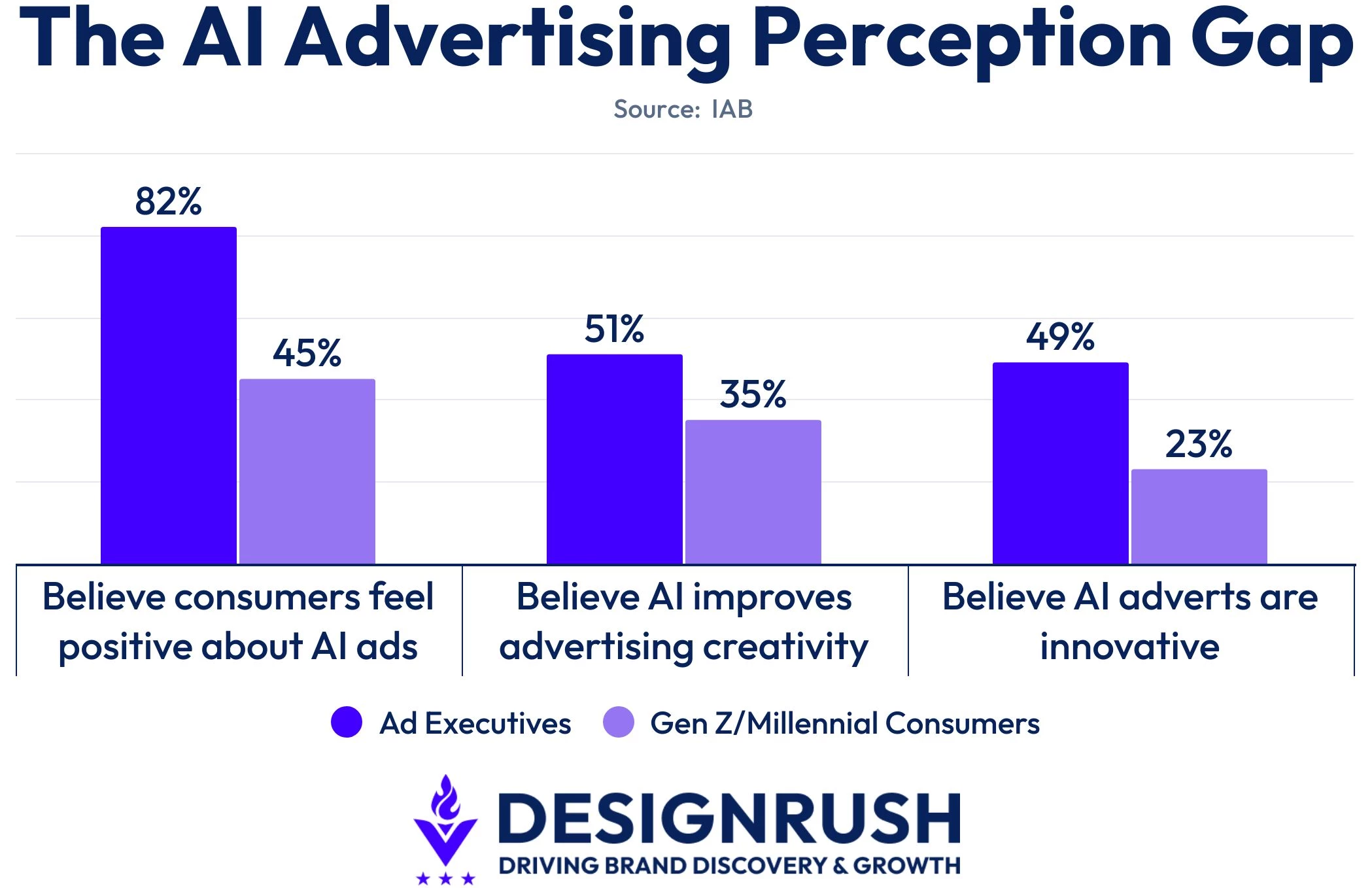
According to the Interactive Advertising Bureau's January 2026 study, "The AI Ad Gap Widens," 64% of advertising executives named cost efficiency as AI's top benefit, up from fifth place in 2024.
The same research found a significant disconnect between industry expectations and consumer sentiment.
While 82% of ad executives believed Gen Z and Millennial consumers felt positive about AI-generated ads, only 45% of those consumers agreed.
The gap widened from 32 percentage points in 2024 to 37 points in 2026.
The research surveyed 505 U.S. Gen Z and Millennial consumers and 104 advertising executives.
For agencies, the findings present a commercial challenge.
Lower production costs can help win business, but clients also need confidence that AI-assisted work will meet audience expectations.
Agencies pitching AI-assisted production to brands should consider three lessons from IAB's research:
Audience Familiarity Does Not Guarantee Acceptance
Agencies should test audience attitudes before recommending AI-generated creative, especially for campaigns targeting younger consumers.
IAB found that 71% of Gen Z and Millennial respondents believed they had seen an AI-generated ad, up from 54% in 2024.
Disclosure Can Support Purchase Consideration
Brands should establish when and how they will disclose AI use, particularly when generated imagery or video forms a visible part of the campaign.
IAB found that 73% of younger consumers said knowing an ad was AI-created would either increase or make no difference to their likelihood of purchasing the advertised product or service.
Production Efficiency Needs a Creative Purpose
Agencies should explain how AI contributes to the creative outcome, alongside the time or money it saves.
IAB found that 83% of advertising executives said their companies had deployed AI in the creative process, up from 60% in 2024.
The opportunity for agencies is to connect production efficiencies with a clear creative benefit that brands can defend to their audiences.
Our Take: Can Hybrid Production Win Brand Trust?
NoSLATE has a compelling agency pitch because it connects AI efficiency with a recognizable production craft.
Its SAP work gives prospective clients a concrete example of how live performances, AI-generated backdrops, and artist-led post-production can work together.
The model also gives brands a more useful starting point for evaluating production partners.
They should ask which parts of a project require human performance, where AI can improve results, who reviews generated assets, and how the studio protects the intended creative direction.
But if the final work looks generic or undermines the campaign's credibility, a smaller production budget will offer little comfort.
The opportunity lies in making AI a demonstrable creative capability, with human judgment visible in the decisions that matter.
Explore these top video production companies that help brands bring ambitious creative concepts to life.