
AI Video Editing Market Growth: Key Findings
- AI is speeding up video workflows, but also raising the bar for differentiation, as more content makes it harder for brands to stand out
- Content production has shifted from campaigns to constant output, as brands face ongoing pressure to publish more without additional time
- Leaders must move beyond campaign-driven structures, with AI-powered workflows enabling consistent output while maintaining clarity and control
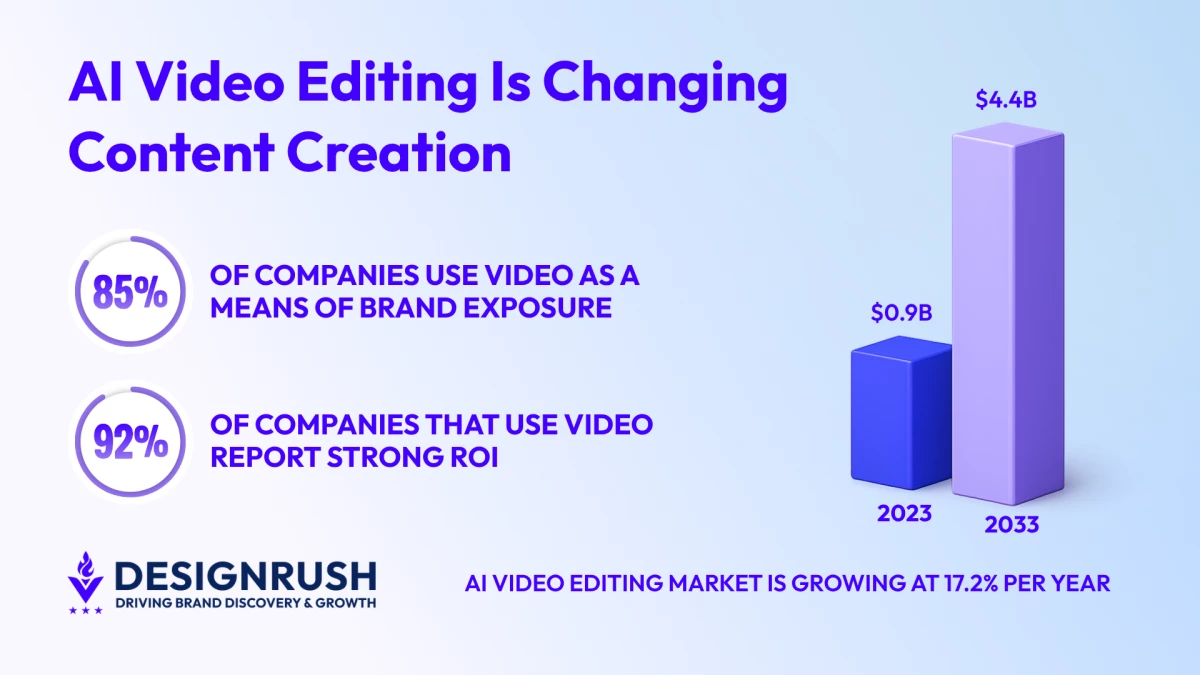
The AI video editing market is growing at 17.2% a year and is expected to reach $4.4 billion by 2033, up from $0.9 billion in 2023, according to Electro IQ.
That growth lines up with what many teams are already dealing with. There’s more content to produce, but not more time to do it.
Editing is often where things slow down. Teams are cutting footage, cleaning up audio, and adding captions, and that all takes time.
AI video editing tools like Descript are easing that pressure, helping teams streamline workflows and manage production timelines more effectively.
Kevin Sloan, Affiliate and Influencer Growth Marketing Manager at Descript, says that this changes not only how fast editing happens, but when it takes place as well.
“It changes how teams approach content altogether. Editing becomes a starting point in the process, not something that happens after,” Sloan says.
The video below reveals the daily struggle every video editor knows too well:
Editor's Note: This is a sponsored article created in partnership with Descript.
Why Video Demand Fuels AI Editing Growth
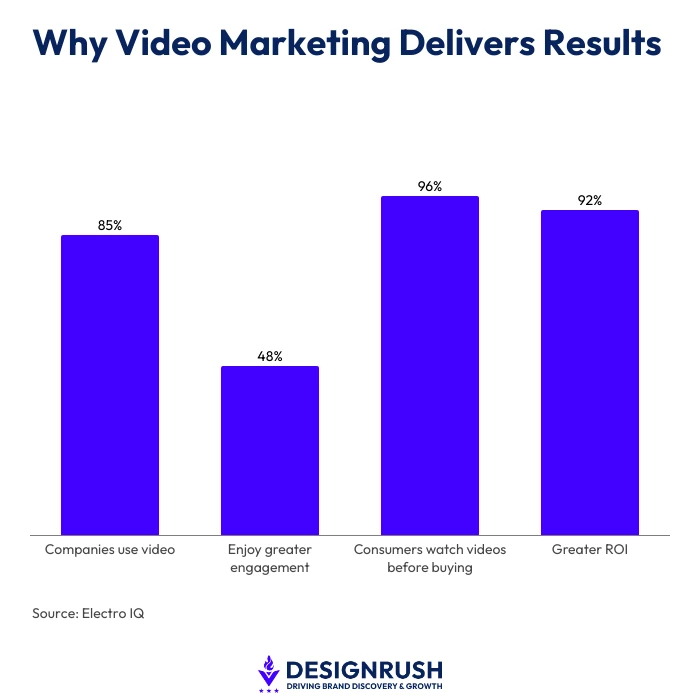
Video has certainly become one of the go-to marketing tools used by brands worldwide, with 85% of companies using it as a means of exposure, according to the same Electro IQ report
And posts that include video receive 48% more views, reinforcing their impact on visibility.
Consumer sentiment and decision-making prove this, with 96% saying that they watch brand videos before buying.
For brands, the benefits of video marketing are proving worthwhile, with 92% reporting strong returns.
And the way people watch it is changing too.
More than 75% of video views are expected to come from mobile devices. Short-form content will account for roughly 80% of what people watch online, while user-generated content is expected to make up 50% of total views.
For brands competing for the same consumer attention, this proves that there’s no room to slow down. Content needs to go out consistently, and not just in sporadic bursts.
Sloan adds that the pressure is also not just about producing more, but keeping up without losing direction.
“It’s not just about volume. Teams need to keep things moving while still being clear about what they’re putting out and why it matters,” he says.
The video below shows why teams are turning to Descript to scale video editing:
Why AI Video Editing Is Reaching More Creators
As the volume of content increases, so has the range of video editing tools being used to produce it.
Professional editing software still dominates. Adobe Premiere Pro holds about 35% of the market, followed by Final Cut Pro X at 25% and DaVinci Resolve at 15%.
And while these professional tools still have their place, more accessible, user-friendly platforms are becoming more widely used.
In November 2024, Canva recorded more than 1.16 million installs in the United States, with Remini and Picsart following suit.
This has led to more people becoming involved in content creation, including those without formal editing experience.
“Editing isn’t just for specialists anymore,” Sloan says. “It’s becoming part of how a much wider group of people creates and shares content.”
Descript shows just how easy it is to edit a video from start to finish, with no experience needed:
How Teams Are Using AI to Speed Up Video
While the role of editors hasn’t disappeared, it has changed.
Less time is spent on repetitive tasks, and more time goes into structuring content and refining how it performs.
This shows up in how teams are working. Cloud-based workflows now account for 72.8% of the AI video editing market, making it easier to collaborate, move files, and keep production moving.
“It means teams aren’t waiting on each other in the same way anymore. Work moves continuously, and that has a knock-on effect on how quickly content can be produced,” Sloan says.
The video below outlines why Descript is the go-to platform to speed up workflows:
Why AI Editing Matters for Brands
Brand spend shows how important video has become, with companies expected to spend around $20,000 a year on video marketing.
And while spend and demand for video continues to grow, the challenge for brands and agencies will be how to maintain output without losing quality.
For leaders, that means rethinking how content teams are set up. It’s less about campaigns and more about building a way to keep content going, with AI helping teams keep up the pace.
As production speeds up, the gap between content volume and meaningful differentiation is likely to define the next phase of competition.
Sloan says the difference going forward won’t just be speed, but how content is managed.
“The advantage isn’t just in producing more. It’s in having the time and space to be more intentional with what you create and how it connects with your audience.”
Because when every other brand is talking, clarity is what makes it worth listening to.
Want to know more about the power of video marketing?
Check out our list of Top Video Marketing Agencies of 2026.