
Ralph Lauren's Milan Comeback: Key Findings
- The luxury brand opened its Milan return with Polo, using runway order to signal where youth-driven demand and volume growth sit within its portfolio.
- Purple followed as a top-tier label, reinforcing pricing power and margin protection as growth accelerates.
- Younger demand is already proven, with Ralph Lauren ranking second only to Gucci in desirability among consumers under 35.
Few American brands can return to the Milan runway after two decades without feeling out of step, and Ralph Lauren avoided this risk by narrowing its focus.
The brand framed its Fall-Winter 2026 men’s show against a backdrop of uneven demand and margin pressure across luxury and premium apparel.
Milan provided a public setting to make its priorities visible.
The show took place at Palazzo Ralph Lauren, a private residence that kept the setting controlled and contained.
The order of the runway did most of the talking. Before styling or celebrity reactions entered the conversation, the structure was already visible.
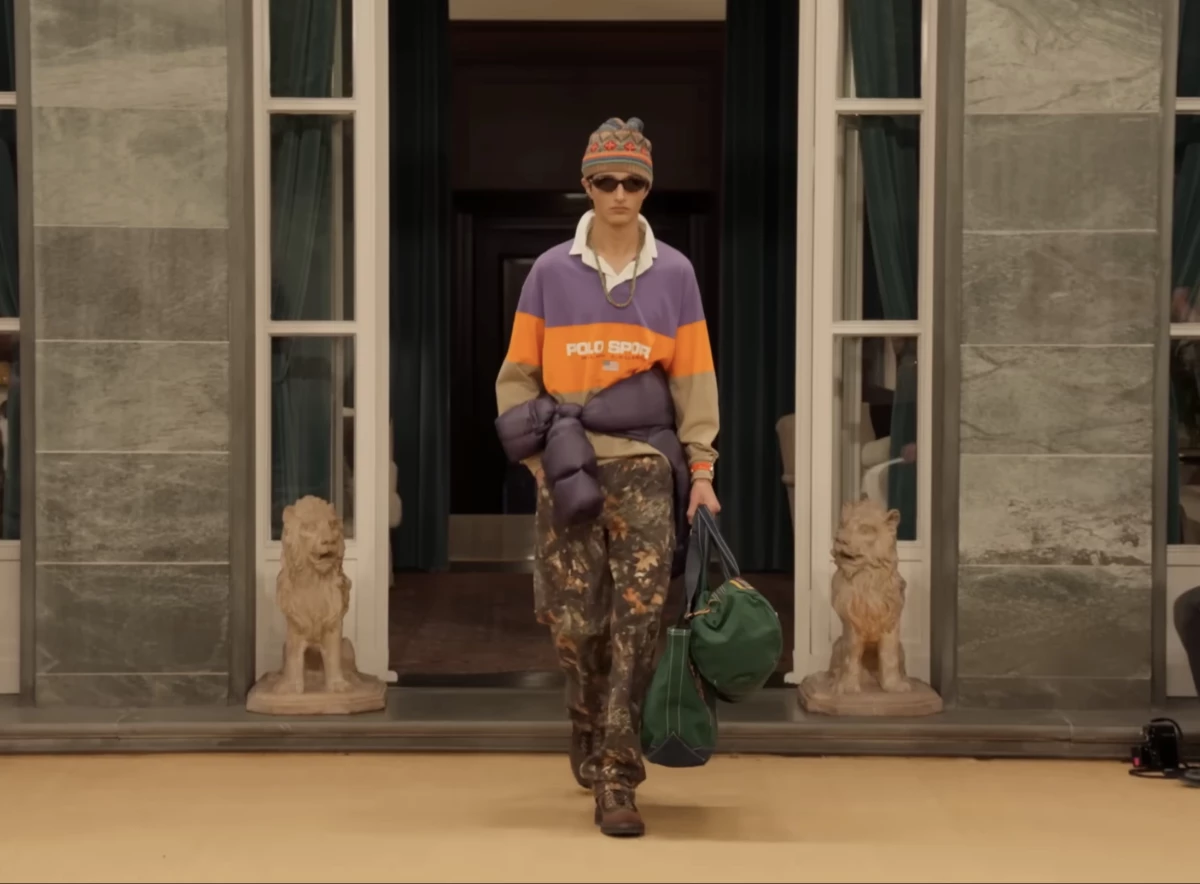
Polo and Purple were presented as one continuous sequence, with Polo coming first to set a tone of accessibility and familiarity.
Purple followed with a quieter register that pulled the room upward.
It made clear that the brand is relying on structure to manage growth and value in a market facing uneven demand and margin pressure.
A Runway Made for Brand Architecture
Polo opened with rugby shirts, racing jackets, puffers, relaxed accessories, and styling that felt familiar.
The clothes moved easily between culture and everyday wear, setting a brand identity built on access.
Purple then showcased tailored outerwear, formal suiting, tartans, and heavier materials that changed the room’s pace.
As the sequence unfolded, the roles became legible without explanation. One label draws people in, while the other holds the brand’s center of gravity.
View this post on Instagram
Rakph Lauren's Milan return is grounded in how the house is organized and owned.
Polo has carried this responsibility since its launch as a menswear line in 1968, and continued ownership keeps decisions contained as tastes change.
The room reflected this continuity, with younger guests naturally seated alongside long-established figures.
The effect positions Ralph Lauren as accessible to new consumers while remaining familiar to existing ones, with brand equity doing the work of holding this balance in place.
Polo Drives Demand, Purple Defends Value
From a business lens, Milan's runway show clarifies how the house works.
Polo remains the growth driver, supported by retail concepts, global sporting visibility, and pop culture moments that keep it in circulation.
As of 2025, Ralph Lauren ranked second only to Gucci in desirability among consumers under 35, according to Kantar data cited by The Wall Street Journal.
View this post on Instagram
Purple operates higher up, reinforcing craftsmanship and protecting margins over time. This delineation of roles has mattered during a choppy cycle.
Ralph Lauren reported $7.1 billion in revenue for the fiscal year ending March 2025.
It has stood out in a sector currently dealing with promotional pressure and unpredictable demand, especially as younger consumers prioritize value for money.
Milan made its existing direction easier to read, surfacing several observations about brand-led growth at scale:
- Clear roles reduce friction. When each label has a defined purpose, decisions travel faster.
- Youth access depends on trust. New consumers engage more freely when credibility stays visible.
- Margins hold when design supports them. Premium tiers work best when they are planned.
The show framed brand architecture as something active and working, and this distinction matters as pressure builds.
Our Take: Does the Milan Show Clarify How the Brand Plans to Grow?
I do think it acts as reassurance through visibility.
It showed how the house is organized, with a balance that has become more important ahead of Ralph Lauren’s role in outfitting Team USA for the 2026 Winter Olympics in Milan and Cortina.
Ralph Lauren is leaning on ownership, discipline, and continuity, and Milan showed how these traits translate when put in front of a room.
It tied Polo’s growth to culturally grounded work like its recent collaboration with the Indigenous-led brand TOPA, showing how relevance is being built through intention.
Human-driven brand systems reward clarity when the stakes rise. These top branding agencies support companies in building growth that holds under pressure.