
Publicis Groupe turned WPP CEO Cindy Rose's explanation for skipping Coca-Cola's North America media pitch into a public challenge.
The dispute began after Rose defended WPP's decision during its Oct. 29 earnings call.
Adrien de Saint Hilaire, a financial analyst, asked Rose why "WPP did not participate in the U.S. pitch for Coke."
The CEO replied that WPP had already retained Coca-Cola's media business in every other market it pitched for.
"We did not participate in the North America pitch, that is correct," Rose said during the earnings call.
"Mostly because we won the rest of the world, and we have a huge amount of work to do in a very short period of time."
She added that they "made a tough call between spending yet another six weeks pitching for North America versus delivering against what we had already won."
Publicis responded with an open letter questioning the consistency of her position.
"You can't be a passionate defender of pitch culture and plead exhaustion in the same breath," the group wrote in the letter now on Instagram.
"If an extra six-week run was enough to sideline your teams, it's not an endurance problem; it's a capability one."
The account outcome gives the exchange another layer.
WPP retained Coca-Cola's global media business outside North America, Japan, and South Korea.
Omnicom won North America from Publicis, while Dentsu retained Japan and South Korea.
Publicis had already exited the Coke review after PepsiCo appointed it to run global media without a pitch in September.
The online dispute raises a practical business question for independent agencies.
How much new business should an agency pursue when existing client commitments already stretch its resources?
Why Publicis Took Rose's Handshake Remark Personally
Rose's answer about the Coke pitch came paired with a jab at rivals who win business without pitching.
She said that her teams spent weeks pitching across several markets over the summer and that she also joined them in London, Shanghai, and Mexico City.
The WPP CEO took personal ownership of the decision to sit out North America.
"It was a fine judgment call, which I made, and it's as simple as that," Rose said.
Rose then took aim at rivals winning accounts without a pitch, which she called a "CEO handshake thing."
She also acknowledged that agency pitches were becoming increasingly expensive and demanding.
"I think what's really important to me is that my clients fully understand the implications of the decisions they're making.
These are really high-stakes decisions with material business consequences, and they deserve careful consideration," Rose added.
Publicis challenged both the reasoning and the suggestion that pitchless appointments lacked proper scrutiny.
Its letter defended the pitchless process behind recent Publicis wins such as Microsoft, PepsiCo, and LVMH's Asia-Pacific media.
The group argued that clients still conduct extensive evaluations when they appoint agencies without traditional competitive reviews.
It said these assessments involve marketers, engineers, data architects, and procurement teams.
The capability jab escalated a rivalry the two holding companies have fought in public since 2025.
Publicis took Mars and Coca-Cola's North America media business from WPP that year.
WPP answered with a client report accusing Publicis-owned Epsilon of selling low-quality ad inventory.
Publicis called the findings fake, while its CEO, Arthur Sadoun, accused WPP of "throwing mud at their peers."
The group also threatened WPP's leadership with legal action in a private letter.
Rose's Coke comments drag the fight into agency selection, where every shop competes for the same clients.
What is happening #publicis #wpp https://t.co/B8HpLUbj8Z
— Afnan Ahmad (@itisafnanahmad) November 5, 2026
This agency disagreement exposes a commercial tension for agencies.
Winning another account can bring revenue, but the resources required to secure and service it also have a cost.
What Agency Pitching Costs in Time and Money
The financial burden of pitching gives Rose's decision a measurable business context.
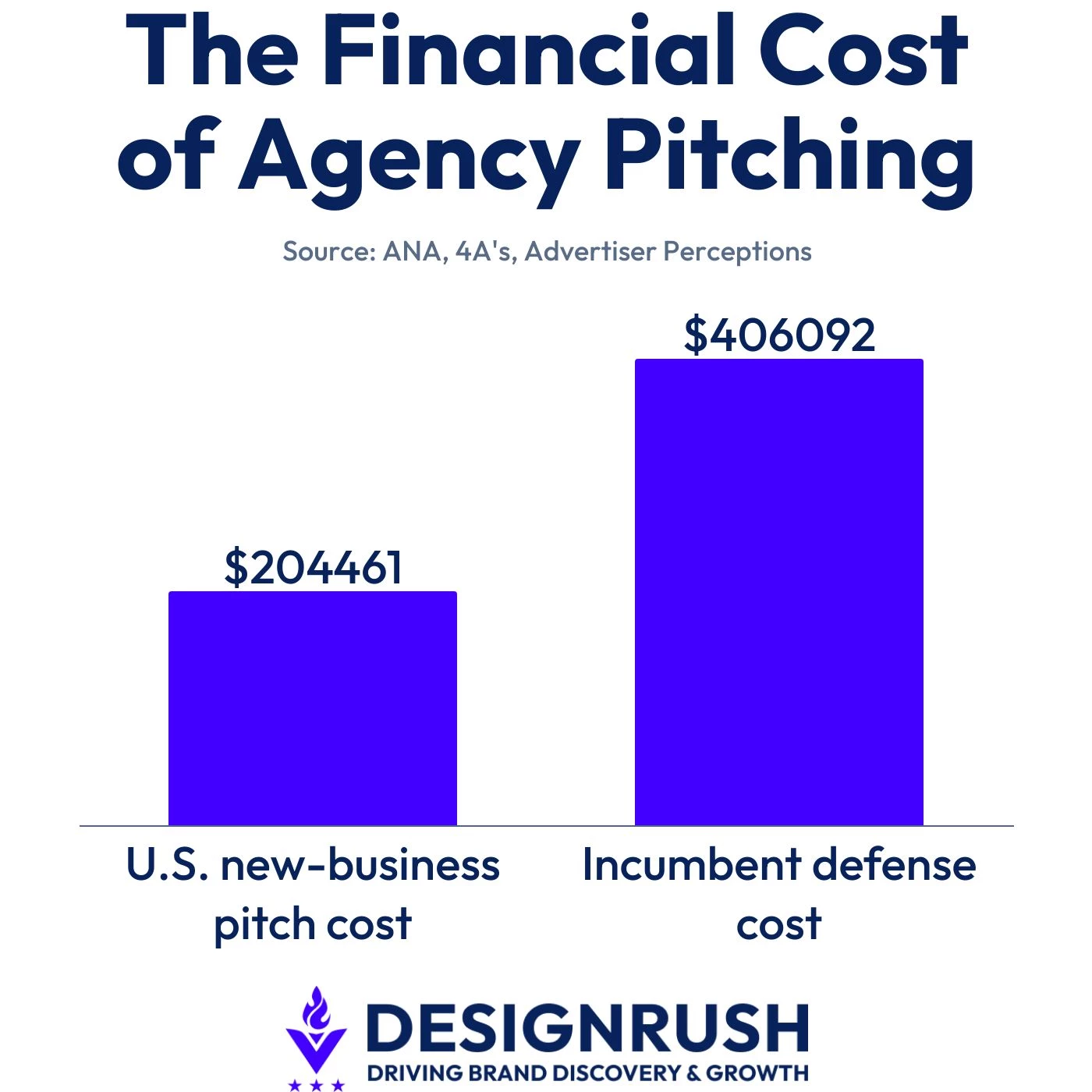
A July 2023 study by the ANA, 4A's, and Advertiser Perceptions found that non-incumbent agencies spent an average of $204,461 per pitch.
Incumbent agencies spent an average of $406,092 defending accounts under review.
The study also estimated that a review involving three competing agencies cost the industry $1.02 million, including the client's internal expenses.
These figures reveal how much pitching consumes employee hours, specialist resources, and creative production budgets.
Agencies must weigh these expenses against the potential value and profitability of each account.
Independent agencies refining their business development strategy should skip a pitch in three situations:
When the Pitch Costs More Than the Account Can Return
Agencies should calculate staff hours, production expenses, and opportunity costs before committing to a competitive review.
The 2023 study found that pitches ending with a new agency appointed ran more than three months on average.
When Current Clients Need Your Senior Team
Agency owners should confirm that their existing accounts receive enough senior attention and specialist support before accepting another major pitch.
The same report found that 25% of incumbent agencies declined to participate in an account review.
Skip When Price Will Pick the Winner
Agencies should ask prospects how they'll weigh fees against capabilities before committing a team.
Sadoun has said that the group avoids pitches that come down to price or payment terms.
Agencies grow sustainably when they win accounts that they can service profitably, which makes pitch qualification core to new-business strategy.
Our Take: Can Agencies Win Without Traditional Pitches?
Publicis argues that its pitchless appointments follow months of client testing before it takes over anyone's data, media, and technology work.
We'd give specialist independents good odds of winning accounts without traditional pitches, as long as prospects see their expertise early.
A strong portfolio, clear service offering, and access to senior decision-makers can support a shorter sales process.
The risk is that direct appointments favor agencies with established reputations and deep pockets.
Publicis showed just how deep its pockets run by acquiring LiveRamp, which bought data that most independents would need years to build.
Smaller shops can answer with one capability they prove in a short paid test, shown to prospects before any RFP lands.
Agencies evaluating their growth strategy can benefit from specialist business advice.
Explore top business consulting firms on DesignRush to find partners that can help strengthen operations and business development.