
Only 31% of projects finish on time, on budget, and within scope, according to the Standish Group's CHAOS Report.
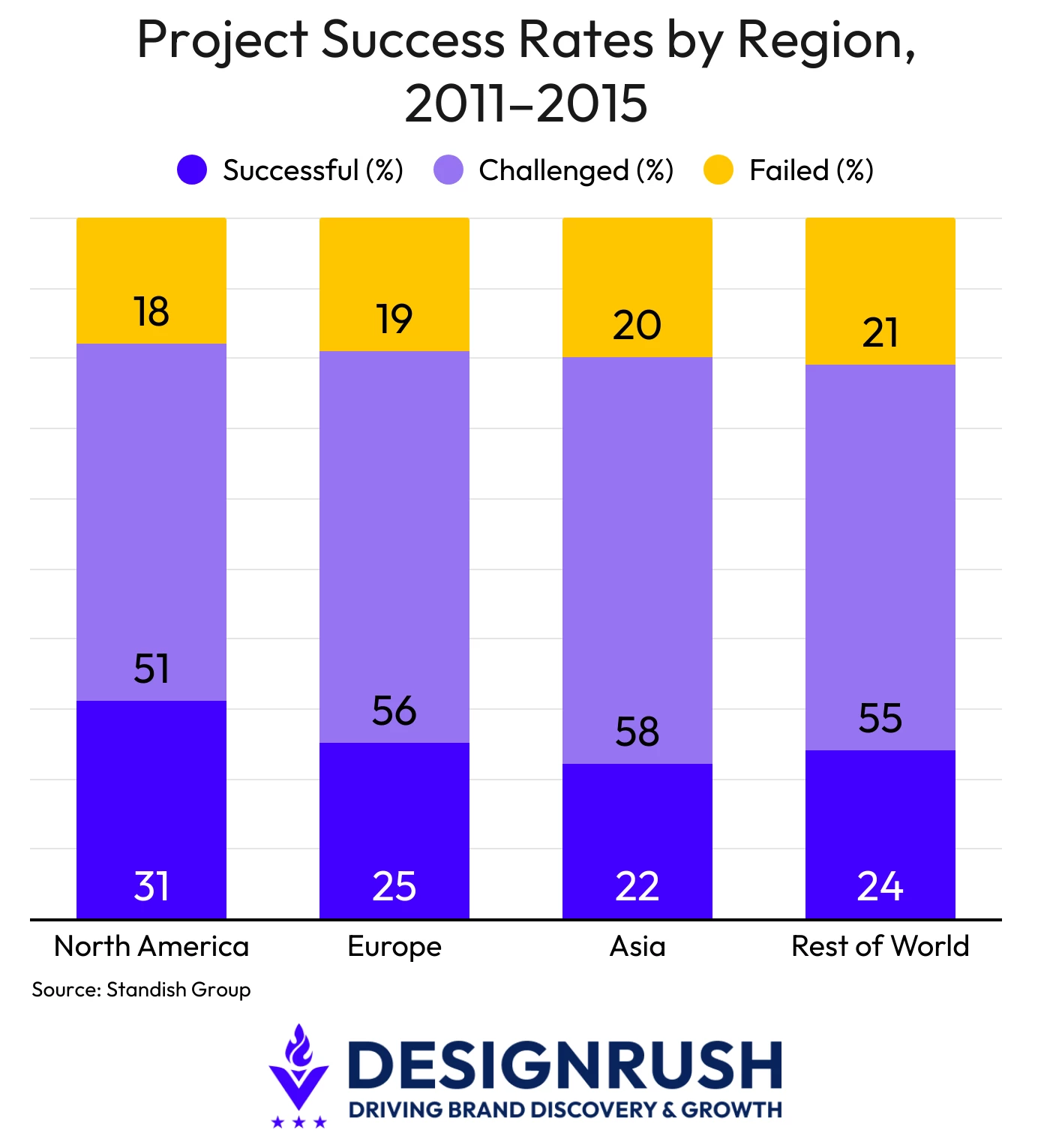 That figure has held roughly steady for three decades of tracking, through waterfall, agile, and now hybrid delivery models.
The problem shows up under newer metrics too.
Nearly one in three enterprise projects still fail to deliver measurable ROI, according to Tempo Software's 2026 State of Strategic Portfolio Management Report.
This holds even at organizations using modern portfolio management practices.
Standish measures whether a project stayed on time and on budget. Tempo measures whether it delivered value.
A project can pass the first test and fail the second, which means fixing scope creep alone does not guarantee the work was worth doing.
Where the Unsigned Decisions Pile Up
Scope creep is the term teams reach for once a project has already drifted past its original brief. That drift starts earlier than the term suggests.
In fact, it starts in the gap between what a brief said and what it actually meant.
A vague brief does not stay vague for long. Someone fills in the blanks, one assumption at a time, usually after the team has already started building.
Case in point, each of those assumptions becomes a decision nobody signed off on.
That matters because the cost of reversing a bad assumption only shows up once the build is far enough along that reversing it is expensive.
At Design In DC we treat this pattern as the reason most projects run long, ahead of any single technical setback.
A choice taken without the client present is typically the cause of a missed deadline. Technical difficulties are rarely the true cause.
More Flexibility, Same Blind Spot
Fixed-scope planning and agile iteration are combined in hybrid delivery models. Adoption grew from 20% in 2020 to roughly 31% by 2023, according to PMI's 2024 Pulse of the Profession.
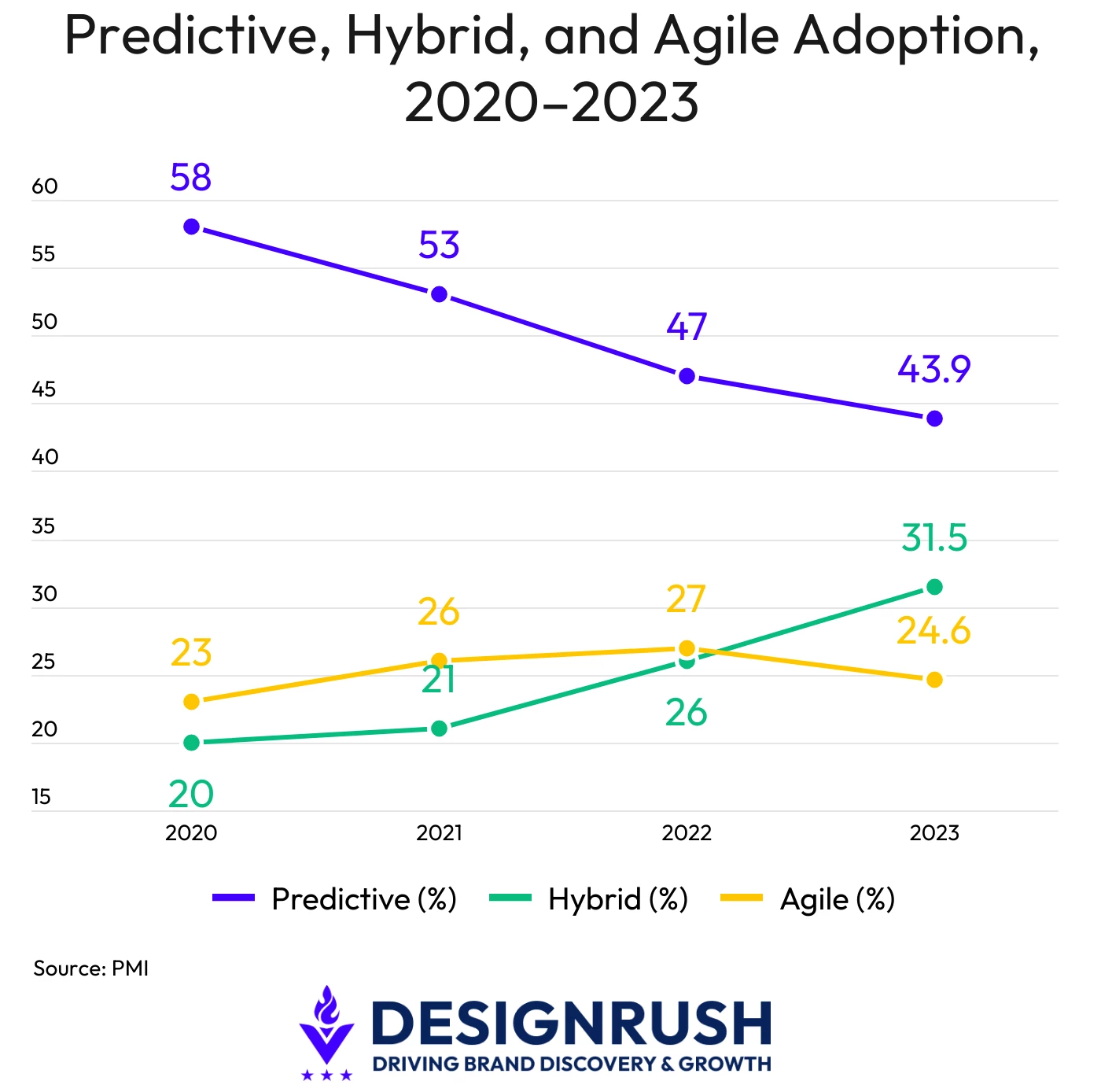 Teams gained more room to adjust once something goes wrong.
Room to adjust is not the same as clarity at the start. Hybrid models help teams absorb problems once they surface.
They do nothing to stop those problems from getting baked into the brief in the first place.
Moreover, AI introduces a newer version of the same gap.
Now, clients bring a rough site map, a feature list created by ChatGPT, or a partially constructed prototype to their initial meeting. It reads like progress made before the work even starts.
Progress on paper does not verify anything. An AI tool may generate a decent set of requirements in a matter of minutes.
However, it cannot confirm if those requirements match what users truly need, what internal teams can support, or what remains relevant a year later.
Skipping discovery because a client walks in with "something" relocates the same blind spot to an earlier point in the project, before anyone is checking for it.
What Happens When No One Owns the Understanding
CMS, the agency behind Healthcare.gov, awarded 60 contracts to 33 vendors without clearly assigning a lead integrator, according to an audit by the U.S. Government Accountability Office (GAO).
That many vendors without one clear owner meant no single team was accountable for whether the pieces actually fit together.
In other words, it is the exact failure mode any multi-vendor project risks once discovery gets skipped.
A critical readiness review moved from March to September, weeks before an October launch. The site went live without verification that it met its own performance requirements.
When the site crashed within hours of launch, most coverage focused on server capacity and code quality.
GAO traced the failure further back. The technical problems were downstream of decisions never finalized, ownership never assigned, and a launch date that could not move regardless of what discovery would have found.
The UK's Government Digital Service took the opposite approach. Every public service passes through Discovery, Alpha, and Beta phases before reaching production.
An independent panel reviews each stage and confirms the team understands the problem before the project moves forward.
The structure has run since 2011, across several changes in government and in technology.
Both are public-sector digital projects with hard deadlines and public accountability. The difference is not budget or talent.
One built a formal checkpoint for confirming the problem was understood before building started. The other assumed that understanding would arrive on its own.
What Changes in How Projects Get Briefed
Discovery needs its own deliverables, distinct from the build phase that follows it. A longer requirements document does not solve this. A checkpoint does.
That means assigning an owner for the outcome, not just the output. It means testing assumptions against real users while there is still time to act on what they say.
AI-generated head start becomes one input to interrogate, alongside everything else gathered during discovery.
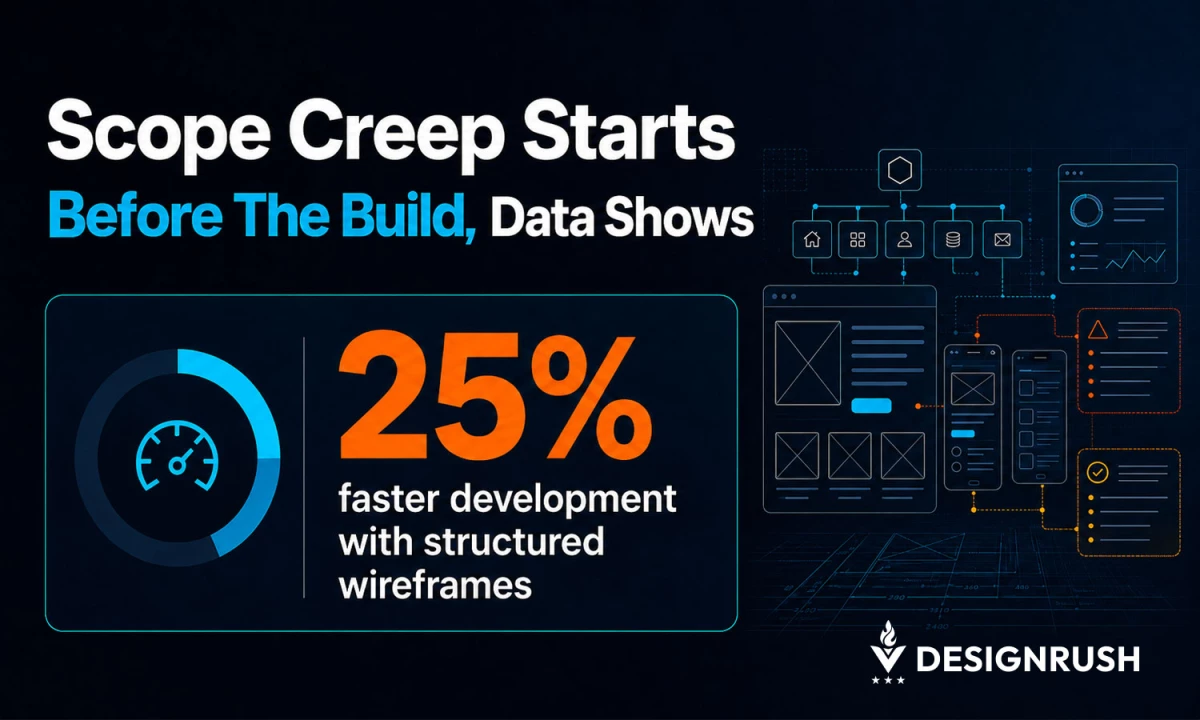
Based on our experience at Design In DC, projects that start with structured sitemaps and wireframes move into development 25% faster on average, with fewer scope changes once the build begins.
Speed gets decided before anyone writes a line of code.