

Product Strategy: Key Findings
- Clear prioritization helps teams focus on solving the right problem instead of spreading resources too thin.
- Early validation reduces the risk of wasted effort and prevents missed product-market fit.
- Strategy should be treated as an ongoing process, not a one-time deliverable.
A successful product strategy is one of the most misunderstood aspects of digital product development.
At its core, a strategy should focus on the smallest set of actions that deliver the biggest insights into user needs and business outcomes.
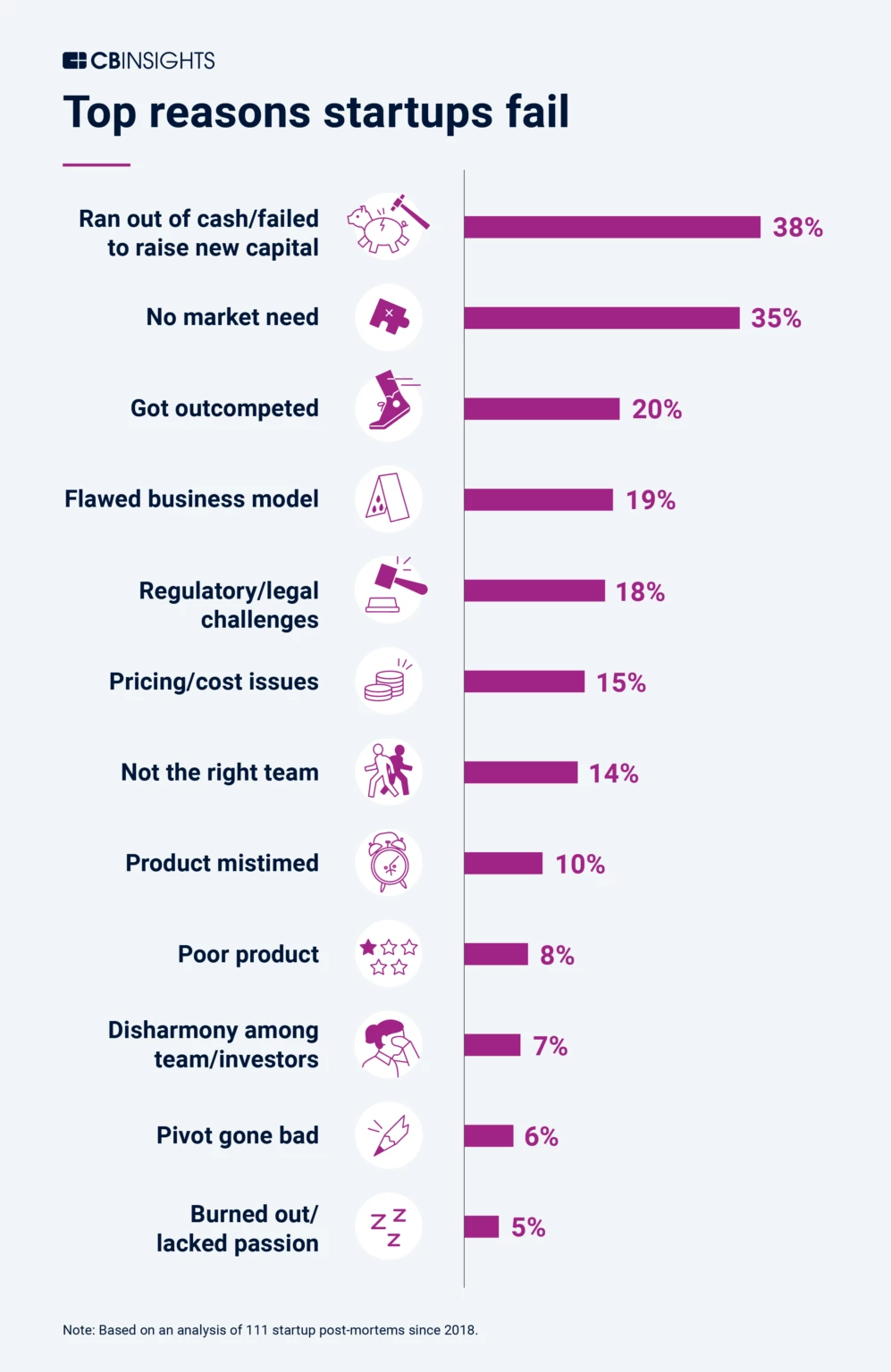
35% of startups fail because they build products that no one wants, according to CB Insights. It’s a problem rooted in poor strategy and lack of validation.
Editor's Note: This is a sponsored article created in partnership with Goji Labs.
When approached correctly, a strong strategy can:
- Reduce wasted development effort
- Improve time-to-market
- Increase early user engagement
Yet many teams still get it wrong.
In an interview with DesignRush, David Barlev, CEO and co-founder of Goji Labs, explains where teams stumble and how a disciplined, user-focused approach can turn ideas into products that stick.

Who is David Barlev?
David Barlev is the co-founder and CEO of Goji Labs, a digital product agency that helps teams turn complex ideas into products people actually want to use. Over the past decade, he’s led the launch of more than 400 digital products across sectors—partnering with early-stage founders, global nonprofits, and Fortune 500 companies alike.
Barlev is known for asking the tough questions early—like, “Are we solving the right problem?”—and for helping teams avoid the costly mistake of building before validating. At Goji Labs, he leads a cross-functional team of designers, strategists, and engineers who prioritize clarity over chaos, usability over flash, and outcomes over hype.
Goji Labs partners with organizations like the World Health Organization and UCLA, but the driving force behind the team is simple: helping founders and enterprises build products that actually work.
This philosophy shapes how they approach one of the most misapplied ideas in product development: the product strategy itself.
Why Do Most Teams Struggle With Product Strategy?
Many teams struggle with product strategy because they try to tackle everything at once instead of focusing on the right problem.
“Everyone wants to build everything at once,” says Barlev.
But without clear prioritization, teams spread themselves too thin, delivering half-baked features instead of solving real problems.
When teams fail to prioritize, they scatter resources across too many initiatives.
The result is diluted impact, slower progress, and products that lose alignment with real user needs. Clear prioritization grounded in evidence is the antidote.
Why Is Skipping Validation So Risky?
A second recurring mistake is rushing into development without user validation.
This is often driven by pressure to launch quickly or keep up with competitors.
According to a Nielsen Norman Group study, the cost of fixing a product after launch is 10x higher than addressing it during early design. Yet many teams skip validation altogether.
But skipping validation is costly: it increases the risk of missed product-market fit and wastes months building features users never wanted.
“Skipping user validation and rushing to build… It’s a recipe for missed product-market fit, no matter the sector,” Barlev says.
Early testing, even with prototypes, is the most effective way to prevent expensive misfires.
How Can Teams De-Risk Product Development?
One of the most effective ways to reduce risk is to break product strategy into distinct stages.
A practical framework includes discovery, validation, prototyping, build, measure, and iterate.
“Each stage de-risks the next and keeps the product grounded in real outcomes,” Barlev says.
Consider PredictionStrike, a sports investing platform.
By running early user tests during the validation phase, the team refined its core user experience before launch.
This groundwork led to higher engagement and stronger retention from day one.
What Should Teams Measure Early On?
A common mistake is over-focusing on vanity metrics such as downloads or signups. These don’t reveal whether users are finding real value.
Instead, early-stage teams should track:
- Activation rate: Are users completing the first key action?
- Retention: Do they come back?
- Engagement: Are they using core features?
- Qualitative feedback: What do users say about the experience?
These are the metrics that matter.
“They show if users see real value, or if they just signed up and bounced,” Barlev says.
How Can Product Leaders Build Trust Internally and Externally?
Whether you’re inside a company or part of an agency, credibility depends on positioning yourself as a strategic partner.
This means leading with curiosity, asking better questions, and tying product goals directly to business outcomes.
“Stop being order takers. Ask better questions” Barlev emphasizes.
For product leaders, that often means pushing back, facilitating tough conversations, and ensuring that the strategy remains grounded in long-term value.
How Is Product Strategy Evolving Today?
The way teams approach strategy is changing. Instead of choosing between “move fast” and “plan long-term,” many organizations are blending lean methods with longer-term roadmaps.
“Strategy is getting smarter, not just faster,” says Barlev.
“We’ve doubled down on research and post-launch support. Strategy doesn’t end at launch, it evolves with the product.”
This evolution reflects the reality that digital products live in continuous cycles of feedback and iteration.
Why Strategy Must Be Treated as a Living Process
Perhaps the most important mindset shift is to stop treating strategy like a deliverable that gets checked off before development.
“Let’s stop treating product strategy like a one-time deliverable,” Barlev argues. “It’s a living, breathing process.”
At Goji Labs, this philosophy underpins their work with clients long after launch, ensuring strategies evolve with real-world feedback.
Successful products are built on strategies that adapt to new data, new user needs, and changing market dynamics.
Products succeed not because they launch fast—but because they learn faster. That’s what makes strategy a living process, not a one-time deliverable.
Product Strategy FAQs
What is the biggest mistake teams make with product strategy?
Trying to build everything at once instead of prioritizing the most important problem.
Why is user validation critical before launch?
It prevents wasted effort by ensuring the product actually solves user needs before major resources are spent.
Which metrics matter most early in a product’s life?
Activation, retention, engagement, and direct user feedback rather than vanity numbers like downloads.
How should teams think about product strategy long-term?
As a continuous process that evolves with user insights, market changes, and product performance.