
Stanford research suggests that enterprise AI might increasingly depend on adaptable systems rather than single operating models.
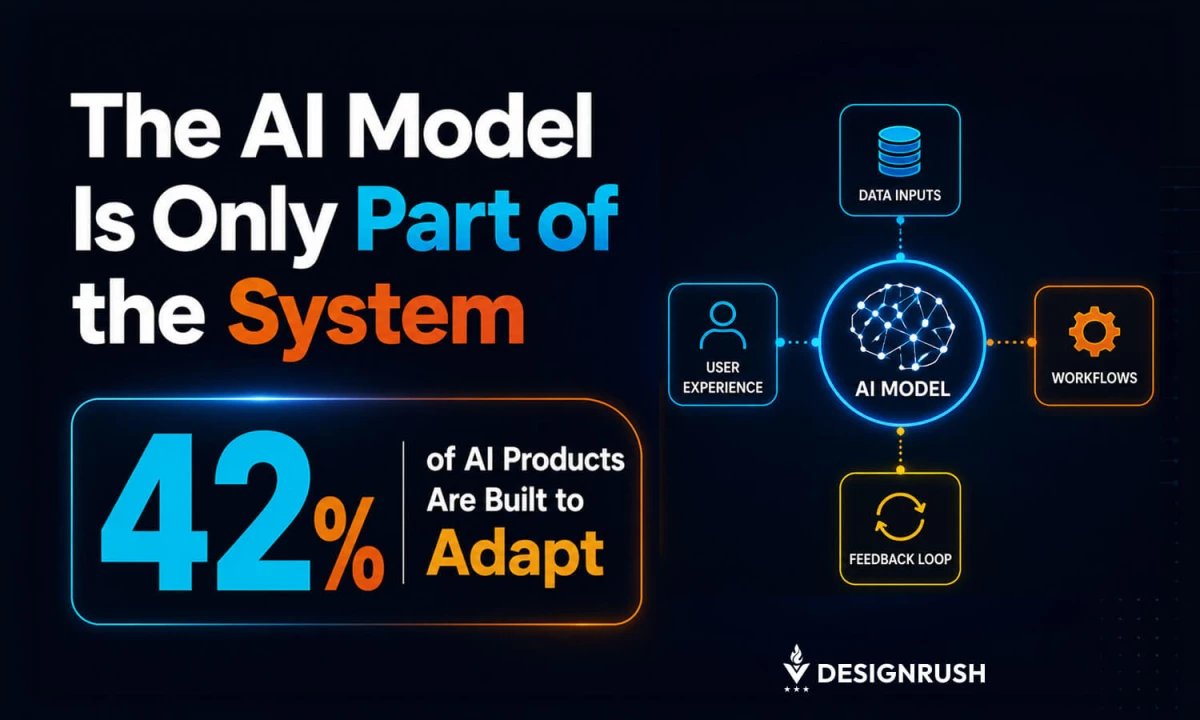
Forty-two percent of AI products can switch between models, its Digital Economy Lab found.
This challenges the assumption that choosing the latest and greatest available AI model is the most important decision for enterprise AI development.
But although 71% of organizations expect AI factories to support innovation, Deloitte found “no clear direction” on which AI model or combination of models will lead by 2028.
According to David Barlev, the CEO of Goji Labs who has led the launch of more than 400 digital products across sectors, enterprise AI decisions should account for more than the model selected during initial development.
“Companies should think about AI as a system rather than a single model choice,” he says.
“The architecture around the model determines how easily a product can adapt as new technologies become available.”
The Stanford findings point to a different approach of enterprise strategy, one where foundation models remain important but as components inside larger systems.
This includes:
- Data infrastructure
- Workflows
- Integrations
- Product design decisions
Together, these layers influence whether an AI product can support evolving business needs after launch.
Why Enterprise AI Systems Need to Adapt to New Models
Discussions surrounding AI adoption typically center around selecting the right model provider.
The problem, however, is that model capabilities constantly change, creating uncertainty for organizations building long-term products around a single technology choice.
In other words, there’s no consensus around a dominant model approach.
This puts pressure on organizations to create products that accommodate different models without requiring a complete rebuild.
Goji Labs describes AI product development as a process that requires attention to product goals, user experience, and technical decisions before development begins.
The company also reiterates the importance of selecting the right approach to AI, based on the specific needs of the product, instead of adding AI features without a defined purpose.
“An AI product should be designed with change in mind,” Barlev says.
“The ability to evaluate and incorporate new models is just as important as the model selected during initial development.”
The agency regularly employs this approach through its Strategy Sprints:
In fact, 90% of Chief Data and Analytics Officers say their current data architecture needs an overhaul to support new AI use cases, according to Gartner.
AI systems depend on the quality, accessibility, and data organization, and without that infrastructure, experiments could struggle to progress into practical applications.
The trifecta behind successful enterprise AI increasingly depends on:
- Data architecture
- AI orchestration
- System design
So a “stronger model” can’t always resolve limitations created by fragmented data or disconnected workflows when those problems are rooted in the underlying data architecture.
And that’s only one side of it. User needs should also be considered.
“The model is one part of the product,” Barlev noted, “while data flows, user interactions, and system connections all influence whether an AI product delivers value.”
Why Enterprise AI Adoption Does Not Always Deliver Business Value
Only 13% of AI decision-makers say AI is positively impacting their firm’s earnings, according to Forrester’s 2026 analysis based on its State of AI Survey.
This difference between AI adoption and business impact suggests that access to advanced models alone does not guarantee meaningful results.
It means that organizations still need the product strategy, technical foundation, and operational processes required to apply AI effectively.
To this end, Barlev recommends that enterprise teams evaluate AI decisions through the full product lifecycle rather than treating the model as the only factor.
“The technology will continue to move quickly,” he adds.
“Products need the flexibility to work with new capabilities as they become available.”
Long-term competitive advantage may depend on how those systems are structured, connected, and maintained.
Which will matter more in five years: choosing today's best AI model or building a system that's ready for tomorrow?