
Adobe is using its own creative software to make the case for human imagination.
The company introduced "Made to Create" at Adobe MAX 2026.
It brings together over 30 artists and creative talents from 18 countries for a film celebrating the human impulse to make things.
Made with creative agency 72andSunny, the project is the first major expression of Adobe’s new platform.
It puts human imagination, taste, and judgment at the center of the creative process as artificial intelligence makes more production tools accessible.
The campaign also lets Adobe show how its products work together across a professional creative workflow.
Premiere, Photoshop, Firefly and Acrobat all appear in the production process, with the company putting its own software to work on the project.
"Adobe’s mission is to empower everyone to create. It serves as our north star in all that we do," shared Adobe CMO Lara Balazs in a memo.
The campaign acknowledges that while AI can open new possibilities, the personal ideas and decisions behind creative work remain essential.
The company plans to air a tailored version of the film during the 2026 NFL Thanksgiving Day broadcast, with additional placements across TV and streaming services.
Adobe Puts Its Workflow to Work
The film moves between different creative disciplines, giving each contributor room to introduce a distinct visual style.
It features contributions from big names like:
- Illustrator Space Dawg
- Ukrainian director and stylist Tanu Muiño
- Digital artists YoveLourself, Malik Afegbua and Edita Žirgulienė
- Global nail color and care company Essie
Notably, Colombian director Santiago Carrasquilla and his multidisciplinary studio, Art Camp, helped bring the film's creative vision to the screen.
Some sequences feature Space Dawg's surreal animation, while others draw on Muiño's picturesque storytelling and styling.
YoveLourself, Afegbua, and Žirgulienė contribute digital artwork, while Art Camp helps connect the different creative elements.
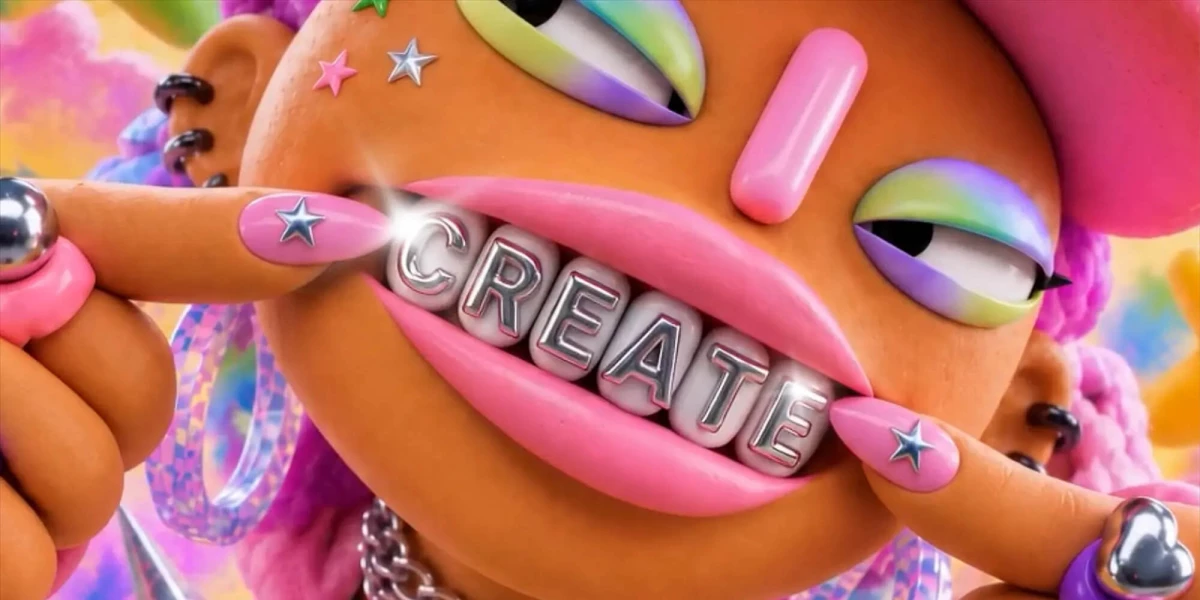
One sequence focuses on the word "Create,” presenting it through different styles, textures, and artistic interpretations.
The production process is particularly important to the project's positioning.
The company describes the project as an example of its "Customer Zero" philosophy.
This is the belief of testing its own products on real creative and business challenges first before bringing those capabilities to customers.
Firefly supported early creative exploration, while Acrobat helped teams review static assets and provide feedback.
Acrobat AI Assistant processed large volumes of information to help shape the creative brief, and Frame.io coordinated collaboration and review among Adobe, the artists, and 72andSunny.
87% of Creators Say AI Helps Grow Their Business
Adobe's campaign arrives as creative professionals grow to incorporate generative AI into their work.
The company's 2026 Creators' Toolkit Report found that 87% of creators using creative AI said it had accelerated the growth of their business or audience.
Another 75% described the technology as integrated or essential to their workflows.
The report also found that 85% of creators believe the final creative decision should always remain theirs.
These give Adobe's campaign a timely business context.
The company can use its own production as a reference point for brands and agencies assessing how AI-assisted creative workflows can support their teams.
Brands and agencies can take three lessons from Adobe's approach:
Make Your Products Part of the Proof
Brands selling professional tools should display their capabilities through projects that resemble customers' real working conditions.
Give Specialists Distinct Creative Roles
Brands working with multiple artists should assign each contributor a sizable part of the creative process.
Adobe's more than 30 participants bring different disciplines and visual perspectives to the film, giving the campaign a wider range of creative examples.
Connect AI Adoption to Human Decisions
Technology companies should explain where AI fits into professional workflows while keeping human judgment visible.
Adobe's report pushes the importance of seeing AI as a necessary tool for creative professionals.
Ultimately, Adobe's "Made to Create" campaign gives its software a working demo while making the people using it the central attraction.
Our Take: Can Adobe Make Its Own Workflow a Selling Point?
Adobe is selling software to people who spend their days making difficult creative decisions, and those people are continually being asked to explain what AI adds to their work.
Showing its own teams navigating that process gives Adobe a more credible conversation starter.
There is also something worth watching in the way the company brings together artists from 18 countries.
As the software provides common ground, the individual perspectives are what make the finished work worth watching.
For an industry that can spend too much time arguing about what AI will replace, Adobe has a useful opportunity to show what creatives still bring to the table.
Brands introducing new technology often rely on creative partners who can translate technical features into clear, engaging stories.
Explore these top creative agencies to help bring product innovations to life.