
OpenAI GPT-Image-1.5: Key Findings
- OpenAI has launched GPT-Image-1.5 with 4x faster generation and more precise editing features.
- Its accelerated December release signals the company responding to Google's Gemini 3 and Nano Banana Pro success.
- The model prioritizes enterprise use cases including e-commerce catalogs, brand asset consistency, and marketing workflows.
OpenAI just accelerated its image generation timeline by weeks.
The company released GPT-Image-1.5 on Tuesday, rolling out its new flagship image model to all ChatGPT users, as well as via API access.
The launch arrives after CEO Sam Altman declared "code red" in an internal memo following Google's Gemini 3 and Nano Banana Pro topping leaderboards across multiple benchmarks.
launching something really fun today! https://t.co/gb4cNGVJyO
— Sam Altman (@sama) December 16, 2025
OpenAI had planned an early January release for the model, but pushed the timeline forward to compete with Google's momentum.
The model generates images 4x faster than GPT-Image-1 while maintaining precision across iterative edits.
This will help solve one of the most persistent problems we currently see in AI image generation processes.
Production Improvements for Businesses
GPT-Image-1.5 aims to fix common issues faced by enterprise teams when generating visual assets at scale.
E-commerce teams can also generate entire product catalogs from a single source image.
The model creates variants across different scenes and angles while keeping brand elements intact.
Lots of examples here:https://t.co/ibXq4FNtOu
— Sam Altman (@sama) December 16, 2025
This means marketing teams can maintain logo integrity and brand colors across multiple campaign variations, without having to heavily oversee each edit.
The model keeps composition, lighting, and facial features consistent across sequential edits.
Brands and agencies can also iterate concepts without losing visual continuity between versions.
Text rendering also got a major upgrade, with the model now handling denser and smaller typography that stays readable in final outputs.
This positions the tool as production infrastructure that will let marketers scale visual content creation without sacrificing consistency.
Luka Reicher, design team lead at digital design agency Infinum, sees this changing the economics of visual production.
"Brands once relied on designers to manually keep every campaign variation consistent," he told DesignRush.
"Now AI can produce hundreds of on-brand options in the time it used to take to review a handful, freeing teams to focus less on making assets and more on selecting the right ones."
Pricing and Interface Changes
OpenAI has dropped API pricing by 20% compared to GPT-Image-1, making high-volume generation more economically viable.
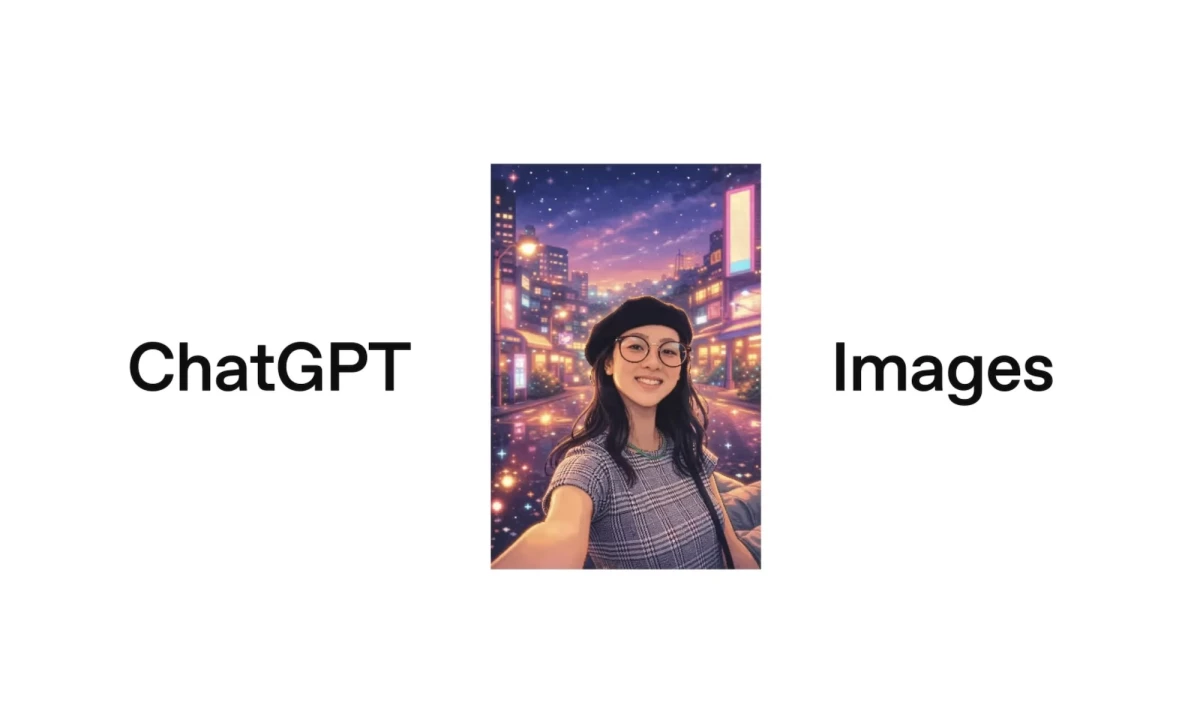
A dedicated Images section has also been added to ChatGPT's sidebar, with preset filters and trending prompts that work like a creative studio interface.
Also a very fun way to use it to easily get fun images in ChatGPT: pic.twitter.com/sWSedwAaII
— Sam Altman (@sama) December 16, 2025
Fidji Simo, OpenAI's CEO of applications, explained the design philosophy behind the dedicated interface in a Substack article.
"Creating and editing images is a different kind of task and deserves a space built for visuals," he said.
"ChatGPT can act as a creative studio in your pocket, capable of both practical edits and expressive reimaginings."
The pricing drop and dedicated interface signal OpenAI treating image generation as a core tool that must be accessible and scalable for commercial teams.
The release highlights three shifts in how marketing teams should evaluate AI image tools:
- Evaluate AI image tools for production readiness, not demo quality: Speed improvements and edit precision determine whether tools support actual operations.
- Budget for iterative visual development cycles: The improvements mean teams can test more concepts within existing timelines and budgets.
- Prioritize tools that preserve brand consistency: Logo integrity and visual continuity matter more than raw generation quality for commercial work.
Brands should assess whether current AI tools handle the iteration volumes and consistency standards that production teams actually need.
Our Take: Does Speed Matter More Than Quality?
OpenAI's focus on speed and editing precision shows the company understands enterprise adoption hinges on workflow integration.
Brands don't need perfect images from a single prompt, but they do need tools that iterate quickly while maintaining consistency across several variations.
The 4x speed boost and improved edit controls will solve actual problems better than incremental quality gains would.
The risk is that competitors like Google continue advancing on both fronts, forcing OpenAI to play catch-up on quality while defending its speed advantage.
In other OpenAI news, ChatGPT's shopping research tool is pulling product discovery from Google and helping the company expand its AI capabilities.
Brands adopting AI image generation need partners who understand real production workflow integration. Take a look at the top AI companies in our directory.