
Nvidia’s Power Play: Key Findings
- Nvidia is the first publicly traded company to breach a $4T market cap and the most valuable company on Earth.
- Its stock has surged ~1,350% since October 2022, outperforming the S&P 500 by ~16 percentage points in 2025 alone.
- The tech giant built the infrastructure powering major AI products, from ChatGPT to autonomous systems.
On Wednesday, Nvidia’s stock rose just enough to send its market cap over the $4 trillion mark.
Nvidia has now become the first publicly traded company to ever hit this milestone, according to CNBC.
At its intraday peak, the tech giant even vaulted above Apple and Microsoft to become the world’s most valuable company, a stunning breakthrough that caps an extraordinary run.
Nvidia shares climbed about 1,350% since late 2022, roughly a 15x increase in just a few years, as reported by Reuters.
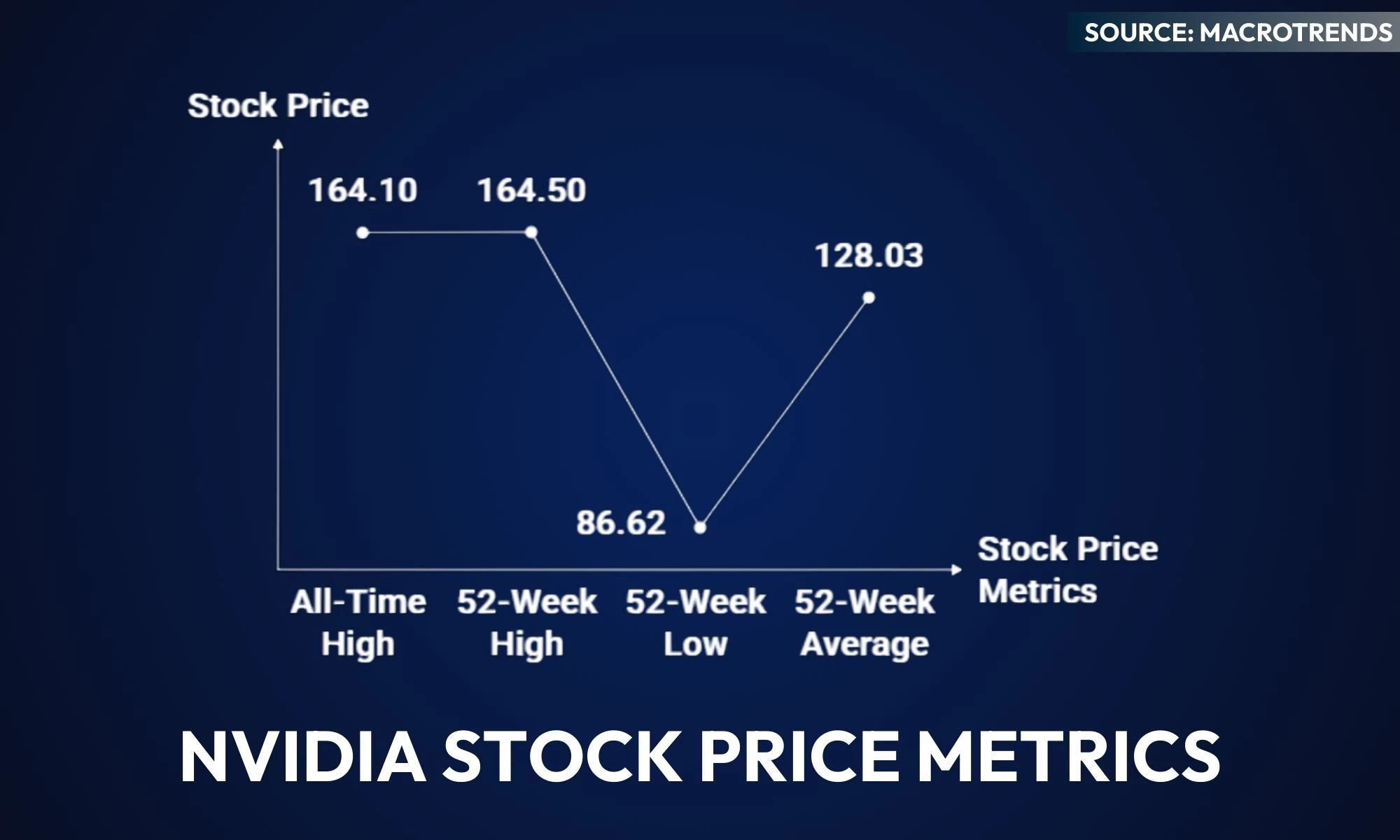
A quick look at Nvidia’s stock price history makes the growth story even clearer.
Its share price more than doubled in the past year.
And on Thursday (July 10), it reached an all-time closing high of $164.10, adjusted for Nvidia’s 10-for-1 stock split in 2024, according to data from Macrotrends.
And this is all because the company took a different path while many other tech firms chased flashy, consumer-facing AI products.
Instead, it quietly built the infrastructure that all these AI products run on.
Now, Nvidia has positioned itself as the indispensable backbone of the AI revolution, enabling others to innovate on its foundation.
And long before it reached this milestone, analysts had already taken notice.
Bank of America dubbed Nvidia the “picks and shovels leader in the AI gold rush,” the one that keeps on generating revenue no matter which chatbot or platform comes out ahead.
In a note seen by Business Insider in 2023, the bank reminded investors that:
“[S]uccess in AI requires full-stack computing and scale/experience across silicon, software, application libraries, developers, plus enterprise and public cloud incumbency.”
In other words, by providing the GPUs and software that power services like ChatGPT, Bard, autonomous vehicles, and cloud AI platforms, Nvidia wins whenever anyone in AI wins.
Essentially, the company built the roads and powerlines of the AI era rather than developing just one more car or storefront.
The Stack That Powers AI
I wondered just how Nvidia became so central to AI development.
A big part of the answer lies in its platform stack, notably the CUDA software platform, as well as proprietary libraries like cuDNN.
It also offers more than a decade’s worth of tools that are now deeply integrated into AI innovation.
Most importantly, CUDA only works on Nvidia’s chips, meaning anyone building advanced AI applications effectively has to use its GPUs, as per ChinaTalk.
NVIDIA created CUDA in the mid-2000s.
— Fernando Cao (@thefernandocz) July 10, 2025
A software platform that turned gaming chips into scientific supercomputers.
For years, it generated almost zero revenue.
Analysts called it a distraction. Investors hated it.
Yet Huang kept pouring money in. Here's why: pic.twitter.com/jv5XnDNx8n
Over time, Nvidia added libraries for deep machine learning and many others, creating a full-stack environment that reduces the effort to develop high-performance AI models.
In short, the tech giant built a whole operating system for AI, creating a strong advantage that's tough for rivals to break through:
- Nvidia’s software ecosystem creates a high barrier to exit. Switching often means rewriting years of code and losing access to mature tools and libraries.
- CUDA is deeply embedded. Even developers using higher-level tools like PyTorch or TensorFlow rely on it indirectly.
- This deep integration has built strong loyalty among AI developers, making it extremely difficult for competitors like AMD, Google, or Huawei to catch up.
Nvidia CEO Jensen Huang famously bet early on this software-first approach, and it has made the brand's position indispensable and sticky.
All the major players in AI, such as cloud providers Amazon, Microsoft, and Google, rely on Nvidia’s hardware to build their AI products.
Nvidia also holds an estimated 80–90% share of the data-center AI processor market.
Simply put, the company runs a near-monopoly on the “brains” that run modern AI workloads.
This shows how Nvidia’s growth is directly tied to the progress of others.
For instance, when OpenAI’s ChatGPT went viral, demand for Nvidia’s GPUs surged across the industry.
Infrastructure Is the Advantage
Nvidia’s story carries a powerful lesson for business leaders.
Owning the systems your industry runs on gives you unmatched leverage. Here’s how this strategy plays out:
- Control = Compounding Growth
When others build on your infrastructure, your business scales with their success. Nvidia profits every time a new AI model launches or a cloud platform expands. - Be the Tollbooth, Not the Car
Nvidia doesn’t need the next killer AI product, because every breakthrough still runs on its chips and software. It wins no matter who leads the app layer. - Platform Strategy Over Feature Chasing
Visionary leaders should focus on building systems others rely on, not just individual products. That’s the blueprint Nvidia followed, and it’s why its growth is exponential.
NVIDIA is proud to be named one of the world’s greenest companies by @Newsweek.
— NVIDIA Newsroom (@nvidianewsroom) July 1, 2025
Our innovations in AI and accelerated computing are setting new standards for environmental responsibility while powering a greener, more sustainable future. https://t.co/d7wKvxp1CQ
For product builders and brand leaders, Nvidia proves that owning infrastructure delivers more strategic value than chasing the next viral feature.
The most durable leverage comes from enabling others to build, then capturing value as they grow.
If you want to lead your market, don’t just aim to be better. Build what others need in order to succeed.
This is how Nvidia turned a foundational layer into a $4 trillion advantage.
The most powerful products aren’t just used, they’re depended on. These companies help you build at that level: