
CES 2026 Agency Trends & Insights: Key Findings
- Infrastructure is now the competitive edge, proving that AI campaigns can only scale when built on secure, transparent systems that support automation, governance, and real-time measurement.
- AI is reshaping workflows, showing that while automation accelerates execution, brand thinking, tone, and creative intent must remain human-led.
- Resilience comes from owning the stack, reminding agencies that control over platforms, data, and decisions is what enables real agility.
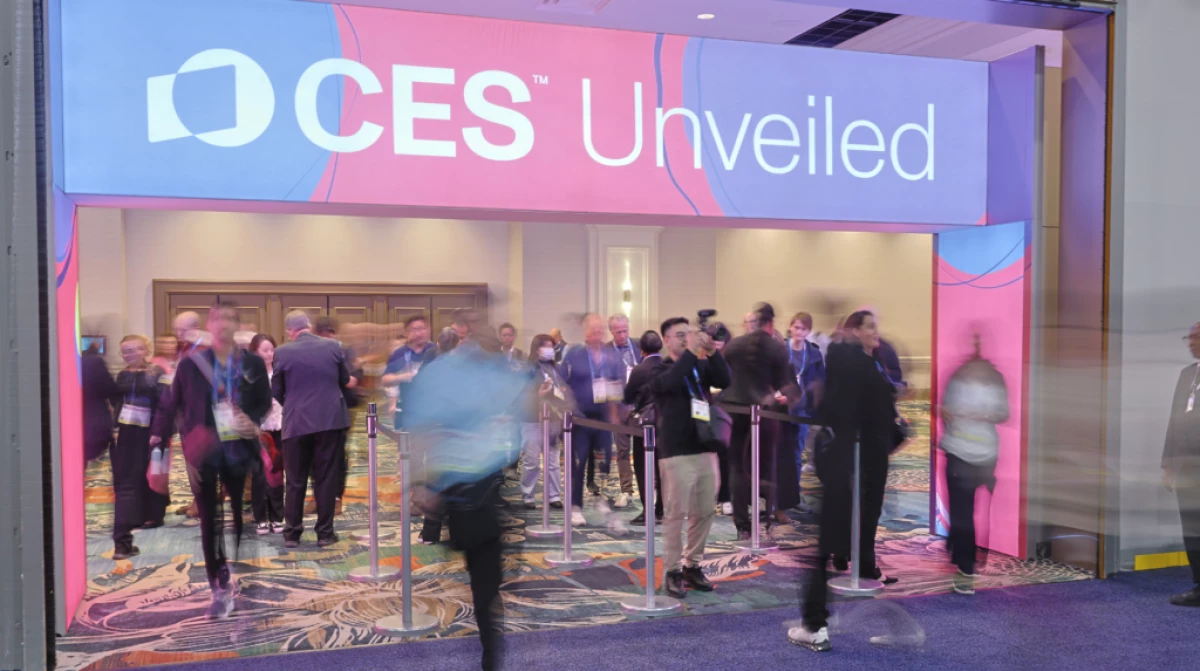
CES, the world’s largest consumer tech showcase, took place this year from Jan. 6 to 9 in Las Vegas.
While the event is over, the ideas that dominated this year will shape how agencies and brands operate throughout 2026.
Unsurprisingly, AI and automation were two huge areas of conversation, along with data-driven experiences.
Compared to CES 2025, which focused on breakthrough AI tools and futuristic innovation, this year's event was quite the leap forward.
Rather than speaking about what AI could do, CES 2026 was all about integrating these tools into your current setup for maximum results.
For agencies and brands, CES produced a wealth of useful conversations surrounding:
- Building real infrastructure behind agentic advertising
- Using AI to streamline creative, not replace it
- Demanding transparency from AI-powered media platforms
- Staying agile amid uncertainty and regulatory shifts
- Taking back control by owning more of the tech stack
These points will be integral to agency success.
That’s why we broke down the five CES-driven trends shaping agency operations in 2026, along with expert perspectives on how to prepare.
Plus, we share what CES 2026 neglected to cover, so you don't miss critical considerations.
1. Agentic Advertising Needs Real Infrastructure
This year’s CES positioned AI as a co-pilot agent in campaign planning and execution, with agencies needing stronger, structured foundation tools.
AI-powered planning tools, showcased by major players, are designed to make campaigns more connected, responsive, and performance-led.
But they only work with the right backend systems in place.
“We’re helping brands transition into more autonomous media ecosystems, but it only works if the foundation is built to scale securely,” says Branimir Akmadža, AI & Data Engineering Team Director at Infinum, a digital product company specializing in scalable AI and enterprise platforms.
For agencies, this means investing in infrastructure that can automate intelligently without sacrificing oversight, brand safety, or accountability.
“Agentic advertising requires more than smart tools. It demands systems that support real-time decisions agencies can actually trust,” Akmadža says.
2. AI Changes Creative Workflows, Not Replacing Them
At CES 2026, creative AI tools were widely discussed for how they’re being used to generate everything from social posts to full-length video ads using real-time data and brand guidelines.
This makes sense, as AI use is statistically proven to boost speed.
According to PwC’s 2025 "AI Business Predictions" report, top teams are already seeing 30% productivity gains from AI solutions.
That same report notes that AI is helping companies reduce costs, improve margins, and execute faster.
Even with those advantages, these tools don’t do what creatives do best.
Why? Strategy, tone, and brand decisions still rely on human judgment.
But AI does deliver when it’s embedded early in the creative process, supporting:
- Rapid testing
- Modular asset creation
- Real-time optimization across formats and channels
Just a year ago, the scale, speed, and personalization they're unlocking would've been unthinkable.
Used well, these tools help agencies move faster without starting from scratch every time.
That means more efficient multi-platform campaigns, without sacrificing the creative strategy that makes work stand out.
In sum, AI helps make that possible by freeing teams to focus on ideas, storytelling, and long-term brand impact.
3. Media Platforms Prioritize AI Transparency
CES also highlighted a new generation of AI-enhanced media platforms that promise not only speed but clarity.
Vendors increasingly emphasized explainable algorithms, auditable decision paths, and clearer data provenance as table stakes for enterprise adoption.
New metrics are emerging that unify attention quality, brand lift, and conversion signals into shared reporting frameworks, reducing reliance on siloed KPIs, and enabling agencies to:
- Validate how AI-driven media decisions are made, improving internal confidence and client-side accountability
- Compare performance consistently across walled gardens, CTV, social, and programmatic environments
- Move optimization upstream, adjusting creative, placement, and spend while campaigns are live rather than post-flight
This allows agencies to diagnose performance drivers in real time, justify spend with defensible data, and shift from retrospective reporting to in-flight optimization across fragmented channels.
“At CES, it was clear the next wave of media platforms is about more than automation — it’s about accountability,” says Katie Akhlopkava, CMO at Kanda Software, a custom software firm specializing in AI-powered adtech and analytics.
“We’re helping clients integrate AI into media pipelines, but the real win is pairing automation with transparency so agencies can trust every decision.”
4. In Uncertain Times, Agencies Build for Flexibility
One of the most repeated themes at CES 2026 was uncertainty.
This refers to the unknowns around AI, including how it’s:
- Disrupting traditional media workflows, from planning to placement
- Forcing a rethink of data and privacy practices, especially as regulations tighten
- Adding economic pressure to deliver more with less in an already cost-sensitive market
ClickZ, a marketing and tech trends publication, reported on CES 2026, describing how marketers chose to approach AI this year.
Instead of using AI for everything, they focused on solving for these unknowns, seeking out AI tools that:
- Integrate cleanly with existing stacks, avoiding siloed solutions
- Adapt quickly to changing campaign needs, data inputs, or regulations
- Reduce friction between strategy and execution by aligning planning, creative, and performance
At CES, this selective approach, using AI where it fits existing workflows, came up repeatedly in panels and product demos.
Naturally, agentic AI was part of that conversation, as many explore intelligent systems to automate and optimize tasks.
Even major brands, such as NBCUniversal and Reddit, are testing these as a way to plug directly into evolving agency operations, reports The Current, a media and advertising insights publication.
Moral of the story? Acting intentionally, rather than applying AI everywhere, is the way to go.
As ClickZ puts it:
"Marketers aren’t short on tools. They’re short on systems."
5. Owning the Stack Becomes a Strategic Advantage
While automation dominated product launches, CES made clear that agencies are placing equal importance on control over data, workflows, and outcomes.
From self-serve campaign builders to brand-owned data dashboards, agencies are moving away from rented tools and investing in infrastructure they can shape (and scale).
This shift was underscored at CES by Disney’s rollout of AI-powered creative and measurement tools, allowing advertisers to plan, produce, and track campaigns directly inside its ecosystem, without agency support.
“We’re seeing a real shift back to ownership, agencies want tools they can shape, not just subscribe to,” says Caleb Bradley, Founder and CEO at Bighorn Web Solutions, a development firm specializing in high-performance digital platforms.
Owning more of the stack gives agencies the flexibility to design workflows, cut friction, and keep pace with rapid changes in creative and adtech requirements.
“When you control the system, you control the outcome. That’s what agencies are after right now,” Bradley says.
What Agencies Should Be Planning Next
If CES 2026 was about infrastructure and intelligence, then the next step for agencies is decision-making, not just what to adopt, but what to build, what to own, and where to specialize.
Here are three key moves agencies should prioritize next:
1. Pick Your Automation Battles
Over 34% of marketers now report major campaign performance improvements from AI-powered workflows, especially in creative production, lead engagement, and media optimization, according to Influencer Marketing Hub.
These are the areas where automation is more effective, directing brands to focus and use them on cases as lead scoring and outreach, rather than automating everything at once.
“Clients don’t just want performance. They want visibility into how it’s achieved. That’s where transparent, AI-powered systems make the difference,” Akhlopkava says.
2. Strengthen Data Fluency
CES emphasized how automation without accountability is no longer acceptable, reports ClickZ.
As algorithms take on more media and creative decisions, agencies need systems and teams that can explain results clearly, turning measurement into a strategic advantage in 2026.
3. Design for Agility
Another big focus for agencies at CES 2026 was adaptable systems, meaning those that can scale, integrate seamlessly, and respond in real time without disrupting main workflows.
And with CES centering on modular platforms, AI-powered orchestration, and faster decision-making, this year’s tech event certainly delivered.
Why does this matter? Because agencies are already putting these ideas into practice.
While not showcased at CES, brands and agencies are already using real-world tools like Warmly’s Orchestrator and AI Chatbot to automate workflows, personalize outreach, and engage with visitors.
At the same time, they’re maintaining brand control and responsiveness at scale.
What CES 2026 Didn’t Address That Agencies Must
Yes, CES honed in on infrastructure, automation, and real-time orchestration.
But it skipped over several considerations that could ultimately determine whether these innovations succeed long-term.
Here are three critical points the tech showcase sidestepped:
AI Governance Is Still Catching Up
As Forbes contributor Bernard Marr observed, the pace of AI development has far outstripped the frameworks meant to regulate it.
Marr pointed out that many CES products featured autonomous capabilities, yet offered little clarity on how they’ll be governed or kept safe in real-world use.
That leaves agencies with no choice but to build their own internal systems (covering compliance, ethics, and accountability), rather than waiting on vendor maturity.
Transparency Has Limits Without Real Privacy
While many platforms touted explainable AI, few addressed how user data, especially behavioral, biometric, or voice inputs, is stored or shared.
Emotion-tracking wearables and smart assistants were front and center this year, but there was little clarity on what happens to that data once it’s collected.
The privacy conversation, especially around how AI systems handle personal data, remains behind the technology curve.
Function Isn’t the Same as Value
CES delivered on spectacle and capability, but showed little of how AI will translate into sustainable business growth.
Marr noted that robots and AI-powered home devices drew attention at CES, but vendors rarely explained how those tools would deliver real returns.
And so, agencies must separate what looks impressive from what actually works.
Why does it matter that CES downplayed these points?
Because these aren’t side considerations.
They're huge factors that will play into how agencies show up, compete, and deliver in the next wave of AI-led transformation.
Want more agency insight? Jason Hernandez, Head of Agency Partnerships at DIRECTV, explains how linear and digital are converging into a single, frictionless video marketplace:
Our Take: What Should Agencies Really Take Away From CES 2026?
CES 2026 signaled a new era for agencies.
Yes, automation is "everywhere," embedded into most every part of the agency workflow. That said, its sheer presence does not guarantee success.
Why?
Adding AI tools is just the starting point.
From there, it's how you use them, and whether they’re actually built into your workflows that makes the difference.
So, if there’s anything to glean from CES 2026, it's this: Smart planning and systems are key.
The agencies making real progress are the ones investing in infrastructure and staying flexible.
They're also pushing for transparency, taking back control of their data and systems.
To explore top agencies already leading in AI, automation, and agile execution, check out our curated list of the Best Digital Agencies of 2026.