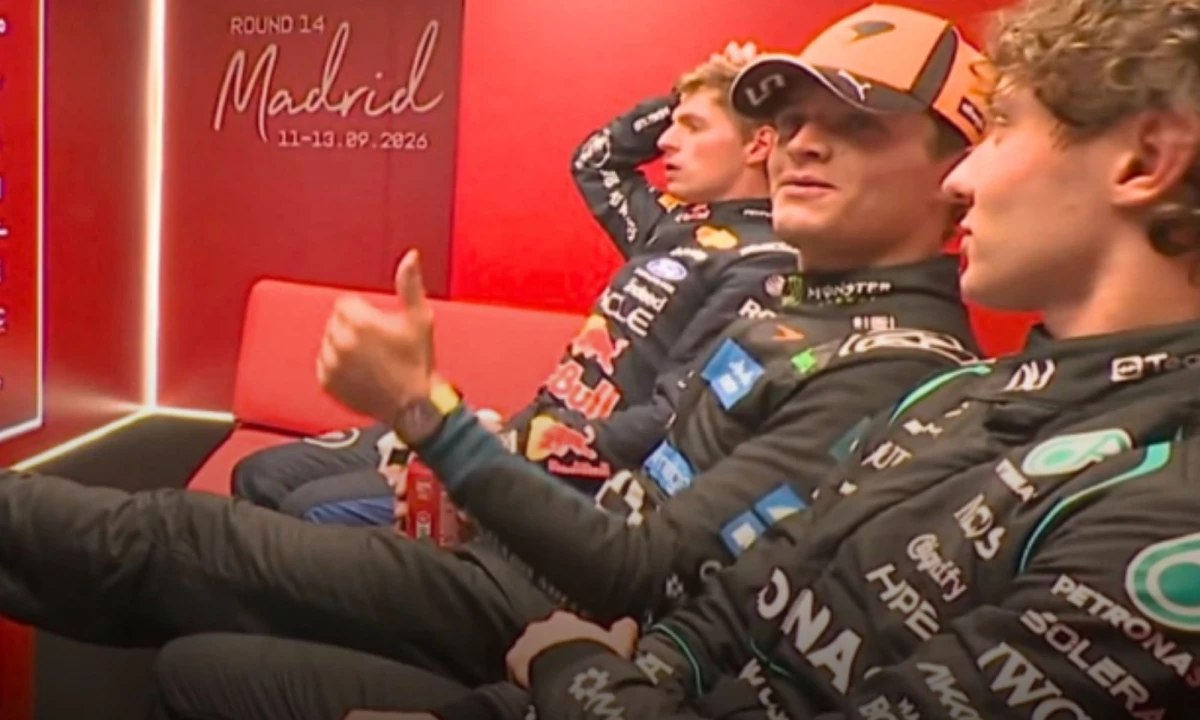

Lando Norris drank a Coke on live Formula 1 coverage, and a staff member appeared to object.
The McLaren driver just finished third at the Spanish Grand Prix when he was seen with the can in the cooldown room.
Norris then responded, "I just done a race so I'm allowed to drink what I would like," according to footage reported by The Telegraph.
The clip drew attention because PepsiCo became F1's Official Partner through a multiyear deal announced in May 2025.
The agreement names exclusive track pouring and product supply rights, trackside advertising, Fan Zones, and marketing rights for Sting, Gatorade, and Doritos.
President and CEO of Formula 1, Stefano Domenicali, said in the partnership announcement:
"PepsiCo will tap into the unique potential of Formula 1 as a global platform to connect with new audiences, and we will benefit from their energy, their extraordinary products, and their loyal community.
"PepsiCo is the ideal partner with whom to share unique moments along our journey."
Despite the brand partnership, neither company's announcement mentions driver drinks or cooldown-room restrictions.
So, the public record supports a narrower story about what PepsiCo's published F1 rights actually include.
Coca-Cola Gains Free Exposure From Pepsi Rival
The Madrid clip gave Coca-Cola unexpected global exposure within seconds.
Norris' exchange made viewers notice the can, the brand, and the sponsorship tension around it.
View this post on Instagram
The soft drink company received mass attention without a visible paid activation tied to the incident.
PepsiCo, on the other hand, paid for an extensive F1 presence.
Yet the unscheduled Coke appearance became the more memorable brand moment in this clip.
Had nobody commented on the can, the Coke may have passed through the broadcast without a stir.
Comment
by u/randomseocb from discussion
in formula1
The intervention arguably gives a competing brand the kind of organic visibility PepsiCo pays to secure.
PepsiCo's missed opportunity lies in failing to let the moment disappear before it became a story.
F1's 1.6B Audience Makes Every Product Placement Visible
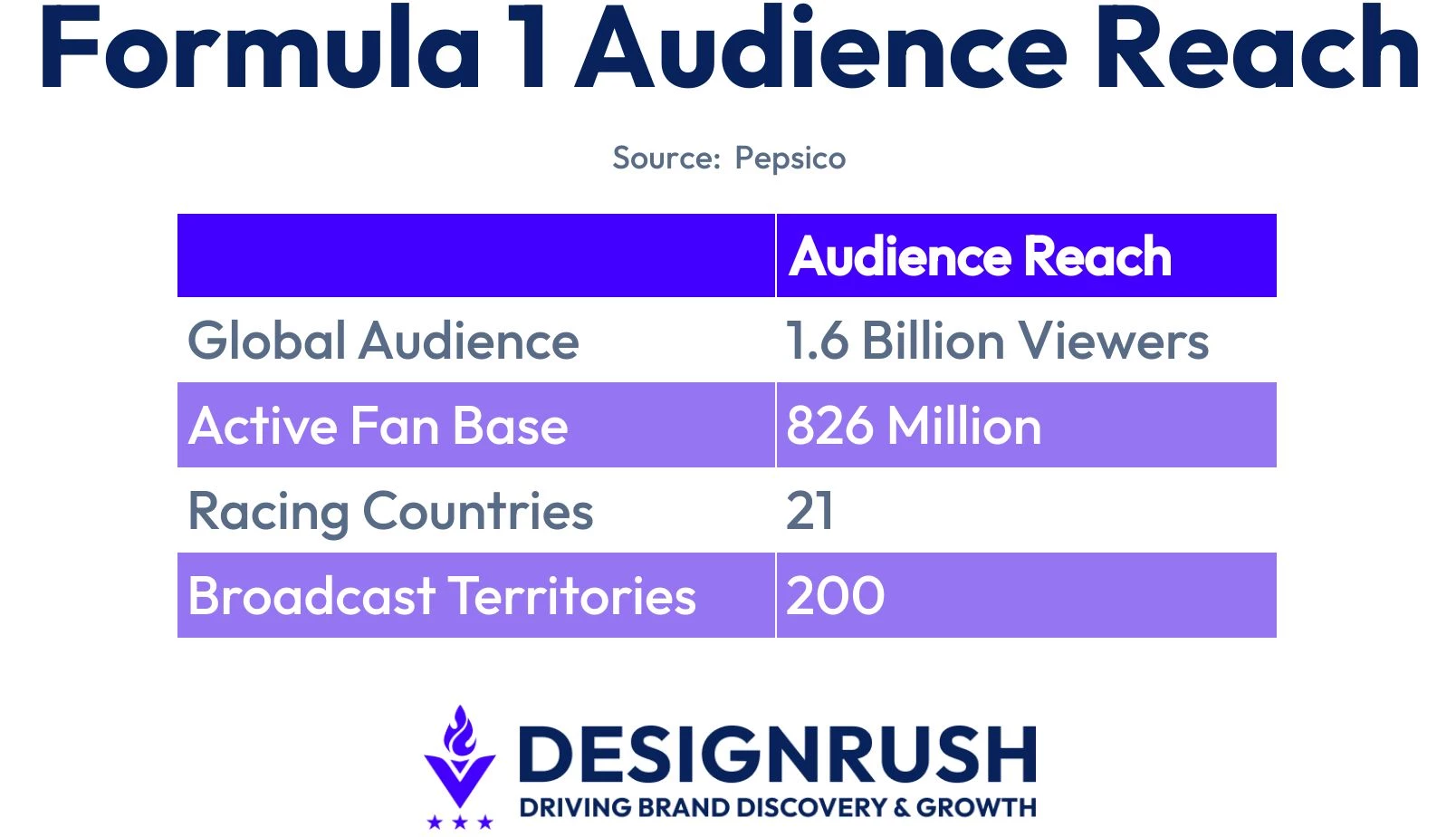
PepsiCo's 2025 announcement cited an F1 cumulative global audience of 1.6 billion viewers and an active fan base of 826 million.
This partnership establishes a powerful platform for the soda brand to engage with consumers across 21 racing countries.
It also spans more than 200 territories through broadcast.
This gives PepsiCo a global platform across races, venues, and marketing activity, and a reason why sponsorship rightsare so protected.
F1's audience numbers and geographic reach point to three lessons for marketers:
- Large sports audiences magnify small brand appearances. Marketers should map visible product placements to understand how quickly a minor appearance can attract attention.
- Rights language sets the usable boundary. Sponsors should define the breakdown of rights to prevent assumptions about what a partnership covers.
- Global reach increases scrutiny. A product seen during a major broadcast can become part of the public conversation without planned activation.
F1's scale makes the distinction between documented rights and assumed rights especially important for sponsors.
Our Take: How Much Can a Sponsor Actually Define?
The Norris clip shows how quickly audiences can connect a visible product with a sponsorship deal.
Even when the public agreement says nothing about the specific incident.
PepsiCo's published F1 pouring rights cover defined commercial areas.
Norris said he could drink whatever he wanted after finishing a race.
We should avoid treating the Coke incident as proof of sponsor enforcement.
The commercial lesson sits in the gap between what a sponsorship announcement publicly lists and what audiences may assume the partnership covers.
This gap is a weak point as sports properties put more branded products, talent, and live content in front of global audiences.
PepsiCo's F1 expansion also reached team-level activations with Mercedes-AMG Petronas.
F1 is not the only sports property where sponsorship rules created unexpected brand exposure this year.
FIFA's restrictions on Levi's Stadium branding gave Levi's a viral marketing opportunity when the brand turned the covered logo into social content.
Sports sponsorship requires precise rights planning across venues, broadcasts, talent, and fan experiences.
Brands can choose from these top sports marketing agencies to manage those partnerships.