
Meta's AI Demo Fail: Key Points
- Meta’s live demo failures at Connect 2025 exposed the risks of tying brand identity to ambitious product rollouts.
- Zuckerberg framed the glitches as WiFi issues, while Bosworth admitted the neural wristband needs debugging after repeated failures.
- Pre-recorded clips and an Oakley brand partnership helped Meta shift focus from mishaps to future product design ambitions.
The world watched as Meta’s bold AI vision tripped live onstage. Not once, but twice.
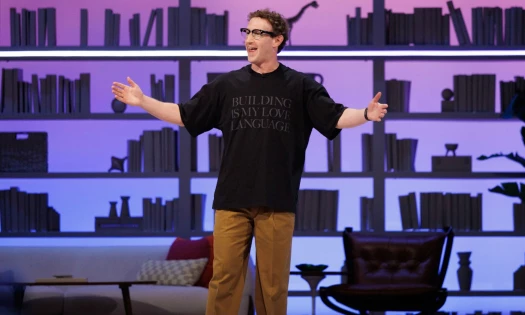
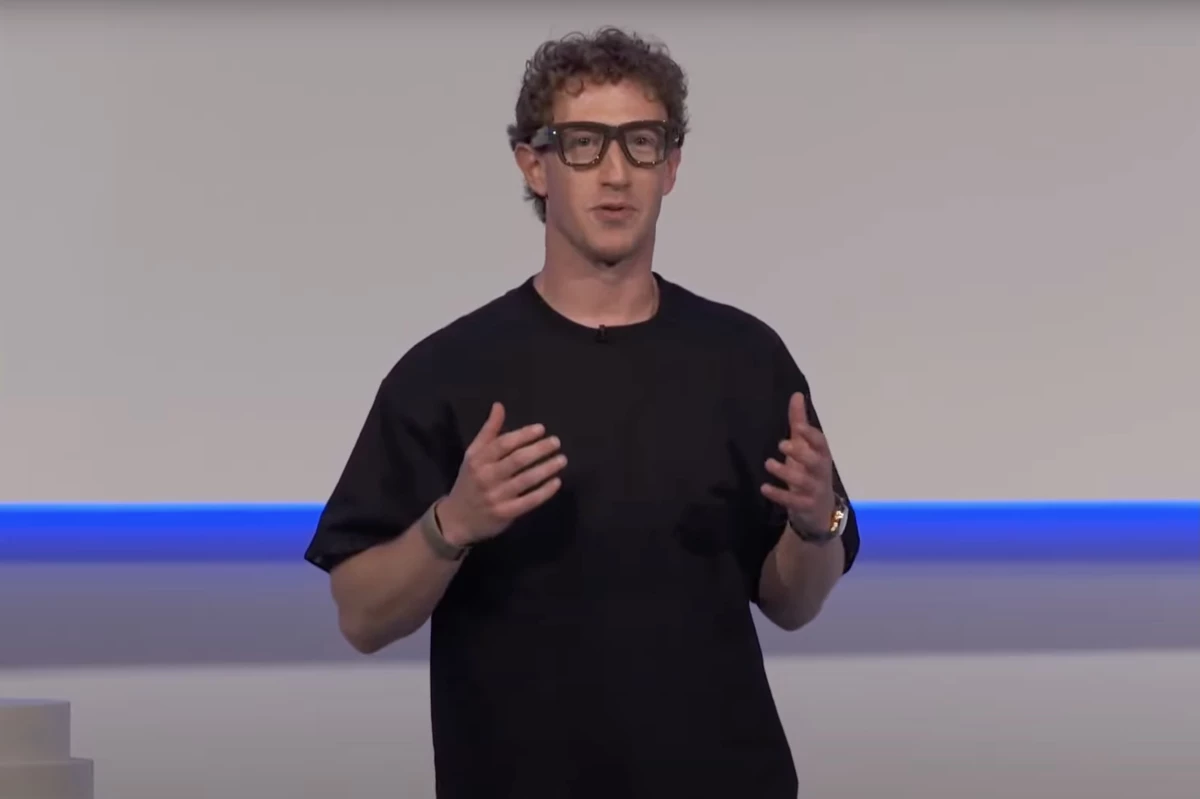
Mark Zuckerberg billed Meta’s $1 trillion gamble on AI wearables as the company’s next big leap, but the big reveal stumbled in front of a global audience.
At the 2025 Meta Connect event, the CEO unveiled the new Ray-Ban Display glasses, a neural wristband, and Oakley-backed sports frames.
But when it came time to show the world how the technology worked, the spectacle went sideways.
In one segment, food creator Jack Mancuso asked the glasses for step-by-step help making a Korean steak sauce.
The AI ignored him, skipping straight to telling him to add a pear to a sauce base that had never been created.
"You’ve already combined the base ingredients," the glasses repeated, leaving Mancuso shrugging at the crowd.
In addressing these unexpected errors, Zuckerberg blamed a “messed-up” WiFi connection.
“The irony of the whole thing is that you spend years making technology and then the WiFi at the day catches you,” Zuckerberg said, brushing off the moment.
But that wasn't all.
Later in the demo, a WhatsApp video call from Meta CTO Andrew Bosworth failed to connect through the wristband, forcing Bosworth himself to walk onstage.
“I promise you no one is more upset about this than I am, because this is my team that now has to go debug why this didn’t work on the stage,” he admitted.
Glitches Meet Spin
Just when it seemed like the demo was irredeemable, Zuckerberg pivoted quickly by showing pre-recorded clips of the glasses being used to design a surfboard and place orders.
All to drive the point that if and when the tech works, it could redefine daily life.
Meta also highlighted its push into sports eyewear through an Oakley brand partnership, tying its AI wearables to performance and lifestyle.
And with a price tag of $800, the Ray-Ban Display was established as a premium product meant to signal both status and cutting-edge adoption.
Beyond product specs, the company’s strategy was to showcase how the innovation can be used in day-to-day moments, whether it's the kitchen, in the ocean, or on the field.
That framing allows Meta to sell vision even when execution faltered.
In 2024, Meta posted $164.5 billion in revenue, up 22% year over year, while Reality Labs recorded $17.7 billion in losses.
Surprisingly, product demo fails are more frequent than you think.
In 2019, Tesla CEO Elon Musk demonstrated the durability of the "armored glass" of the Cybertruck, only for the demo to end in the glass shattering twice.
The demo caught the internet's attention, leading to a viral moment that made it hard for the brand to bounce back and rebuild its now solid reputation.
What Meta’s AI Flop Teaches Creative Agencies
Meta’s launch is a reminder of how fragile high-stakes product rollouts can be.
But it's not impossible to bounce back.
Research shows consumers are often willing to forgive product hiccups, especially when brands are perceived as authentic and handle the situation transparently.
A well-managed recovery can even increase brand loyalty in some cases.
Here are key takeaways that brands and agencies can learn from Meta's mistake.
- Always prepare backup demos (video, screenshots) in case of technical failure.
- Use storytelling through failure and acknowledge glitches with humor or humility.
- Focus on audience empathy and shift quickly to what matters to users, not just the tech specs.
The coming months will determine whether Meta’s AI gamble is remembered as a bold pivot or a full-fledged brand fail.
Our Take: Failure or Foothold?
Watching the Connect demos, it obviously didn't go as planned. But at the same time, I wasn’t convinced the glitches were purely a failure.
In some ways, they humanized the pitch and kept people talking, which is no small feat in a crowded attention economy.
But even then, banking on imperfection is a risky brand marketing strategy.
We go together like AI and glasses—is that not an expression? It will be. Check out all the news from Connect 2025. pic.twitter.com/PQfVQROS3u
— Meta (@Meta) September 18, 2025
While one glitch looks real, repeated glitches can make a trillion-dollar bet look shaky.
If anything, Meta reminded us that vision sells only when it’s backed by proof and performance.
For marketers, the lesson is to choreograph both the dream and the delivery.
The dream can inspire, but delivery and a proper demonstration are the things that earn belief.
In other news, BMW recently made a subtle update to its logo, which debuted in its iX3.