

VPN Protocol Key Findings:
- Protocol choice drives marketing performance by enabling faster monitoring, secure data handling, and reliable access in restricted regions.
- WireGuard, OpenVPN, and StealthVPN serve different roles — choose based on whether you need speed, security, or censorship resistance.
- Protocol switching prevents work disruptions by adapting connections across borders, devices, and network conditions.
As digital teams expand globally and privacy concerns grow, VPNs have become essential for secure work, research, and content access.
Using a VPN is a smart first step, but the protocol it runs on can make or break both your speed and security.
And VPN usage is no longer niche.
A Forbes Advisor poll conducted in June 2025 found that nearly half of users (49%) used a VPN on at least some devices, while 23% used one on all their devices.
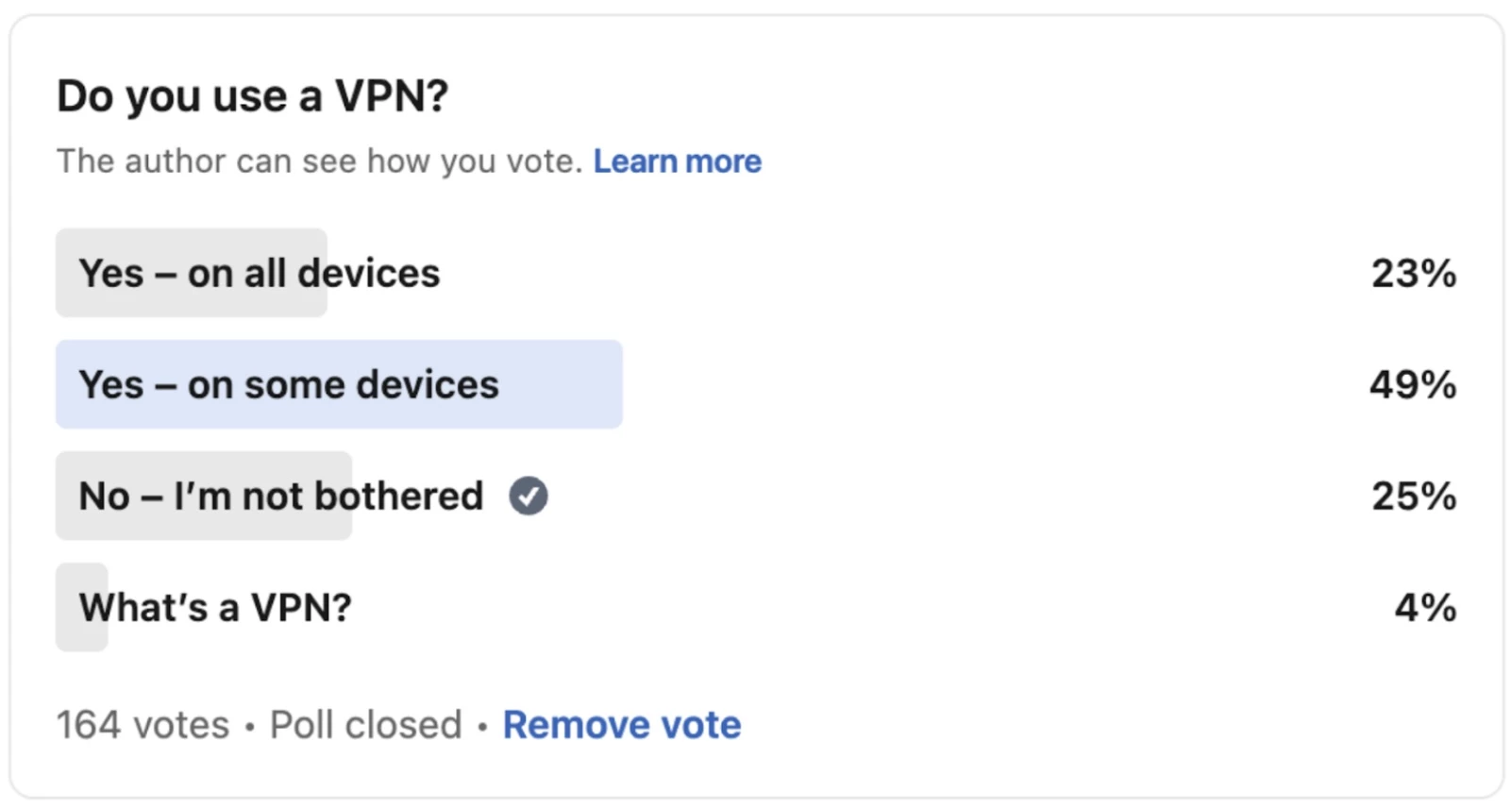
That’s a clear sign that VPNs are becoming default tools in the digital workspace.
But here’s the catch: not all VPN protocols are created equal.
And using the wrong one can cost your business in speed, access, and data protection.
Quick listen: VPN protocol strategy impacts speed, access, and campaign security — in under 2 minutes.
That’s where providers like Astrill VPN come in. These companies support multiple protocols across a global network, offering flexibility for users who need speed, stealth, or stability depending on where and how they work.
I spoke with Arqam Zafar, marketing director at Astrill VPN, about the practical trade-offs between protocols like WireGuard, OpenVPN, and StealthVPN, and what businesses should consider when choosing the right one for their needs.

Who is Arqam Zafar?
Arqam Zafar is the marketing director at Astrill VPN, where he leads global marketing initiatives, brand strategy, and partnership development. With over a decade of experience in digital marketing and cybersecurity advocacy, he specializes in helping privacy-conscious businesses scale across borders. At Astrill, Arqam focuses on educating users and organizations on how VPN technology supports internet freedom, data protection, and reliable global access.
Editor’s Note: This is a sponsored article created in partnership with AstrillVPN.
Choose the Right VPN Protocol for Speed, Access, and Security
Picking the right VPN protocol directly impacts how fast you work, what content you can access, and how well your data is protected.
For digital teams managing campaigns or research across borders, protocol choice can determine whether tools load instantly or get blocked entirely.
The three most widely used protocols offer different strengths depending on your network environment and business needs:
- WireGuard is built for speed, giving marketers instant access to dashboards, analytics, and real-time tools without lag.
- OpenVPN locks down your data, making it the go-to for teams handling sensitive client work or operating under strict compliance.
- StealthVPN breaks through censorship, keeping marketing operations live even behind China’s firewall or aggressive network filters.
Using the wrong protocol can lead to speed bottlenecks, security gaps, or outright inaccessibility, especially when your team operates internationally or on mobile.
Choosing based on actual use case (e.g., streaming, research, remote work, or bypassing censorship) lets businesses keep productivity high and risks low.
Enable Protocol Switching to Prevent Downtime in Changing Work Environments
Connectivity challenges can interrupt ad monitoring, campaign deployment, or team collaboration.
That’s where protocol switching makes the difference.
“For dynamic work, where teams might shift between offices, cafes, or different countries, protocol switching should be smooth and intuitive,” Arqam says.
For example:
- WireGuard is ideal for speed, but if it’s blocked in a restricted country, StealthVPN takes over automatically.
- OpenVPN offers stronger encryption for secure data access, making it a smart fallback for sensitive client materials.
As such, brand leadership needs to assess whether the VPN they’re considering offers protocol switching.
VPNs that don’t have this feature can leave global teams disconnected at critical moments.
Match the Protocol to the Task
One-size-fits-all rarely applies to VPN performance.
The right protocol depends on:
- what you're doing
- where you're doing it
- how much security or speed your task demands
“We advise businesses to select protocols based on use case and network conditions,” Arqam says.
From a marketer’s perspective, speed is critical, but so is security. Choosing the appropriate protocol helps maintain both performance and privacy.
This kind of targeted protocol selection ensures you’re not overpaying in performance for unnecessary encryption or risking security when reliability matters most.
Avoid Outdated Protocols to Protect Data and Reputation
When it comes to VPN protocol selection, businesses should be wary of legacy options that no longer meet modern security standards.
“We advise brands to avoid outdated protocols like PPTP or L2TP/IPSec. These are no longer secure by modern standards and could expose businesses to risks,” Arqam says.
Astrill has proactively phased out older protocols to minimize risk and ensure secure connections for all users.
It reflects an industry-wide shift toward stronger encryption and better resilience against modern threats like packet sniffing on public Wi-Fi networks and man-in-the-middle (MITM) attacks that exploit weak handshakes or outdated encryption algorithms.
Understand How Encryption Standards Affect Speed and Security
Encryption standards are the foundation of any VPN protocol, and they directly impact both performance and data protection.
“Encryption is at the core of what makes a VPN secure,” Arqam says.
Astrill uses a mix of AES-256 and ChaCha20 encryption standards across its protocols to ensure both speed and security
This matters because the encryption method affects:
- How fast your connection feels: Some encryption algorithms are more lightweight and optimized for speed.
- How safe your data remains in transit: Stronger encryption resists brute-force attacks and meets global compliance standards like GDPR and CCPA.
For example:
- WireGuard uses ChaCha20 encryption, which is known for balancing high performance with robust security, making it well-suited for mobile users or real-time campaign monitoring.
- OpenVPN supports AES-256 and AES-GCM, standards commonly used in enterprise environments for secure communications.
- StealthVPN uses RSA-2048 certificates for authentication and AES-256 for encryption
If you’re handling proprietary research, running paid media across borders, or accessing region-specific tools, these encryption layers ensure your data isn’t compromised along the way.
Monitor VPN Performance in Real Time to Optimize Campaign Speed
VPN performance shifts depending on location, network conditions, and device type, which can seriously affect global marketing campaigns.
For marketers working across borders, even a few seconds of lag can disrupt ad delivery, analytics tracking, or content testing.
To stay ahead of these issues, Astrill continuously evaluates and refines its protocol performance.
“At Astrill VPN, our product and engineering teams work closely to continuously test and refine our protocols,” Arqam says.
“We conduct real-world speed tests across various regions, security audits and vulnerability scans, [and] user experience evaluations, especially for mobile marketers and remote teams.”
This kind of ongoing testing ensures VPN stability where it matters most: during live campaign monitoring, geo-specific research, and collaboration between global teams.
Test Protocols Inside Real Marketing Workflows
A VPN protocol that looks fast on paper might behave differently inside real tools like Meta Ads Manager, HubSpot, or Google Analytics, especially when switching regions or juggling multiple accounts.
That’s why Astrill prioritizes field testing inside actual marketing workflows.
“We also gather feedback directly from users, and this helps us optimize not just for speed and security, but also for ease of use and adaptability in real marketing scenarios,” Arqam explains.
Evaluating performance where it counts ensures marketers won’t face unexpected lags or lockouts mid-campaign.
It’s not just about theory; it’s about day-to-day usability for global teams.
Protocol Choice Is a Marketing Performance Decision
Choosing the right VPN protocol directly impacts access, speed, and security across campaigns, tools, and teams.
Whether you're navigating censorship, protecting sensitive data, or managing global operations, the VPN protocol you choose can significantly impact performance and accessibility.
WireGuard offers an excellent balance of speed, security, and efficiency for most users. However, in highly censored environments or when frequently switching networks, fallback options like
OpenVPN (TCP) or StealthVPN may be more reliable due to their ability to bypass deep packet inspection and maintain stable connections..
No single protocol fits all needs, and the most resilient teams are those equipped to adapt.
Ultimately, treating protocol choice as part of your marketing stack can unlock smoother workflows, stronger data protection, and faster results.