
Meta's Hiring Spree in AI: Key Findings
- Meta hired Ruoming Pang for over $200 million to lead its AI efforts in content and advertising.
- The tech giant formed Superintelligence Labs to build faster and smarter creative tools with human-level output.
- To rebuild Meta’s content systems, Pang is joined by leaders from Scale AI, GitHub, and Safe Superintelligence.
- Agencies must evolve fast, as AI-native teams set new expectations for personalized, scalable, and ethically guided storytelling.
Quick listen: Meta’s $200M AI hire reveals the future of agency creativity, in under 2 minutes.
Former Apple AI executive Ruoming Pang just stepped into one of the most high-stakes roles in tech today.
Meta reportedly offered more than $200 million to bring him on board, making it one of the largest packages ever given to a single executive, Bloomberg reported.
He will now lead Superintelligence Labs, Meta’s internal effort to merge AI with content creation, brand storytelling, and campaign delivery.
But this move isn’t about catching up to OpenAI. It’s about changing how creativity works across Meta’s entire system.
Meta has made unusually high compensation offers to new members of its "superintelligence" team — including a more than $200 million package for a former Apple distinguished engineer https://t.co/LLvbZbaKIs
— Bloomberg (@business) July 9, 2025
Launched in June 2025, Superintelligence Labs is Meta’s boldest move yet in applied AI.
It’s part of a broader push that now includes plans to spend “hundreds of billions” on advanced data centers built specifically for superintelligence, as reported by Reuters.
Zuckerberg aims to accelerate AI innovation so it can outperform humans across a wide range of tasks.
And to support this effort, the tech mogul is investing heavily in infrastructure and recruiting top-tier talent through aggressive hiring.
Inside Meta’s Superintelligence Labs: The New Creative Vanguard
Superintelligence Labs brings together a heavyweight team:
- Alexandr Wang, former CEO of Scale AI, now Chief AI Officer
- Nat Friedman, ex-GitHub CEO and AI investor
- Daniel Gross, co-founder of Safe Superintelligence
The focus is on creative systems.
With Llama 4 falling short of internal expectations, the team is now rebuilding Meta’s content engine to deliver faster tools without losing narrative quality.
And the ripple effects won’t stop at Meta. Agencies should take note.
What’s happening inside Superintelligence Labs is a preview of what creative teams everywhere will need to adapt to, and fast.
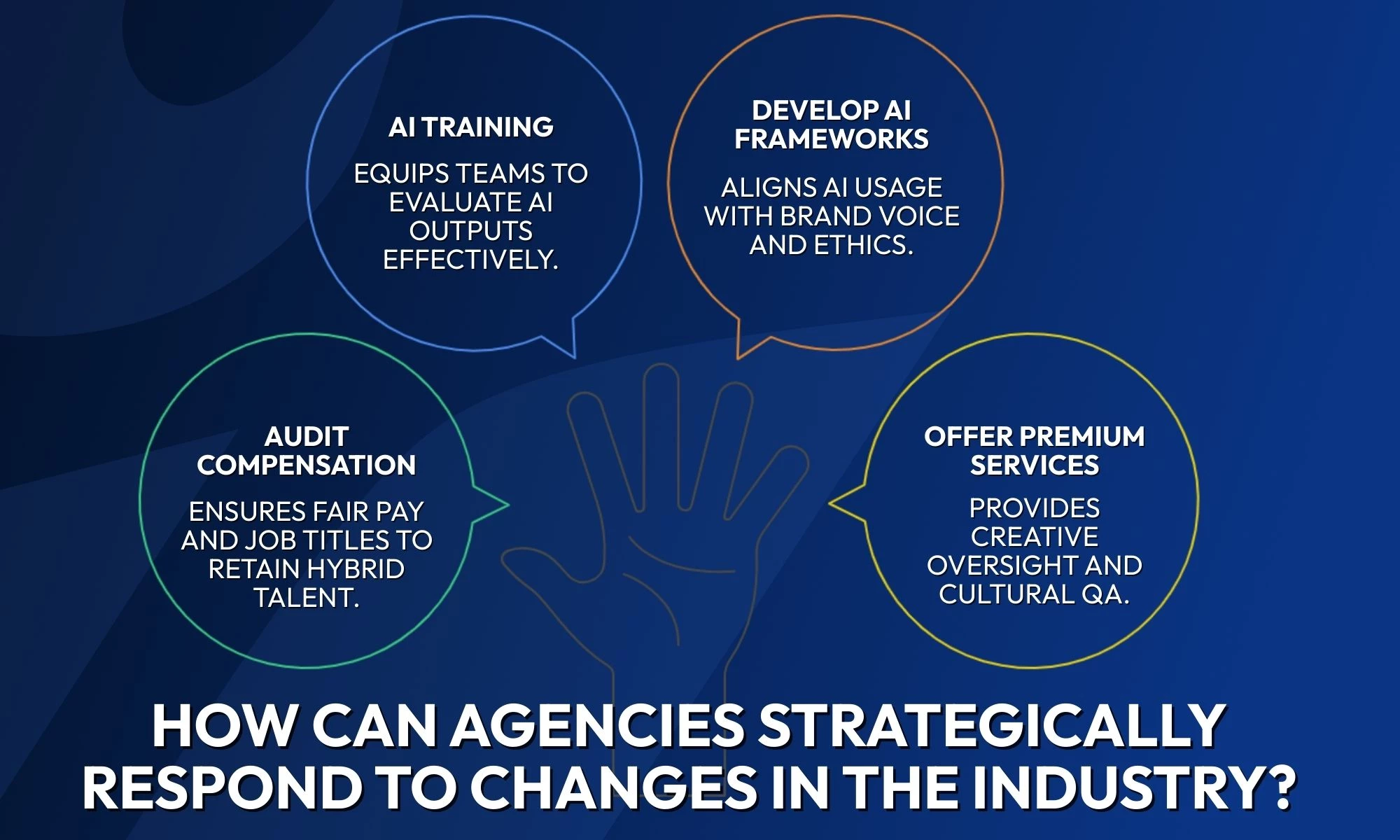
- AI-native talent is no longer optional. Teams that combine creative instinct with technical fluency will set the standard.
- Content tailored with AI will be expected by clients, from personalized messaging to versioning at scale.
- The agency’s role is shifting. It’s less about volume, more about guiding voice, ethics, and cultural nuance in a machine-accelerated world.
If your team can’t speak both art and algorithm fluently, you’re already falling behind. And no amount of automation will save you.
How This Compares to Industry Moves
R/GA has launched a global AI products team to develop custom solutions, according to Medical Marketing and Media.
The move comes as part of its broader push to integrate machine learning into creative strategy.
Deloitte Digital now also operates AI-enabled Content Studios that blend creative talent with automation, supporting large-scale, brand-aligned campaigns for clients.
Simultaneously, client expectations are shifting:
- Speed alone isn’t enough. Platform tools are making content faster and more templated, but brands want more than automation.
- Strategic storytelling is the new differentiator. Brands want partners who protect their voice, apply ethical AI, and reflect cultural context, not just generate content tuned to an algorithm.
But faster output comes with trade-offs.
As more content is generated at scale, the risk of creative sameness and shallow brand experiences grows.
Agencies must step in as ethical filters and narrative architects to maintain quality.
Speed matters, but only when it supports clear strategic intent and doesn’t sacrifice it.
Before you hire an agency promising AI-powered content, here’s what Tim Hanson from PenFriend.ai says you really need to watch for:
Superintelligence Labs previews the future.
AI‑native teams marrying creative instinct with technical fluency will set the new standard as clients demand not just speed but truly tailored, AI‑driven storytelling.
For example, Unilever’s Dove leveraged AI‑generated remixes of influencer content to drive 3.5 billion social impressions and reach 52% new customers, according to the Wall Street Journal.
The bottom line? The real creative battle is over trust, taste, and voice.
Meta’s $200 million investment in Pang and other AI-related hires signal a shift in how scale, personalization, and storytelling must work together.
Agencies that adopt AI without sacrificing emotional depth, narrative authenticity, and ethical judgment will lead the next wave.
The future won’t be won on technology alone.
It will be won on taste; whether that means creative judgment, artistic discernment, strategic sensibility, or sharp creative intuition.
AI tools are everywhere. What matters is the judgment behind them. These agencies build content that earns attention and trust: