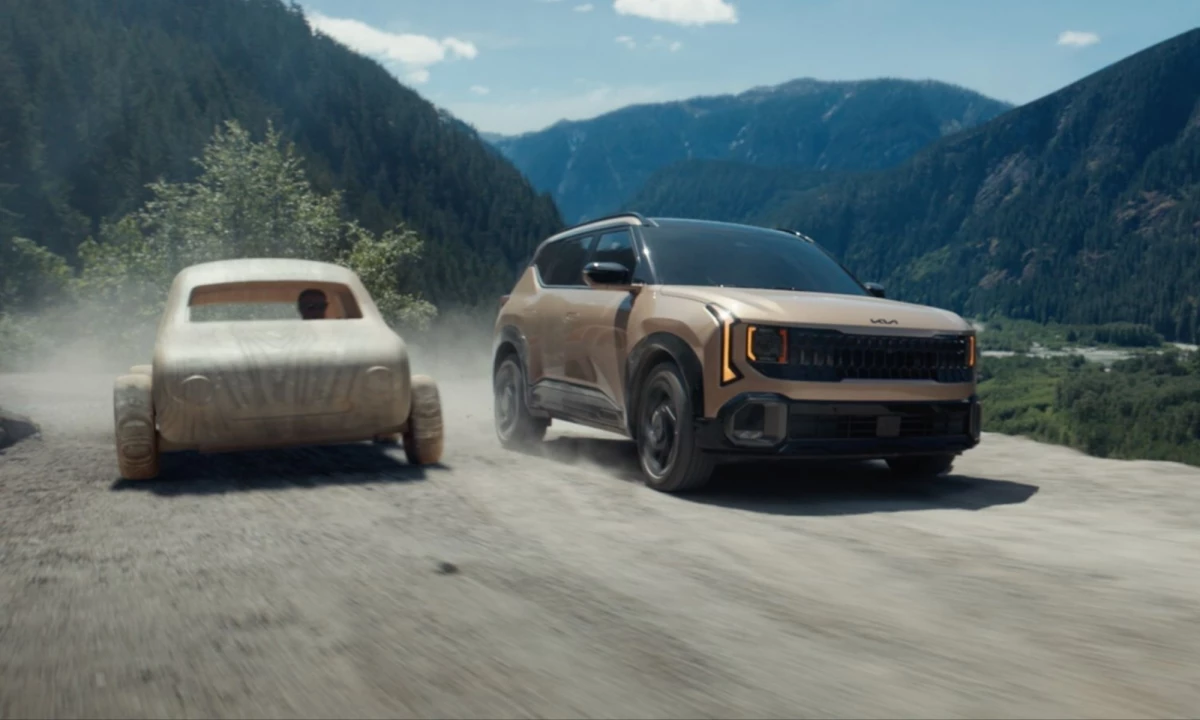

Kia America literally shrank its competition to spotlight the new 2027 Seltos.
The 40-second spot, "A Real SUV," places the redesigned model alongside toy-sized rival SUVs to highlight what sets it apart.
Created with CGI and a custom-built toy SUV, the creative supports the latest model's arrival in U.S. showrooms.
It highlights the vehicle's larger dimensions, expanded technology, and new hybrid option.
"The second-generation Seltos raises the bar for the entire compact SUV category," Russell Wager, vice president of marketing at Kia America, said in a statement.
"We developed a fun and creative way to illustrate how the Seltos stands apart from — and beats — the competition."
The film distills a long list of product upgrades into a visual production that audiences can understand without a specs breakdown.
Visual Effects Keep the Product Front and Center
The commercial exaggerates technical differences by placing the Seltos alongside tiny competitor SUVs.
CGI and a practical miniature vehicle built specifically for filming give the effects a physical quality that feels convincing.
Meanwhile, two 15-second spots focus on the interior room and the available Blind-Spot View Monitor.
The campaign extends across broadcast, print, digital, OOH, and social media.
The automaker's first hybrid SUV with electric all-wheel drive offers:
- Nearly 30 inches of combined display screens
- Surround View Monitor
- Memory power seats
- Over-the-Air software updates
The 2027 edition also adds more passenger and cargo space than its predecessor.
Simplifying product complexity through visual communication sets the campaign apart in one of the industry's most crowded categories.
Compact SUVs Capture 40% of New U.S. Sales
Compact SUVs continue to attract buyers seeking passenger space, fuel efficiency, and new technology without moving into larger vehicle classes.
This competition made feature lists look increasingly similar, forcing automakers to communicate value more creatively.
The global compact SUV market is projected to reach $5.25 billion by 2033, according to Congruence Market Insights.
Of the new SUVs sold in the U.S. in 2024, more than 40% were compact models, reflecting sustained consumer demand.
Kia's decision to highlight premium features borrowed from the Telluride also reflects an industry trend of moving flagship tech into entry-level models.

"A Real SUV" reinforces several marketing principles that teams can apply to their own campaigns:
- Simple comparisons improve recall. Brands should reduce complex benefits into one memorable visual cue to improve understanding.
- Premium features create stronger value perception. Marketers should incorporate features from higher-priced products to justify buy-in.
- Practical production strengthens believability. Creative teams should combine physical and digital VFX to make exaggerated concepts feel authentic.
When innovation and execution support the same message, consumers have a clearer reason to choose the brand.
Our Take: Why Build What You Can Animate?
We often see brands rely entirely on CGI for exaggerated product demonstrations.
But Kia invested in building a physical miniature vehicle before layering in digital effects.
This decision gives the commercial texture and realism that audiences may not consciously notice but are more likely to believe.
The approach only works if the craftsmanship serves the story.
Practical effects without a clear brand message would feel like a gimmick.
As AI-generated ads become more common, combining media effects could become the creative tool to make polished work feel more human.
Similarly, Renault UK marked the upcoming arrival of its electric vehicle with a tennis-inspired claymation film.
Brand campaigns often need practical effects, CGI, and storytelling to communicate technical product advantages clearly.
Explore these top visual effects companies that help translate feature-heavy products into ideas consumers remember.