
For decades, the creative brief started at an agency desk.
At Unilever, it now starts in a WhatsApp group with a few hundred thousand creators.
During the CAGNY conference in early 2025, CEO Fernando Fernandez announced that the company would work with 20x the influencers it had at the time.
One year on, and the numbers are in.
Unilever now works with close to 300,000 creators, up from 10,000 just two years ago.
This figure is not 20x the target, but 30x.
Fernandez confirmed the scale at a Barclays fireside chat earlier this year, noting the transformation has moved far past the original target.
Unilever's 2025 full-year results also show the company invested 16.1% of its $60 billion turnover in brand and marketing.
The company that helped write the rules of modern ad agency work is quietly handing the first draft to the crowd.
One Creator for Every ZIP Code
The size of the creator network is the headline, but the structure underneath is what makes it work.
Unilever runs it through WhatsApp groups, live events, and creator communities connected to specific brands and categories.
This approach keeps conversations going before, during, and after campaigns.
India alone has grown to 17,000 influencers.
This number reflects Fernandez's original ambition to have at least one creator in each of the country's 19,000 zip codes.
The company is also using AI to surface user-generated content (UGC) from people already talking about its brands.
This is done even without obvious tags, removing the manual work of tracking brand mentions at volume.
The ripple effects have already reached other companies, according to Hello Partner.
Marketing consultants report a surge in calls from Fortune 500 brands asking how to build their own creator roadmaps.
Earnings calls at General Mills, Gap, and Victoria's Secret show executives making the same pivot toward influencer spend.
A network of 300,000 creators needs constant management.
Unilever holds the strategy while agencies and platforms handle the execution underneath.
The creative brief now starts inside Unilever, which is the part of the job that agencies used to own.
43% More Sales, 3.2 Billion Impressions
Unilever CMO Leandro Barreto said the creator push is an ROI decision, with campaign results supporting this claim.
"Vaseline Verified," which turned consumer-generated product hacks into lab-tested, creator-developed content, delivered a 43% uplift in sales.
Dove x Crumbl, a limited-edition collaboration with the dessert brand, pulled 3.2 billion impressions and 53 million video views.
Over half the buyers were new to Dove.
Meanwhile, the "Dirt Is Good x Arsenal Women" campaign earned nine Cannes Lions shortlists and a Bronze Lion for MullenLowe in 2025.
Across some core brands, Barreto reported that creator-led content has driven more than 50% year-on-year growth in ROI.
These numbers also reflect a bigger pattern seen across the industry.
CreatorIQ's 2026 State of Creator Marketing report found creator budgets now growing at a pace that rivals traditional paid media.
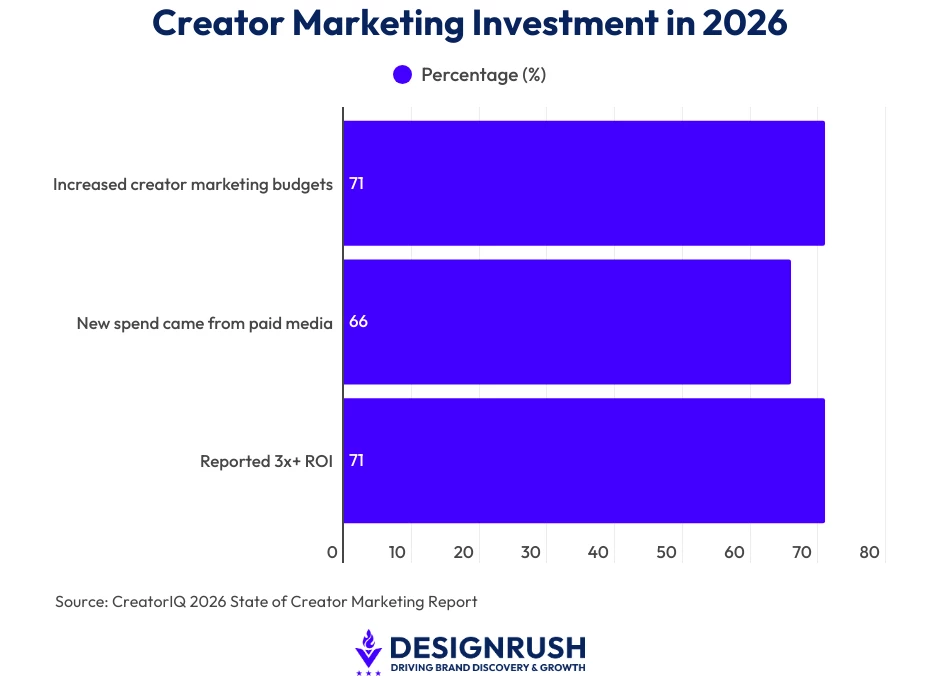
Barreto calls the model "poetry and plumbing."
Cultural intuition supplies the idea, and AI content systems supply the infrastructure to amplify it.
"Relevance is the engine of growth," he wrote in a piece published ahead of SXSW.
Unilever also put the 300,000-creator model to its biggest test yet.
As Official Personal Care Sponsor of the FIFA World Cup 2026, it activated more than 50,000 creators across the tournament's 39-day window.
A company-run creator hub called "House of Fresh" backed the effort from New York, Miami, and Mexico City.
Rani Al Hajji, Unilever's chief growth and transformation officer for personal care, put the goal plainly:
"The goal is to flood the feed with content generated by real people, real influencers, real celebrities, powered by our brands."
This vision only holds if the ideas start with the creators themselves, and the numbers back this move up.
Agencies keep the craft and the execution. The origination of the concept is the part slipping away.
The New Job Description for Agencies
Unilever keeps its agencies in the process, but changes when they enter it.
Creators now join at the brief stage, which reworks the whole production process.
The "Vaseline Verified" model shows how far this goes.
On the second run, Unilever went back to the creators who first posted the product hacks and asked them to co-create and promote a new product range.
These creators now earn 15% of the sales they drive, an outcome-based deal that sits outside the standard agency fee.
Barreto put the underlying question plainly in a recent interview.
"The question the whole industry is asking now is who creates value and where value is created," he said.
"And if the value is created in these places, how does the person who creates value get rewarded?"
For agencies and brands watching Unilever's model closely, a few things are worth acting on now:
- Build creator relationships before campaigns start: Ongoing community management between activations produces better briefs and faster execution.
- Pilot outcome-based creator compensation on one campaign this year: Tying creator pay to sales gives creators a direct stake in how the product performs.
- Use AI to surface organic brand conversations before briefing anyone: Tag-based monitoring misses content from people already talking about the brand without using official handles.
Creator networks at this scale take time to build, and Unilever has a two-year head start on almost everyone watching.
Our Take: Is the Creator Strategy the New Default?
We think Unilever already answered the question the industry spent the past year debating.
The "Vaseline Verified" sales uplift and the Dove x Crumbl new-buyer numbers are the kind of results that move the conversation on.
The model works, and the data backs it up.
The agency role changing is a different story, and one that still hasn't been resolved.
Unilever is now experimenting with compensation models that give creators a share of what they actually sell.
This puts real pressure on agencies to articulate where their value sits in a system where the creative brief starts with the community.
Nobody has a clear answer to this question yet, and the industry will probably be working it out for the next few years.
Brands and agencies rethinking how they build creator relationships need partners who understand how they translate into commercial results.
Explore these top influencer marketing agencies in our directory.