
The Tylenol Crisis: Key Findings
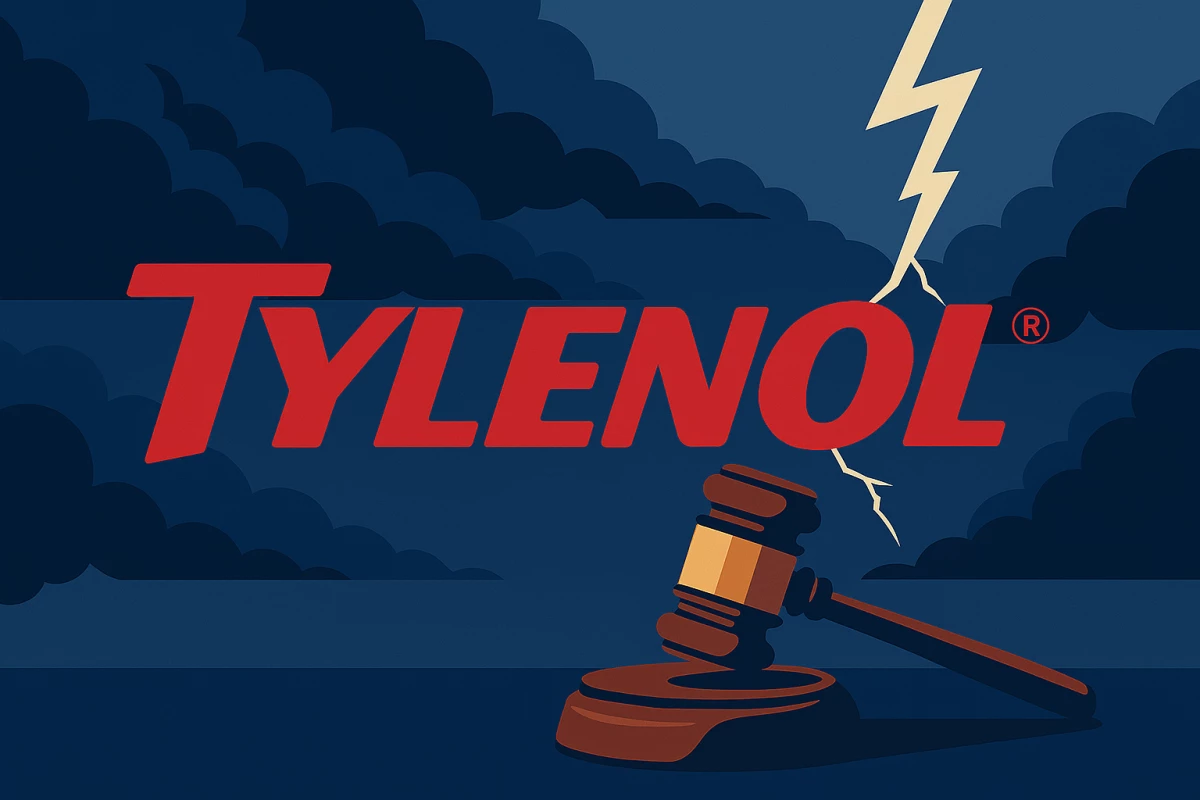
- Tylenol’s ongoing legal and PR fallout shows how misinformation, politics, and poor timing can upend even a heritage health brand.
- Trump’s unfounded autism claims and Texas’s lawsuit put Kenvue in damage-control mode, testing its crisis management strategy.
- The case shows marketers that trust isn’t built by advertising alone; it’s rebuilt through honesty, consistency, and restraint.
When the U.S. president publicly accuses your product of causing autism, no marketing magic can fully prepare you.
That’s the situation confronting Tylenol maker Kenvue, whose new Chief Marketing Officer, Jon Halvorson, has stepped into one of the biggest health branding challenges in recent memory.
Formerly of Mondelez and Publicis, Halvorson now faces what could be a defining test of crisis management.
He's left with the responsibility of rebuilding consumer trust while countering misinformation at the highest political level.
Last month, President Trump and Health and Human Services Secretary Robert F. Kennedy Jr. claimed that Tylenol use during pregnancy may be linked to autism.
These claims run counter to established medical consensus.
Despite the lack of evidence, Texas Attorney General Ken Paxton followed up with a lawsuit accusing Kenvue and its parent company, Johnson & Johnson, of deceptive marketing practices.
Currently campaigning for U.S. Senate, Paxton alleged that both companies violated consumer protection laws by not warning buyers of potential risks.
"Big Pharma betrayed America by profiting off of pain and pushing pills regardless of the risks," Paxton said in a press release.
In response, Kenvue defended its product as safe when used correctly.
"Acetaminophen is the safest pain reliever option for pregnant women as needed throughout their entire pregnancy," the company said in an official statement.
He added that its science-backed data "clearly shows that taking acetaminophen does not cause autism."
The Medical Industry Speaks
Medical groups have supported Kenvue’s stance.
The American College of Obstetricians and Gynecologists called Trump’s guidance “irresponsible.”
They warned that discouraging the use of Tylenol could harm both mothers and babies by forcing them to endure untreated fever or pain.
In a statement, Kenvue declared that it will "vigorously defend ourselves against these claims and respond per the legal process."
"We stand firmly with the global medical community that acknowledges the safety of acetaminophen and believe we will continue to be successful in litigation as these claims lack legal merit and scientific support," the company wrote.
While this political clash dominates headlines, Kenvue is also reportedly seeking a new ad agency for its $1.6 billion marketing budget.
This further shows that the brand is preparing for a strategic reset in the wake of what's described as brand marketing gone wrong.
Politics, Product, and Public Perception
The Tylenol lawsuit is an example of how fast public trust can fracture when politics and health intersect.
Trump’s criticism, amplified on social media, has put Kenvue in the same spotlight as brands like Cracker Barrel.
It recently faced boycotts and harsh criticism after removing iconic elements and briefly changing its logo.
The challenge for Kenvue will be balancing transparency with restraint.
Countering misinformation too aggressively risks extending the controversy, while staying silent can make it seem complicit.
It’s a fine line that every brand, more so one in the health industry, must learn to navigate, especially at a time when one viral post can undo decades of consumer goodwill.
Last year, Kenvue reported an annual revenue of $15 billion, ranking it among the largest pure-play consumer health companies in the world.
A Lesson From Tylenol’s Misinformation Battle
Tylenol’s situation is a case study in how to have a grasp of your brand's narrative during political and health crises.
- Political controversies can instantly redefine a brand’s narrative, showing why health messaging must stay rooted in science and clarity.
- When misinformation spreads faster than official statements, a rapid and empathetic response becomes the strongest brand defense.
- Brands like Cracker Barrel and Bud Light show that silence can amplify outrage, and narrative control begins with honest communication.
The question now is whether Kenvue can turn its current ordeal into an example of measured recovery, one where consistent facts and calm leadership outlast a week of social outrage.
Our Take: Can a Pain Brand Heal Its Own Wounds?
Watching this unfold, I’m reminded of how fragile consumer trust has become.
A single headline, an impulsive post, and suddenly decades of reliability are rewritten as doubt.
What strikes me here is how Tylenol’s brand now finds itself having to prove it all over again.
If I were in Kenvue’s shoes, I’d double down on education, not billions worth of advertising.
I’d put doctors and mothers at the center of the story, not executives.
Because when fear becomes the loudest voice in the room, the only antidote is empathy paired with proof.
In other news, Puma announced a massive workforce cut in its bid to reposition against Nike and Adidas.
It's another reminder that even global brands must rebuild from within before they can win back their audience.