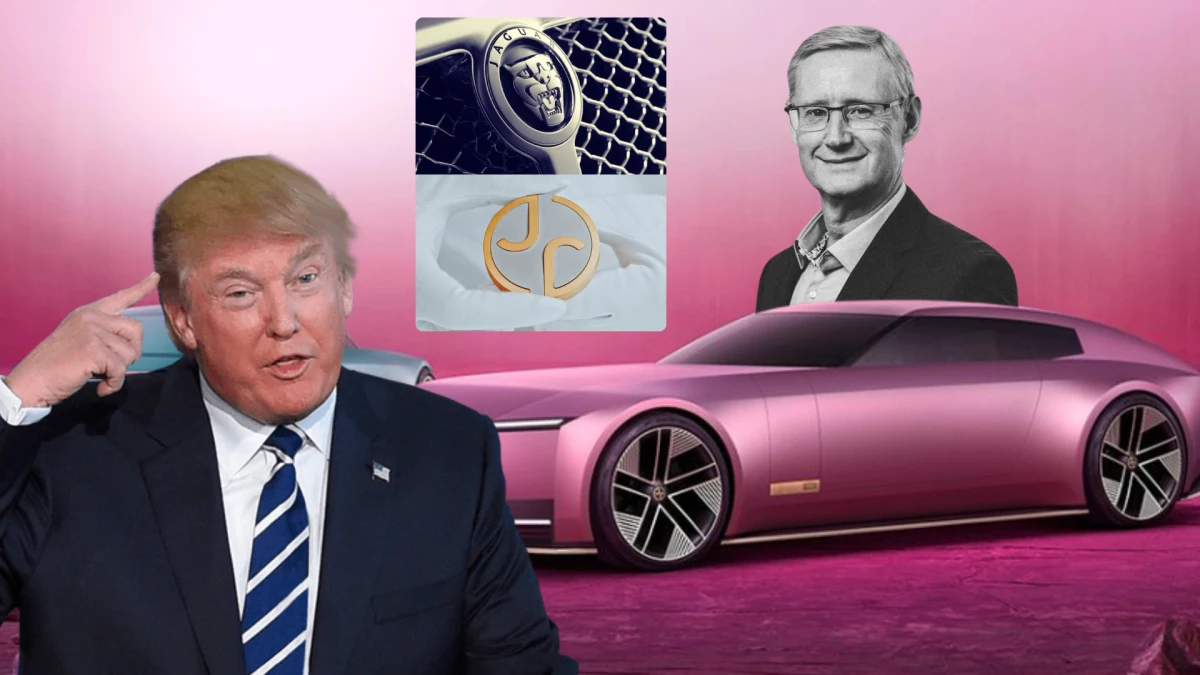

Trump Slams Jaguar, CEO Leaves: Key Findings
- Trump criticized Jaguar’s ad as “woke,” renewing debate over its branding and linking it to the CEO’s resignation.
- Jaguar’s U.S. exports briefly paused this year after new tariffs, affecting key models like the Range Rover.
- Under Mardell, Jaguar posted its highest profits in a decade and cut down £5 billion in company debt.
Quick listen: Jaguar’s viral rebrand faces backlash — here’s what happened, in under 2 minutes.
Jaguar Land Rover (JLR) is once again in the political and cultural crossfire, and this time, it’s personal.
On Monday, President Donald Trump publicly mocked the British automaker’s 2024 rebranding effort and tied it to the recent resignation of Jaguar Land Rover CEO Adrian Mardell.
"Jaguar did a stupid, and seriously WOKE advertisement, THAT IS A TOTAL DISASTER!” Trump wrote on Truth Social.
He added: “The CEO just resigned in disgrace, and the company is in absolute turmoil.”
The 30-second “Copy Nothing” campaign, which went viral last year, ditched cars entirely in favor of models in bright, androgynous fashion.
Accompanied by lines like "delete ordinary" and "live vivid," the ad polarized audiences online.
Some called it bold, and others, baffling.
Jaguar’s statement at the time acknowledged the pushback.
“As proud custodians at such a remarkable point in Jaguar’s history, we have preserved iconic symbols while taking a dramatic leap forward,” the company said.
“The brand reveal is only the first step in this exciting new era.”
The company did not respond to Trump’s recent post, nor did it clarify whether Mardell’s departure was related to the backlash.
In a release on July 31, JLR confirmed that Mardell, a 30-year veteran who took over as CEO in 2022, would step down later this year.
“These three years have been a great privilege,” Mardell said in a written statement, adding that he was proud to have led the brand through “a time of incredible change.”
The company has named P.B. Balaji, the Chief Financial Officer of Tata Motors Group since November 2017, as Mardell’s successor.
Balaji will take the helm during a delicate transition, with both the brand’s reputation and bottom line under intense scrutiny.
What Happened Behind the Scenes
Jaguar’s rebranding wasn’t the only source of tension this year.
In April, JLR paused all U.S. exports for a month after President Trump imposed a sweeping 25% tariff on imported cars.
Luxury carmaker Jaguar Land Rover is cutting its outlook for the year as Donald Trump’s tariffs bite https://t.co/tATH0KjxVZpic.twitter.com/ybAMu1fsbV
— Reuters (@Reuters) June 16, 2025
The U.S. accounts for nearly a quarter of the company’s global sales, and its luxury Range Rover and Defender models are especially popular in the American market.
Production for Range Rover models is based in the UK, now facing a 10% tariff.
Meanwhile, Defender units made in Slovakia are subject to a 15% levy.
With no manufacturing presence in the U.S., Jaguar’s export pause drew scrutiny from analysts tracking its operational resilience and long-term profitability.
Notably, it only sold 49 units across Europe in April.
Despite the external pressures, Mardell’s tenure marked a financial high point for Jaguar Land Rover.
The company posted its strongest profit in a decade, slashed £5 billion (or $6.6B) in debt, and stabilized operations after years of uncertainty.
Still, the brand image shift prompted fierce debate.
While some saw the campaign as forward-thinking, others questioned whether it truly reflected the Jaguar legacy.
Conservative critics online called the rebrand a betrayal of its classic British identity.
That reaction only intensified after Trump’s post and the coincidental timing of Mardell’s retirement announcement.
Our Take: Did Jaguar Overcorrect Too Fast?
There’s a clear risk when a legacy brand tries to redefine itself too abruptly.
From my perspective, Jaguar’s “Copy Nothing” campaign looked more like a statement piece than a sales driver.
It was bold in message, but lacked in product connection.
I understand the appeal of shifting brand identity to resonate with a new generation, but campaigns that disconnect from the product can alienate core buyers.
The fact that Trump’s voice amplified this divide only made things worse for the luxury brand.
This isn’t a matter of right or left, but about knowing your customer.
Jaguar took a risk, and in a fragmented media environment, it got louder than it expected.
Now, it's up to Balaji to lead a brand in flux, with a strong balance sheet but an unclear cultural footing.
Recently, American Eagle launched an equally controversial ad starring Sydney Sweeney, to which President Trump praised following news that she was a registered Republican.