
Interactive Meeting Software & Enterprise Engagement: Key Findings
- Enterprises use an average of 447 SaaS apps, making passive training ineffective and forcing a shift toward embedded, experience-first rollouts.
- Beekast’s adoption success grew from integration into real workshops for a 20,000+ employee insurer, proving value must be experienced, not explained.
- Support embedded into daily tools like SharePoint and Teams significantly reduces friction, helping teams activate faster and collaborate better.
Enterprise collaboration has reached a breaking point.
According to SaaS Academy, large enterprises now manage an average of 447 SaaS applications, creating digital overload that makes engagement harder to earn and sustain.
In this environment, traditional rollout strategies built on documentation, demos, and training sessions are no longer enough to drive real adoption.
Instead, organizations are being forced to rethink how collaboration tools are introduced, experienced, and embedded into everyday work.
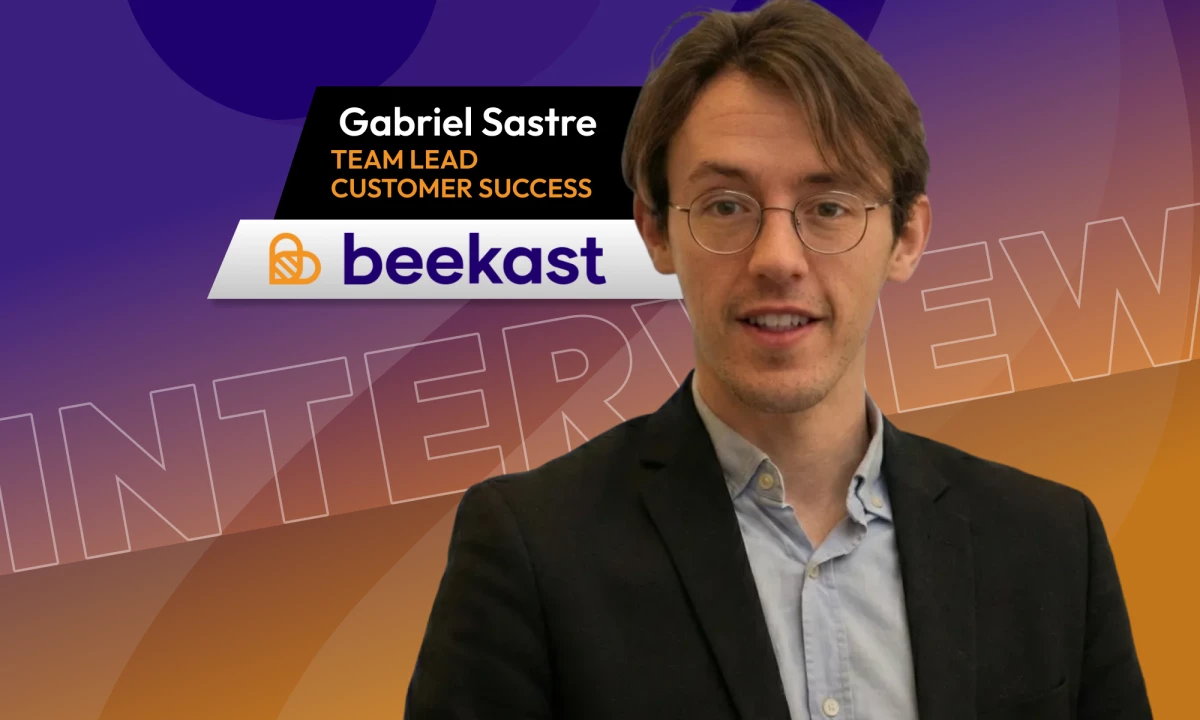
Gabriel Sastre is the team lead of customer success at Beekast, an interactive meeting software designed to improve engagement, structure, and outcomes across meetings, training sessions, and large-scale events.
In an exclusive interview with DesignRush, Sastre explains why interactive meetings are emerging as the most effective lever for driving enterprise adoption at scale.

Who Is Gabriel Sastre?
Gabriel Sastre is Team Lead Customer Success at Beekast, where he leads enterprise rollout strategy and supports organizations in scaling adoption of interactive meeting software across meetings, training sessions, and change initiatives.
He has over six years of experience working with large enterprises and public-sector organizations on engagement, retention, and deployment strategy.
Why Enterprise Collaboration Is Failing at Scale
Set the macro context around SaaS overload, attention scarcity, and why traditional software rollouts no longer deliver adoption.
Rethink Enterprise Rollouts Beyond Training and Documentation
For years, enterprise software adoption followed a predictable formula: communicate the rollout, demonstrate the product, and train users.
“That approach no longer works,” Sastre explains.
The reason is simple: employees are overwhelmed.
Collaboration tools multiply, Teams channels never stop, and middle managers are under immense pressure to deliver results while navigating constant change.
Asking teams to “learn one more tool” without context or purpose often leads to surface-level usage at best and quiet resistance at worst.
Embedding Interactive Tools Into Real Work
Frame adoption as a byproduct of experience, not instruction.
1. Embed New Tools Into Strategic Initiatives
This reality became clear during Beekast’s deployment with a large French insurance group employing more than 20,000 people across 10 subsidiaries.
The objective wasn’t to add another platform to the stack.
It was to improve engagement and effectiveness across meetings, training sessions, and large-scale events, both remote and in person.
What surprised Sastre most wasn’t the size of the rollout, but the strategy behind it.
“Instead of launching Beekast through traditional product training, they embedded it into a strategic management transformation initiative,” he says.
The deployment was led by a transversal headquarters team responsible for supporting managers across the organization.
2. Let Managers Experience the Tool Before Asking Them to Adopt It
Rather than being trained on Beekast, managers encountered it as part of real workshops and seminars designed to co-create a hybrid management charter.
Using polls, collaborative exercises, and live feedback, managers immediately felt the difference interactive meetings made.
“That shift was critical,” Sastre says.
Early adopters emerged organically, while others followed later through targeted support from the internal management development team.
“Once the value was experienced in daily work, the platform was no longer perceived as ‘another tool,’ but as a game changer for meetings and collaboration,” Sastre adds.
What Enterprises Actually Expect From Interactive Meetings
Clarify that engagement is a means to better outcomes, not an end in itself.
1. Focus on Participation, Structure, and Measurable Outcomes From Day One
When organizations evaluate tools like Beekast, Sastre sees three priorities surface consistently.
“First, teams want to ensure broader participation so that every voice is heard,” he explains.
“Second, they want to structure meetings and collaborative moments more effectively.”
The third priority is measurement.
“Many leaders want to measure the impact of these tools against clear business goals so they can understand the return on their investment,” he says.
However, an early misunderstanding often slows adoption.
“One early misunderstanding we often address is the assumption that because Beekast is interactive, it must be ‘just a fun tool,’” Sastre explains.
Engagement, he emphasizes, is a means to better outcomes. It’s not the end goal.
2. Diagnose Collaboration Problems Before Expecting Tools to Fix Them
When adoption stalls, the issue is rarely technical.
“The most common pattern we see in teams that struggle with adoption is the absence of a clear problem to solve,” Sastre says.
Many teams expect the tool itself to fix meetings without questioning how those meetings are designed or facilitated.
“I often say: using Beekast just to use Beekast doesn’t create value,” he adds.
What changes the trajectory is reflection and diagnosis.
“Our Customer Success teams work almost like consultants,” Sastre explains.
“We help teams analyze their current meeting patterns, identify pain points, and define a clear vision of what better collaboration looks like.”
When managers become active relays of communication and purpose, adoption accelerates dramatically.
Reducing Friction and Building Trust at Enterprise Scale
Position enablement and support as critical to sustained adoption.
1. Reduce Friction by Embedding Support Inside Existing Work Environments
Working with large, change-focused organizations also reshaped Beekast’s onboarding approach.
“One major lesson we learned is that access to information is critical,” Sastre says.
If learning resources live outside employees’ daily tools, they effectively don’t exist.
Today, Beekast embeds onboarding materials directly into clients’ environments, from SharePoint and intranets to Microsoft Teams and internal knowledge hubs.
“The goal is to shorten the path to value,” Sastre explains.
By reducing friction and meeting users where they already work, Beekast helps teams feel confident from day one.
2. Build Trust by Listening First and Challenging When Needed
For Sastre, trust doesn’t start with features or dashboards.
“Listening,” he says. “It may sound simple, but it’s probably the most underrated tactic there is.”
Before discussing tools or use cases, Beekast spends time understanding organizational dynamics, past failures, and the personal stakes for leaders driving change.
But listening also leads to challenges.
“If a client doesn’t have a clear objective or a real problem to solve, adoption is likely to fail,” Sastre explains.
By acting as both advisor and challenger, Beekast builds trust rooted in shared responsibility for long-term success.
“There are many platforms with similar features,” he says.
“What truly makes the difference is how well teams are supported through change.”
Looking to improve engagement, structure meetings more effectively, and scale collaboration without adding friction?
Explore top collaboration and customer success partners on DesignRush.