
The H-1B Work Visa Shift: Key Findings
- $100K H-1B fee could add $5.5 billion to tech’s annual hiring costs - raising the per-worker cost from $7,000 to $100,000.
- 94% of H-1B approvals go to SMBs - only 6.6% went to the top 10 employers in 2025.
- 1 in 3 visas go to firms with 10 or fewer hires - nearly 90,000 approvals for small employers across industries.
New 2025 data from DesignRush shows that H-1B visas aren't dominated by Big Tech. Instead, thousands of small and mid-sized businesses drive most approvals.
Trump admin's new $100,000 H-1B petition fee could add more than $5 billion a year in costs for the technology sector.
The $100,000 Fee: A New Cost Shock
The U.S. government has introduced a $100,000 petition fee for new H-1B applications, creating an enormous new cost burden for employers.
- Each year, 85,000 new H-1Bs are issued (65,000 regular + 20,000 master’s cap).
- Historically, 60–70% of these approvals go to computer-related jobs - around 55,000 workers.
- At the new fee level, that equals $5.5 billion annually in costs for tech alone.
- Rising costs for tech: Under the old system, hiring 55,000 skilled workers cost $200–$400 million. With the new fee, it’s over $5 billion.
- Who feels it most: The increase hits tech jobs hardest, but small and mid-sized firms in every sector will struggle to absorb it.
- The scale of the jump: The $100,000 charge is 25x higher than the old base fee, and more than 10x higher than the Public Law fee.
- Cost per worker: The cost per hire jumps from $3,600–$7,600 to $100,000.
- Where the money goes: The new fee makes up 95%+ of total costs, dwarfing all other application charges.
The Long-Tail Reality: 94% of Approvals Go to SMBs
DesignRush analyzed 2025 records from the USCIS H-1B Employer Data Hub, revealing the H-1B program is far more decentralized than the headlines suggest.
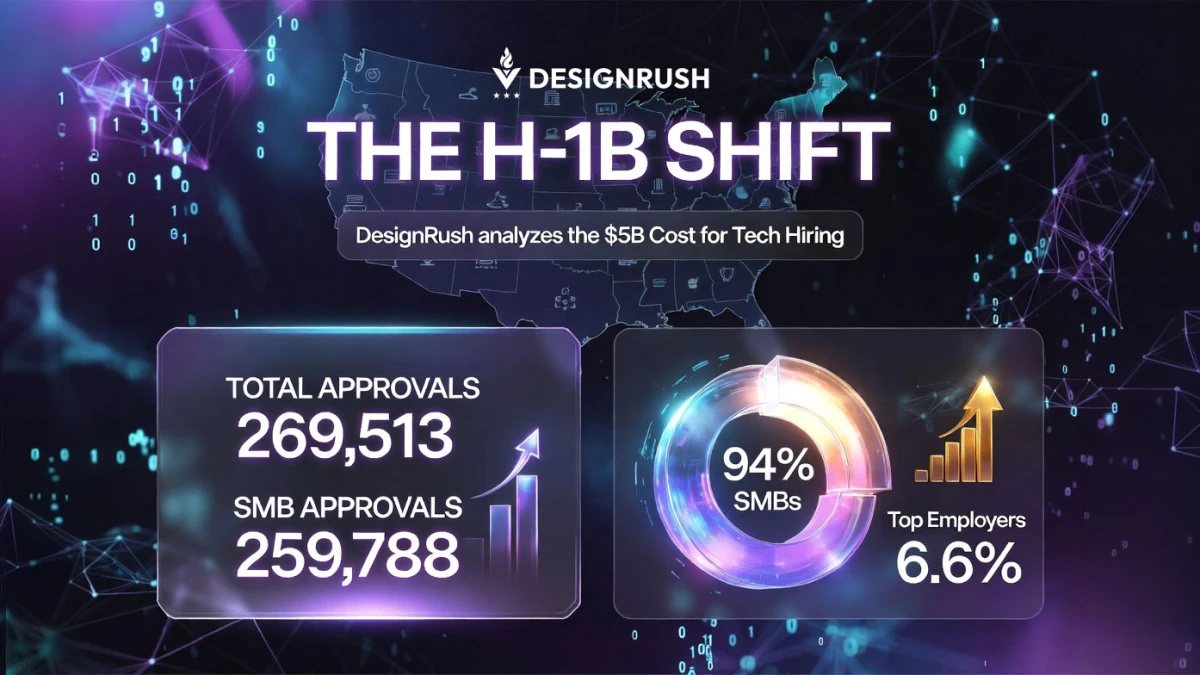
- Total approvals (2025): 269,513
- Denials: 6,338 → National denial rate: 2.3%
- Distinct employers: 43,493 across 58 states and territories
The top 10 employers accounted for just 6.6% of approvals. That means 94% of visas went elsewhere.
One in Three Visas Go to Small Employers
Small and mid-sized businesses, not global corporations, make up a huge portion of approvals.
- 10 or fewer approvals: 89,826 visas → 33% of the total
- 5 or fewer approvals: 66,122 visas → 25% of the total
Nearly 90,000 visas are going to firms with 10 hires or fewer, and more than 66,000 are going to firms with just five hires. These include local consultancies, hospitals, real estate firms, farms, and construction companies.
State Hotspots: Wyoming and Oklahoma
Contrary to the belief that H-1Bs mostly flow to California or New York, many of the highest small-employer shares appear in smaller states.
In Wyoming, seven out of ten H-1Bs went to very small employers. Oklahoma and Montana also had more than half of the visas approved for small firms.
Beyond Tech: Farms and Builders Depend on H-1B
The industry breakdown shows how non-tech sectors rely heavily on small H-1B employers.
For example, more than 8 in 10 agricultural visas came from very small firms - farms, fisheries, and greenhouses. Construction and real estate show the same small-business reliance.
Even Big Tech Uses H-1B Differently
Where tech giants are involved, their strategies vary widely.
Apple and Google use H-1Bs to bring in new international talent, while Microsoft leans heavily on renewals and transfers of existing workers.
What It Means for Employers
Gianluca Ferruggia, General Manager at DesignRush, explains what this change will bring to employers across the US:
“For tech companies, this is more than just another fee. It takes billions away from areas like product development, hiring, and innovation. Larger companies might absorb these costs, but for smaller firms and startups, it could mean fewer opportunities to bring in the talent they need to grow.”
Source: DesignRush analysis of FY2025 employer-level approvals from the USCIS H-1B Employer Data Hub.