

Idaho's Tech Pay Growth: Key Findings
- Idaho posted the highest U.S. tech salary growth at 26.13% over the past decade.
- Network Architect salaries rose nearly 31%, reflecting rising infrastructure demand.
- Boise ranks #8 out of 277 U.S. cities for tech salary growth.
- Boise’s tech wages jumped 10.3% year-over-year due to remote talent migration.
- Major players like Micron, HP, and Meta are fueling Idaho’s $9.8B tech economy.
- The state projects 12% tech job growth by 2029, signaling sustained momentum.
Quick listen: Why Idaho leads the U.S. in tech salary growth and what that means for your hiring strategy.
Idaho is now the fastest-rising state in tech salaries, and the industry is taking notice.
DesignRush’s 2025 U.S. Tech Salaries Report reveals that from 2014 to 2024, tech professionals in Idaho experienced a 26.13% inflation-adjusted wage increase.
This marks the highest growth rate in the country.
And it's driven by remote worker migration, corporate investment, and rising demand for high-skill infrastructure roles.
Why Idaho Leads the Nation in Tech Wage Growth
According to the 2025 Tech Earnings Index, Idaho’s inflation-adjusted tech salary rose from $94,687 in 2014 to $119,425 in 2024.
This delivered a $24,738 (26.13%) earnings increase, the highest percentage increase nationwide.
A significant driver was compensation growth in specialized roles.
For instance, Idaho-based Network Architects saw nearly 31% salary hikes, reflecting high demand for network engineering and infrastructure skillsets.
These real increases highlight not just nominal growth but actual purchasing power gains.
From a broader perspective, Idaho’s tech workforce spans 51,000 jobs.
And these support nearly $9.8 billion in gross regional product, with a tech employment growth rate projected at 12% by 2029.
Remote Workers Are Driving Boise’s Tech Boom
The report also highlights that Boise ranks #8 among 277 U.S. cities for tech salary growth over a 10-year span, from 2014 to 2024.
Several factors help explain Boise’s strong showing in the rankings:
- Tech job applications soared: 116% increase between 2021 and 2023
- Key employers fueled growth: Micron, HP, Meta, and Boise State University
- Infrastructure and DevOps in demand: Salaries range from $157K to $210K
University, industry and government partners from the U.S. and Japan gathered in April at #BoiseState to advance semiconductor and microelectronics education, work that is critical to making Idaho, Japan and the United States globally competitive.https://t.co/inf3OXEtZCpic.twitter.com/8UDa3WsmqO
— Boise State University (@BoiseState) May 1, 2025
The rise of remote work has helped turn Boise into a prime destination for tech professionals leaving high-cost coastal hubs.
From 2022 to 2023, average wages in the metro area rose by 10.3%, outpacing the statewide growth rate of 8.3%.
As mentioned earlier, applications for tech roles in Boise have surged in recent years.
The city draws talent with its lower cost of living, strong work-life balance, and opportunities for young professionals.
This influx of tech workers has stimulated wage growth and boosted demand for advanced infrastructure and services.
Business-Friendly Policies Attract Big Tech Investment
Idaho has actively cultivated a pro-business environment that continues to attract major corporate investment.
One of the most effective tools has been the Tax Reimbursement Incentive (TRI) program.
Under this initiative, companies hiring more than 50 employees in urban areas are eligible for a 30% credit on income, payroll, and sales taxes for up to 15 years.
This incentive has played a key role in luring large-scale employers who see long-term cost advantages in building operations within the state.
Another major incentive is Idaho’s favorable property tax structure.
For example, Micron’s massive Boise expansion benefits from local property tax relief and CHIPS Act funding.
This level of financial predictability makes Idaho a standout choice for capital-intensive tech investments.
The impact is evident in major investments:
- Micron’s $15 billion initial fab in 2022 is projected to create 2,000 direct and 17,000 indirect jobs.
- A second Boise fab is in development as part of Micron's $200 billion national expansion, offering thousands more jobs.
- Meta's Facebook contributed $800 million and helped generate model DevOps salaries.
Public–private collaboration is also strong. Companies like Idaho National Lab and Boise State University offer workforce training through initiatives like the Idaho LAUNCH.
Idaho's Tech Salary Growth vs. Other States
While Idaho leads, several other states are seeing gains, though none match Idaho’s pace.
With a nearly $25,000 real income increase, Idaho surpasses even strong-performing peers by a wide margin.
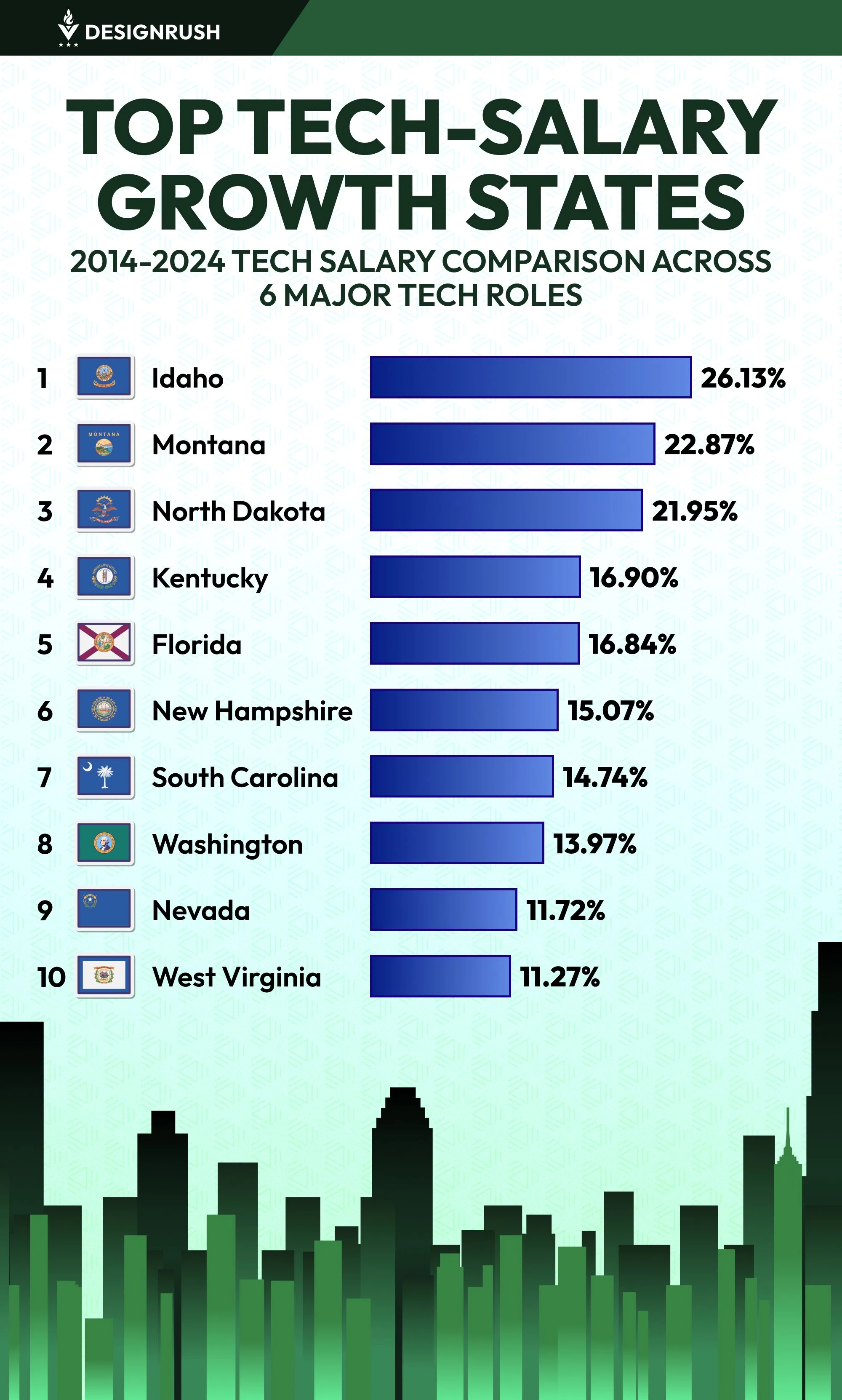
Idaho’s thriving tech economy is supported by robust structural investments:
- Workforce development: STEM programs and bootcamps are expanding via educational partnerships.
- Infrastructure build-out: Enhanced broadband, co-working spaces, and transport developments support continuing growth.
- Population growth: Boise’s metro grew by about 30,000 residents since 2010, creating demand for housing and services.
The Idaho Tech Council projects 12% employment growth through 2029, signaling continued upward wage pressure.
With sustained remote worker interest, generous business incentives, and expanding educational infrastructure, Idaho’s tech sector is well-positioned to stay at the forefront of national wage growth trends.
Want to stay ahead of where talent and opportunity are moving? These agencies help uncover the data that drives real decisions: