
SEO for Service Area Businesses: Key Findings
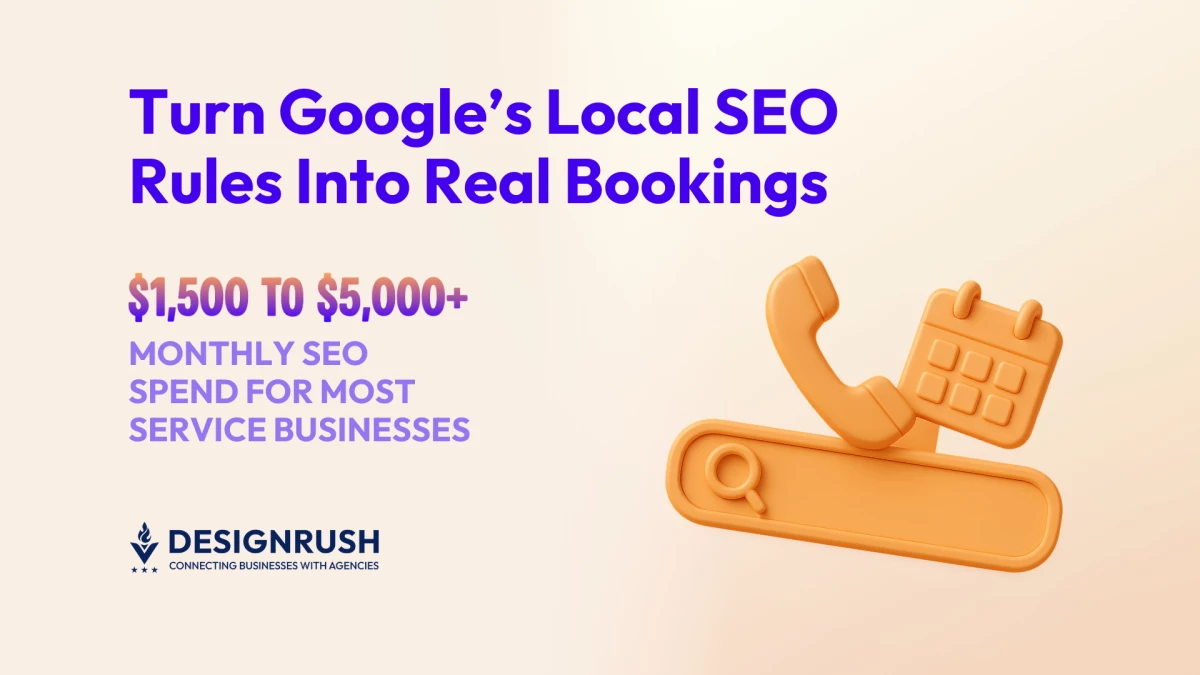
- SEO costs range from $1,500 to $5,000+, showing that brands should focus on clear service-area pages and local content that drives results.
- Google now rewards content that helps local customers and shows expertise, so agencies can build pages with real proof of work and answers to actual questions.
- Accurate listings, genuine reviews, and regular updates build trust, meaning businesses can turn well-maintained pages into bookings.
These days, SEO pricing can vary anywhere from $1,500 for small businesses to over $5,000+ for enterprises, according to AI-First customer relationship management system Nutshell.
Those costs usually go toward technical SEO, content creation, and link building.
In short, it’s the work that helps a business rank higher in search results and attract the right leads.
But for service-area businesses (SABs) like plumbers, electricians, or mobile pet groomers, spending that money doesn’t guarantee results.
Rather, local visibility depends on having a clear strategy.
The real challenge lies in defining service areas, optimizing for multiple locations, and proving to Google that each community is truly served.
“For service area businesses, SEO success depends on how strategically you invest,” says Ryan Duncan, Founder and Managing Partner of award-winning digital marketing agency Funnel Boost Media.
“When your reach spans multiple communities, precision matters. You need a clear structure, strong local signals, and reliable tracking to show Google you really serve each area you listed.”
Building Visibility Across Every Service Area
These days, Google’s Helpful Content updates are reshaping local SEO.
Content made to help people now takes the highest priority. Pages that are useful, reliable, and show real expertise get rewarded, while content aimed only at manipulating rankings does not.
At the same time, Google quietly made a change that threw some SEO tracking tools off, showing that it’s better to pay attention to real results instead of just rankings:
Editor's Note: This is a sponsored article created in partnership with Funnel Boost Media.
According to Search Engine Journal, SEO is no longer about cramming pages with keywords or listing every city.
Meanwhile, Medium notes that Google now favors content that actually helps local customers and gives useful, location-specific information.
That means stop relying on tactics that used to work and no longer do, such as:
- Keyword stuffing
- Thin content
- Exact-match anchor texts
- Directory submissions
- Content spinning
So what changed? Google stopped pretending every thin, city-listing page is useful.
It looks for signals that a business genuinely serves a place: relevant local details, clear answers to local questions, and proof that work happens there.
If your site features a collection of cookie-cutter pages that swap out city names, you can expect poor results.
Many small businesses struggle to get found online, and these five practical points explain how SEO works and how partnering with an agency can make a difference:
Stop guessing and focus on things that produce calls and bookings.
This is the minimum standard for each service-area page. Missing any of these weakens the page’s chance of ranking and converting:
- Build one dedicated service-area page per community with unique copy and local proof.
- Answers to actual customer questions, not theoretical SEO queries. Examples: "How fast can arrival be?" and "Are permits handled?"
- Local job photos with dates and short captions that name the neighborhood.
- Genuine, localized reviews that carry more weight than numerous generic five-star entries.
- Tracked outcomes like UTM-tagged call-to-actions, recorded call length, and measured local page conversions.
Duncan recommends that each service area needs its own page with clear, accurate information.
Keeping contact details consistent across listings builds trust with both Google and customers.
This helps service area businesses appear in the right searches and attract customers who are ready to book.
Why It Matters for Service-Area Businesses
Service-area businesses face a practical problem: you might service ten towns, but you can’t fake local credibility at scale without having structures in place.
A single, generic service page will not convince Google or a skeptical homeowner. What converts is a crisp local page with useful information, relevant proof, and a clear path to contact.
This is why genuine reviews matter in building trust with both Google and potential customers. And paired with tracking performance with analytics?
Well, then, local online marketing strategies help local customers find what they’re looking for more easily while giving a business a better shot at ranking.
“Local SEO is about being visible where it matters most. For service area businesses, each location needs its own presence, clear information, and proof of service,” he added.
“Consistency across pages, reviews, and content builds trust with both Google and potential customers.”
As Funnel Boost Media put it, local SEO success comes down to three key elements: clear service area pages, consistent engagement, and authentic local content.
That’s why partnering with an agency can make a big difference. It helps manage multiple locations, keeps content accurate and consistent, and ensures every page is performing while avoiding overload for internal teams.
And when each page actually answers what local customers need, the business becomes the solution they’re looking for.
It’s the type of approach that converts local SEO into a long-term strategy rather than a one-off project.
Turning Local SEO Into Results
Local SEO works best when it is part of how the business runs every day.
Clear service-area pages, real proof of work, and content that actually helps local customers make a stronger connection with the community.
When service-area pages show real work and content that actually helps local customers, they build trust.
Over time, those pages get noticed and turn casual visitors into loyal customers, even encouraging word-of-mouth referrals.
The key is keeping content consistent, relevant, and fresh.
That is what separates pages that sit there from pages that actively bring in business.